Imagine Math
Overview
- Overview
-
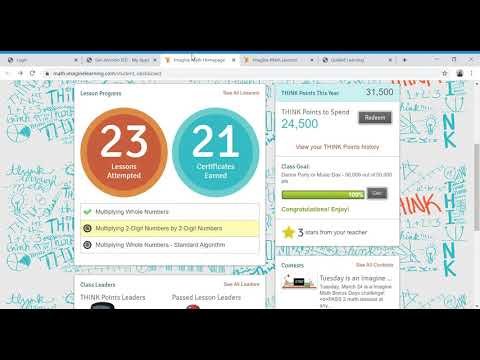
Imagine Math is an adaptive mathematics portfolio from Imagine Learning. Students follow individualized pathways with instruction and practice; some editions add live tutoring and language supports while teachers monitor skill progress.
Skill performance, practice time, and available tutoring describe the selected program’s support. Mathematics teams connect those records with instruction and use repeated evidence when reviewing progress. The useful history includes the support provided between measures. Student-support staff and teachers coordinate who reviews progress and who changes the instructional plan.
Features
- Features
-
Audience and instructional role
Grades / learners:
students across elementary and secondary mathematics, depending on the licensed Imagine Math product
Primary users:
students, math teachers, interventionists, tutors, and administrators
Learning focus:
mathematics practice, conceptual development, intervention, language support, and live tutoring — an adaptive mathematics portfolio from Imagine Learning
How it supports learning
- Students follow individualized pathways with instruction and practice; some editions add live tutoring and language supports while teachers monitor skill progress.
- Teachers should use the product within a defined instructional model rather than treat activity completion as evidence of learning.
Implementation and instructional decisions
- Identify the exact grade-band product and instructional role. Placement algorithms and lesson completion should inform—not dictate—teacher decisions.
- Districts should confirm accessibility, language support, student-data practices, assignment workflow, reporting, and the role of teacher judgment.
Student Data Privacy
- Student Data Privacy
-
Review the Common Sense Privacy Rating:
N/A
Imagine Math Privacy Policy:
https://www.imaginelearning.com/support/privacy/
Signed California Student Data Privacy Agreement?
Yes
Company News
- Company News
Interoperability
Sign-on, rostering, and file exchange methods
Select a connector to see every product that supports it.
Quick Start Guide
- Quick Start Guide
Imagine Math has grade-level pathways built for grades 2–8, Algebra I, Geometry, ACT, and SAT. The program also has first- and second-grade lessons available for support and remediation. Teachers and administrators have the option to create custom pathways and assign multiple pathways.
Pathway Types
Default Pathway: Common Core or state specific pathway. Automatically assigned when enrolled. Includes benchmark tests.
Domain Pathways: Focuses on specific areas of curriculum—fractions, measurement, expressions and equations, etc.
Custom Pathways: Created by the school.
Note: SDLA does not endorse or resell any products listed on the site. They are listed simply to aid in the development of integration resources for school district ed-data leaders.
Media
Videos