Happy Numbers
Overview
- Overview
-
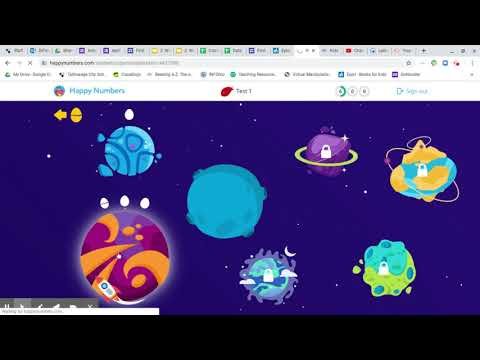
Happy Numbers is an adaptive elementary mathematics program. Students work through visual models, guided problem solving, and sequenced practice while teachers review class and learner progress. A learner’s responses determine a history of guided mathematics practice. Teachers use that record alongside classroom observation to decide which models and concepts need further explanation.
Features
- Features
-
Audience and instructional role
Grades / learners:
preschool and elementary mathematics learners
Primary users:
students, elementary teachers, interventionists, and families
Learning focus:
number sense, conceptual mathematics, fluency, and individualized practice — an adaptive elementary mathematics program
How it supports learning
- Students work through visual models, guided problem solving, and sequenced practice while teachers review class and learner progress.
- Teachers should connect use to explicit learning goals and inspect student work rather than rely on completion, time-on-task, or engagement alone.
Implementation and instructional decisions
- Confirm grade coverage and whether use is supplemental, intervention, or a digital station; screen time should complement mathematical talk and hands-on representation.
- Districts should confirm accessibility, language support, student-data practices, assignment workflow, reporting, and the continuing role of teacher judgment.
Student Data Privacy
- Student Data Privacy
-
Review the Common Sense Privacy Rating:
https://privacy.commonsense.org/evaluation/Happy-Numbers
Happy Numbers Privacy Policy:
https://happynumbers.com/privacy-policy
Signed California Student Data Privacy Agreement?
Yes
Company News
- Company News
Interoperability
Sign-on, rostering, and file exchange methods
Select a connector to see every product that supports it.
Note: SDLA does not endorse or resell any products listed on the site. They are listed simply to aid in the development of integration resources for school district ed-data leaders.
Media
Videos