



SDLA Compliance Resource
Administer Annual Reading-Difficulties Risk Screening to Pupils in Kindergarten Through Grade Two
An implementation guide for moving from a locally scheduled screening window to timely, instructionally useful support for every eligible K–2 pupil.
In Plain Language: Schools are required to screen each eligible kindergarten, first-grade, and second-grade student at the beginning of each school year using a state-approved assessment instrument. The screening assessment identifies students with potential early-reading risks and informs instructional supports. It is not used to identify students with disabilities, which may require additional processes and procedures.
Why this matters
Early screening gives educators and families a shared signal that a pupil may need more instruction or closer evaluation. Its value comes from what happens next: interpreting the result in context, acting on the identified need, and monitoring whether support is working.
Primary ownership
Primary owner: District assessment or early-literacy lead. Partners: elementary curriculum leaders, site administrators, K–2 teachers, multilingual-learner staff, special education and Section 504 staff, data/SIS staff, and family-communications staff.
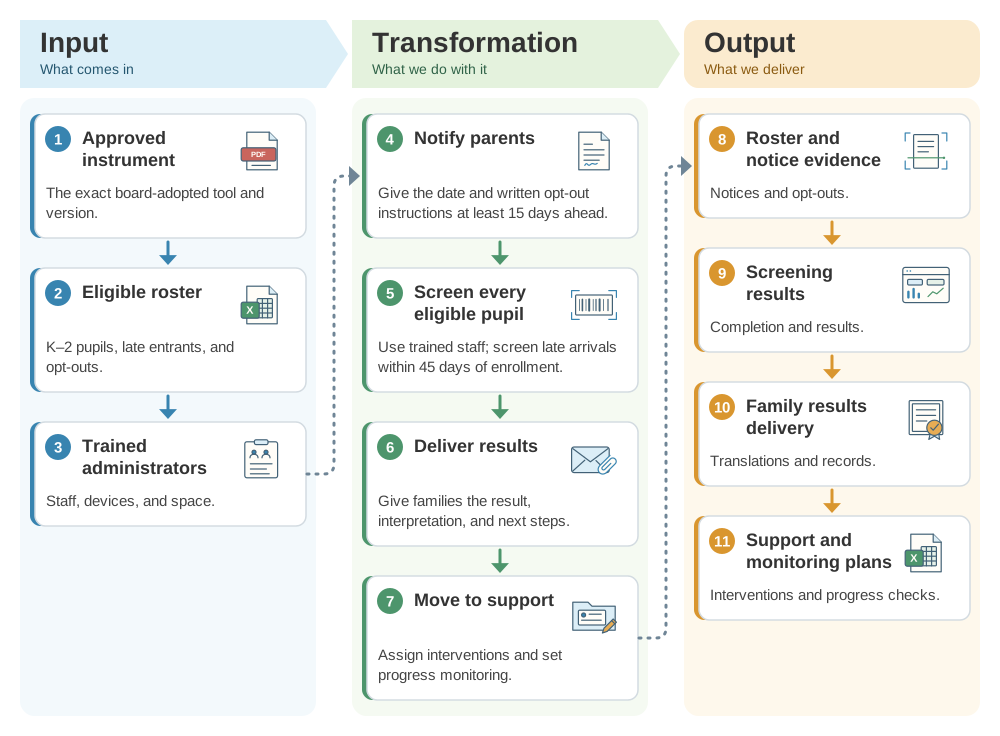
From the approved screener to timely reading support: the SDLA ITO workflow
The screening result is a risk signal, so the loop closes only when the pupil receives matched support. This SDLA ITO (Input, Transformation, Output) graphic shows how the approved instrument, the eligible roster, and parent notices and opt-outs become the roster and notices, the screening results delivered to families, and the support and monitoring plans.
The annual implementation calendar
- Before the screening windowConfirm the instrument, roster, languages, training, and administration plan.Use the exact approved instrument adopted by the governing board or body; identify eligible pupils and the staff who will administer, interpret, communicate, and follow up.
- No later than 15 calendar days before screeningNotify parents and guardians.Provide the screening date or dates and instructions for submitting a written opt-out. Apply required translation rules.
- Before administrationConfirm sufficient foundational-reading instruction.The local schedule must support a valid administration. A kindergarten pupil may not be screened before the 91st school day.
- During the locally scheduled annual windowScreen every eligible K–2 pupil.Use trained employees and follow the adopted instrument’s administration directions. One-to-one or small-group administration is strongly recommended when consistent with those directions.
- Within 45 calendar days of enrollment, when applicableScreen a newly enrolled K–2 pupil who arrives after the grade-level window.Exceptions apply for a written parent opt-out or documented similar screening in the current grade when the parent was informed of the prior result.
- No more than 45 calendar days after administrationMake results available to the parent or guardian.Include interpretation and next-step information, including applicable supports and services.
- When risk is identifiedMove from the signal to support.Use the result with other pertinent pupil information to plan appropriate instruction, intervention, progress monitoring, tutoring, or further evaluation.
Who is screened? Eligibility and exception controls
| Situation | Required response | Evidence to retain |
|---|---|---|
| Enrolled pupil in kindergarten, grade one, or grade two | Screen at least once each school year using the LEA-adopted approved instrument, subject to the controls below. | Roster, administration date, instrument/version, administrator, and completion status. |
| Parent or guardian submits a written opt-out | Do not administer the screening covered by the written opt-out. | Dated written opt-out and the pupil’s resulting screening status. |
| Pupil has a disability, IEP, Section 504 plan, diagnosis, or pending evaluation | Do not assume automatic exemption. Screen unless the LEA applies a statutory exemption meeting Education Code section 53008(i) and obtains prior written parental consent. | Applicable criterion, prior written parental consent, responsible decision-maker, and decision date. |
| New K–2 pupil enrolls after the grade-level screening window | Screen within 45 calendar days unless there is a written opt-out or documentation of a similar current-grade screening with evidence that the parent was informed of the results. | Enrollment date, deadline, prior-screening documentation or opt-out, and completion date. |
| Pupil does not have sufficient English for an English-language instrument | Use an approved instrument in the pupil’s proficient primary language when available. If no approved instrument is available in a language in which the pupil is proficient, follow the statutory developmental-history, educational-history, and literacy-progress analysis. | Language-proficiency determination, instrument/language used, or documented alternative analysis and supporting information. |
| Pupil placed in a nonpublic school through the IEP | The LEA remains responsible for screening unless the pupil is properly exempted with prior written parental consent. | Coordination record, administration result, or exemption documentation. |
California-approved screening instruments
Confirm the LEA’s board-adopted instrument and the current California approval information before administration. Product links below go to the official provider pages; the CDE FAQ remains the authority for California approval and conditions.
Amira
Kindergarten through grade two · English and Spanish
Distributed by Amira Learning or HMH, as identified on the current CDE approved list.
mCLASS with DIBELS Edition 8 and mCLASS Lectura
Kindergarten through grade two · English and Spanish
Multitudes
Kindergarten through grade two · English and Spanish
Developed by the UCSF Dyslexia Center for culturally and linguistically responsive screening.
Rapid Online Assessment of Reading (ROAR)
Grades one and two · English
Screening-to-support pathway
Recommended district workflow
- Assign accountable owners. Name the district lead, site coordinators, trained administrators, data owner, family-communications owner, and intervention decision team.
- Lock the approved instrument and version. Reconcile the CDE-approved list, board action, contract or access, grade coverage, language availability, and vendor administration requirements.
- Build the eligible roster. Use current enrollment and grade data; identify language needs, late entrants, opt-outs, possible exemption reviews, and nonpublic-school placements.
- Back-map the calendar. Start with the locally established screening-administration dates, apply the kindergarten requirement that screening not occur before the 91st school day, and schedule parent notice, translation, staff training, makeups, results delivery, and intervention review.
- Prepare staff and sites. Verify training completion, devices/materials, space, accessibility, testing conditions, troubleshooting, and a process for documenting interruptions or invalid administrations.
- Administer and reconcile daily. Monitor completion against the eligible roster without treating a vendor dashboard alone as proof that every statutory case has been resolved.
- Deliver understandable results. Provide each family the result, interpretation, and next steps within 45 calendar days; complete required translations and record delivery.
- Close the instructional loop. Convene the appropriate educators, assign supports, set progress-monitoring expectations, and escalate to further evaluation when concerns do not resolve—without delaying Child Find.
Before calling the annual requirement complete
- Board-adopted instrument and administered version match the current approved list.
- Every eligible K–2 pupil has a resolved status: screened, written opt-out, valid exemption, or documented prior similar screening where allowed.
- Kindergarten administrations occurred no earlier than the 91st school day.
- New-enrollee 45-day deadlines were monitored and resolved.
- Results, interpretation, and next steps were delivered within 45 calendar days.
- Language-access requirements and alternative analyses were documented.
- Pupils identified at risk were assigned appropriate supports and follow-up.
- The LEA can reproduce its roster, decisions, notices, results-delivery record, and intervention handoffs.
Official guidance and help
- CDE Screening for Risk of Reading Difficulties FAQsControlling CDE explanation of adoption, eligibility, administration, parent information, exceptions, result use, supports, and the approved instrument list.
- California Education Code section 53008Statutory requirements governing K–2 screening for risk of reading difficulties.
- California ELA/ELD Framework, Chapter 8Assessment-purpose distinctions and the screening, diagnostic-assessment, and progress-monitoring continuum; see printed pages 859–861.
- California Dyslexia GuidelinesAdditional guidance for understanding dyslexia, assessment, instruction, intervention, and the analysis required when no approved screener is available in a language in which a pupil is proficient.
CDE California Statewide Literacy Office:
Source review completed August 28, 2026. Verify live CDE guidance, the approved-instrument list, vendor administration materials, and related legal requirements before acting.