


SDLA Compliance Resource
Train and Calibrate Every K–2 Reading Screener Administrator
A pre-administration readiness check for vendor-required training, standardized directions, student access, scoring, security, and reliable referral handoffs.
In Plain Language: Complete the approved instrument’s initial and ongoing training and demonstrate the ability to administer, score, document, and explain the screening consistently.
Why this matters
Even a strong instrument produces poor information if staff prompt differently, skip components, use the wrong language/version, or do not know what to do with a risk flag.
Joint ownership
Owner: LEA screening lead. Partners: vendor/trainer, site administrator, teachers, multilingual education, special education, IT, and data/privacy staff.
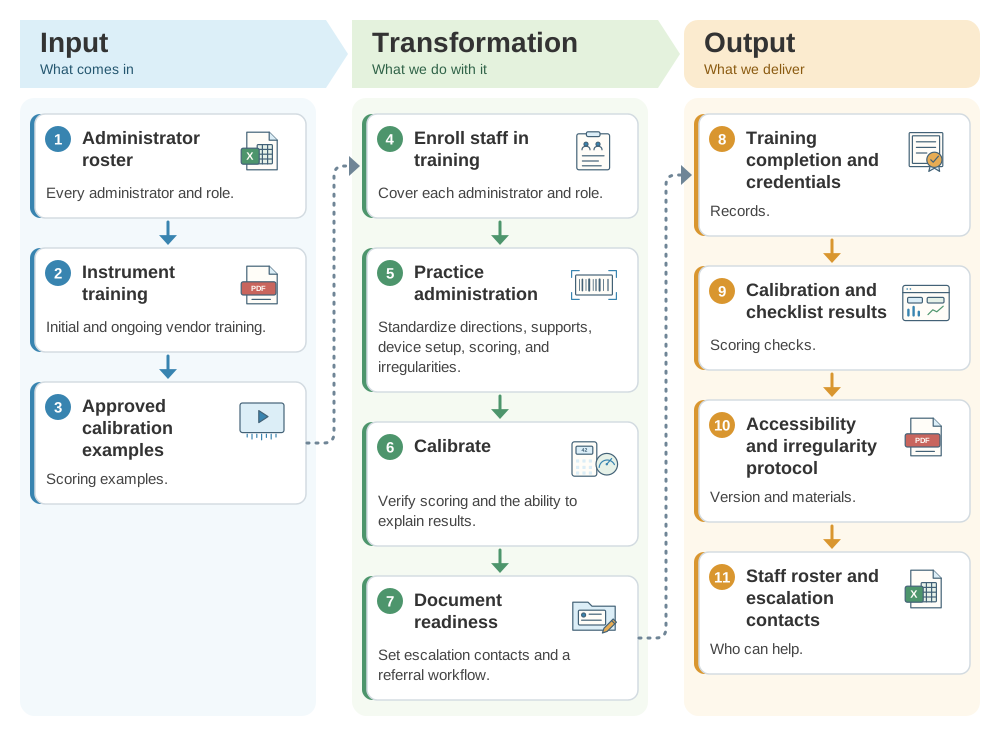
From administrator roster to calibrated K–2 screeners: the SDLA ITO workflow
Staff must be able to administer, score, document, and explain 'risk, not diagnosis' before they screen anyone. This SDLA ITO (Input, Transformation, Output) graphic shows how the list of administrators, the adopted instrument's training, and approved examples become the training and credential records, the calibration results, and the roster and escalation contacts.
Operational workflow
- Identify every administrator and role; enroll staff in required initial/ongoing training.
- Practice standardized administration, permitted supports, device setup, scoring, interruption, and irregularity handling.
- Calibrate with approved examples and verify staff can explain “risk, not diagnosis.”
- Document readiness; provide escalation contacts and a post-screening support/referral workflow.
Readiness proof
Evidence to retain
- Training completion/credential
- Version and administration materials
- Calibration/checklist results
- Accessibility and irregularity protocol
- Staff roster and escalation contacts
Official guidance and help
- CDE Screener FAQsTraining and administration guidance
- CDE Approved ScreenersApproved tools and vendor links
- Education Code section 53008Program requirements
Source review completed August 30, 2026. Verify current federal and California law, CDE and test-contractor manuals, local board policy, adopted instruments, individual student circumstances, and live system status before acting.