



SDLA Compliance Resource
Notify Parents at Least 15 Calendar Days Before K–2 Reading Screening
A plain-language advance notice that gives the screening window, purpose, tool, result use, privacy information, accessibility, and a workable written opt-out route.
In Plain Language: Tell families when screening will occur, what it does and does not do, and exactly how to submit a written opt-out. Provide the notice in the language and mode required for meaningful access.
Why this matters
The screener is a risk flag, not a diagnosis. Families should understand that results guide support and cannot be used as a high-stakes gate or to delay special education child-find duties.
Joint ownership
Owner: screening coordinator/principal. Partners: teacher, communications/translation staff, special education, records, and parent liaison.
From the screening date to a 15-day parent notice: the SDLA ITO workflow
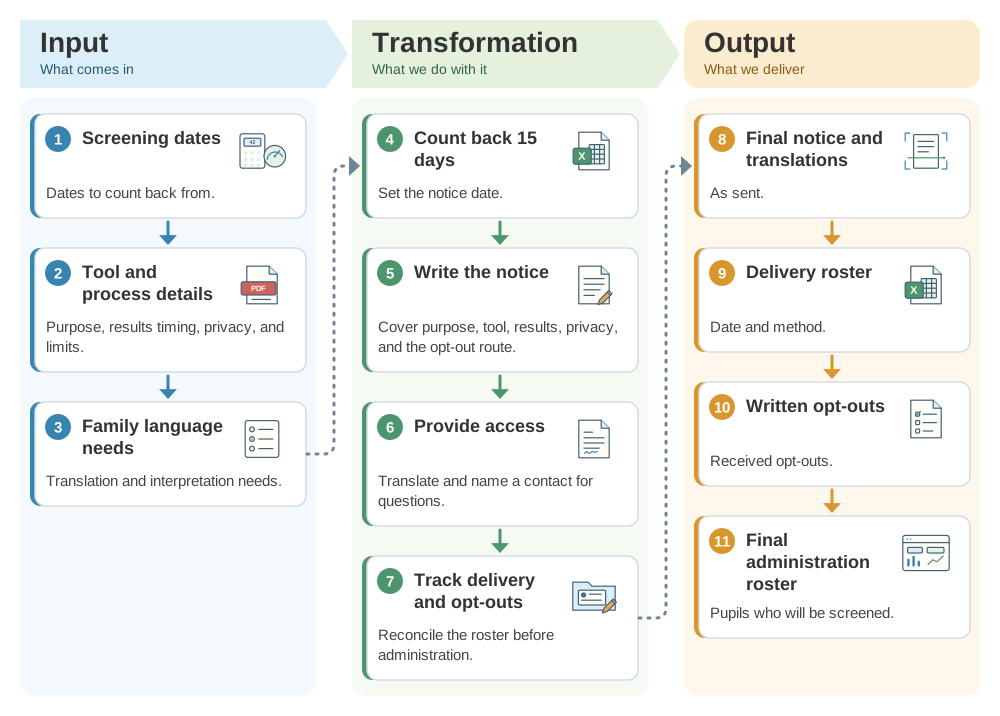
Count back at least 15 calendar days from screening, and give families a workable way to opt out in writing. This SDLA ITO (Input, Transformation, Output) graphic shows how the screening dates, the adopted tool, and family language needs become the final notice and translations, the delivery roster, and the written opt-outs and final roster.
Operational workflow
- Set the screening dates and count back at least 15 calendar days.
- Describe purpose, adopted tool, administration, results timing, privacy, limits, and support process.
- Provide accessible translation/interpretation and a named contact for questions or disability access.
- Track delivery and written opt-outs; reconcile the final roster before administration.
Notice essentials
Evidence to retain
- Final notice and translations
- Delivery roster/date/method
- Questions and responses
- Written opt-outs
- Final administration roster
Official guidance and help
- CDE Screener FAQsNotice and opt-out requirements
- CDE Approved ScreenersCurrent instrument list
- Education Code section 53008Reading-screening statute
Source review completed August 30, 2026. Verify current federal and California law, CDE and test-contractor manuals, local board policy, adopted instruments, individual student circumstances, and live system status before acting.