



SDLA Compliance Resource
Review, Update, and Adopt Each Comprehensive School Safety Plan
The annual site planning process for evaluating risks, consulting required partners, updating mandated procedures, inviting public input, adopting the plan, forwarding it for LEA approval, and implementing it.
In Plain Language: By March 1, each school reviews, updates, and adopts its CSSP through the required committee and public process, includes all current statutory elements—including instructional continuity and immigration-enforcement notification procedures—and forwards it to the district/COE for approval.
Why this matters
A copied plan with a new date is not an annual safety process. Missing consultation, public presentation, required content, adoption, LEA approval, or implementation can create audit findings and weaken real emergency readiness.
Primary ownership
Primary owner: LEA school-safety/compliance lead. Partners: principals, CSSP committees, district/COE approver, governing board, emergency responders, labor/teachers, families/pupils, special education, facilities, legal, instructional continuity, and records staff.
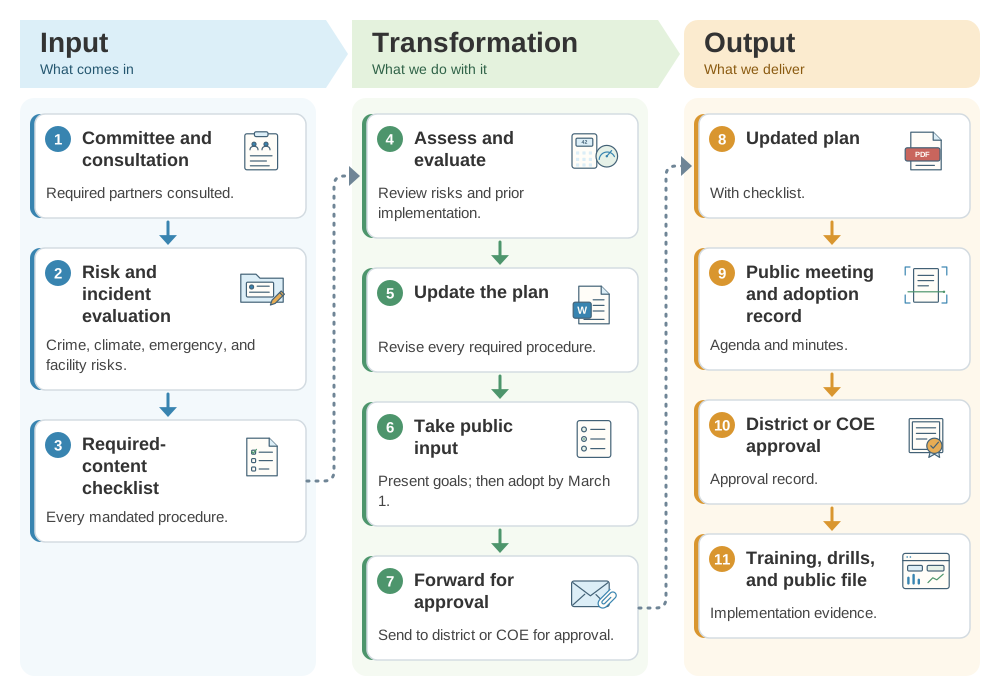
From the planning committee to an adopted Comprehensive School Safety Plan: the SDLA ITO workflow
Each school's plan is reviewed, updated with required partners and public input, adopted, then tested during the year. This SDLA ITO (Input, Transformation, Output) graphic shows how the planning committee, incident and risk evaluations, and the required-content checklist become the updated plan, the public meeting and adoption record, and the implementation evidence.
Operational workflow
- Convene/verify the required planning committee and consult law enforcement, fire, emergency, labor, staff, families, pupils, and other required partners.
- Assess current crime, climate, emergency, facility, accessibility, and continuity risks and evaluate prior implementation/incidents.
- Update every required procedure, including disability adaptations, instructional continuity, immigration-enforcement notification, and current policies.
- Present plan goals for public input, then complete school adoption by March 1 and forward for district/COE approval.
- Train, implement, test, maintain the public/redacted file, and track corrective actions throughout the year.
Implementation pathway
Evidence to retain
- Committee and consultation evidence
- Risk/incident evaluation
- Required-content checklist and updated plan
- Public meeting and adoption record
- District/COE approval
- Training/drills/implementation and public-file evidence
Official guidance and help
- CDE CSSP GuidanceMarch 1, October 15, content, and process
- CDE Safe Schools PlanningCompliance tool and resources
- CDE Instructional Continuity PlanRequired CSSP component
- Education Code 32280–32289.5Statutory authority
Source review completed August 30, 2026. Verify current CDE, governing, Dashboard, school-plan, SARC, safety, instructional-materials, local-calendar, and legal instructions before acting.