



SDLA Compliance Resource
Report Local-Indicator Results with LCAP Adoption
The public-accountability action that connects locally measured priorities, the SBE self-reflection tools, governing review, and the adopted LCAP.
In Plain Language: Complete the current SBE self-reflection tools, place the results on the same governing-board/body agenda as LCAP adoption as a non-consent item, present the actual results publicly, and preserve the meeting date and evidence for Dashboard entry.
Why this matters
Local indicators are not met by attaching a summary somewhere in the LCAP packet. Missing the same-meeting, non-consent presentation can result in “Standard Not Met” even when the LEA performed the underlying analysis.
Primary ownership
Primary owner: LCAP/accountability lead. Partners: local-indicator data owners, superintendent/designee, board office, legal/governance, communications, Dashboard Coordinator, educational partners, and charter authorizer when applicable.
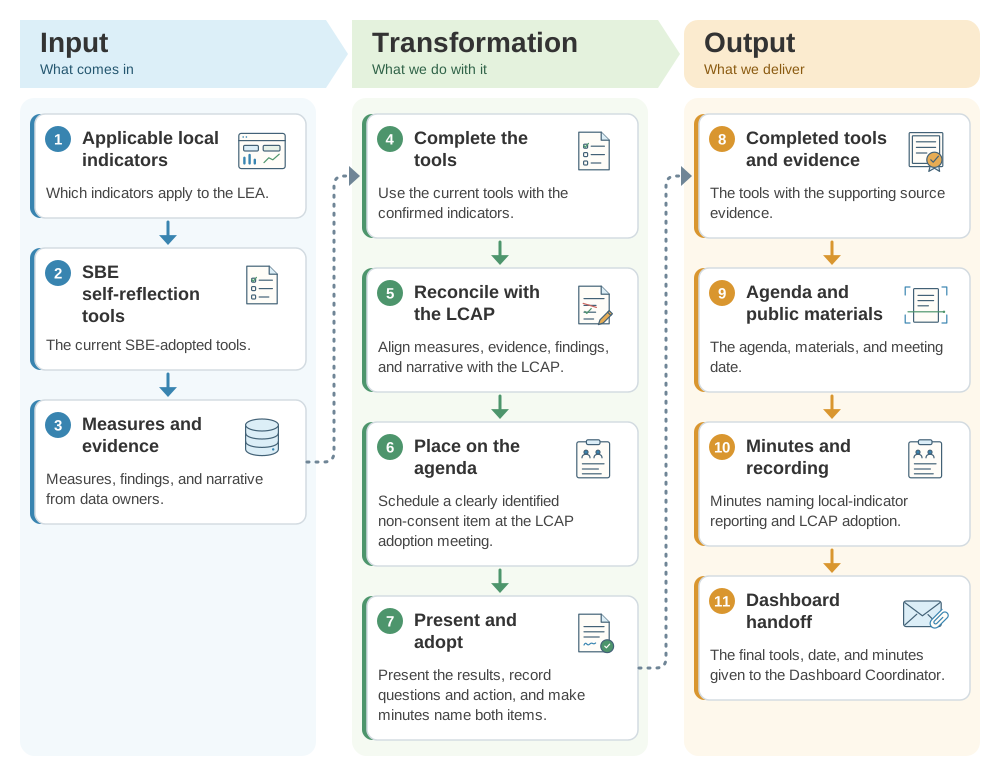
From local-indicator tools to the LCAP adoption agenda: the SDLA ITO workflow
Local indicators must be reported publicly at the same meeting where the LCAP is adopted. This SDLA ITO (Input, Transformation, Output) graphic shows how the applicable local indicators, the SBE self-reflection tools, and measures and evidence become the completed tools, the agenda and minutes, and the Dashboard handoff.
Operational workflow
- Confirm applicable local indicators and use the current SBE-adopted self-reflection tools.
- Reconcile measures, evidence, findings, and narrative with responsible data owners and the LCAP.
- Schedule a clearly identified non-consent item at the same meeting as LCAP adoption.
- Present the results, record questions/action, and ensure minutes identify both local-indicator reporting and LCAP adoption.
- Give the final tools, meeting date, agenda, materials, and minutes to the Dashboard Coordinator.
Implementation pathway
Evidence to retain
- Completed self-reflection tools/source evidence
- LCAP alignment review
- Agenda and public materials
- Presentation and adopted LCAP date
- Minutes/recording
- Dashboard handoff/approval
Official guidance and help
- CDE Local Indicator FAQsSame-meeting and non-consent requirements
- CDE Local IndicatorsCurrent tools
- CDE LCAP FAQsAdoption context
- California School DashboardAccountability context
Source review completed August 30, 2026. Verify current CDE, governing, Dashboard, school-plan, SARC, safety, instructional-materials, local-calendar, and legal instructions before acting.