

SDLA Compliance Resource
Complete the Applicable LREBG Needs Assessment
Complete the required evidence-based needs assessment before selecting and implementing the applicable LREBG-funded LCAP actions.
In Plain Language: Complete the required evidence-based needs assessment before selecting and implementing the applicable LREBG-funded LCAP actions.
Why this matters
A generic district priority list does not identify which students and schools need learning-recovery support or justify the chosen investment.
Primary ownership
LCAP lead, assessment/data team and fiscal services, with relevant program/site owners
Required distinctions and controls
- Review disaggregated academic performance, chronic absence and additional local evidence for the populations in greatest need, using current CDE definitions.
- CDE permits the required assessment to be part of the regular LCAP needs assessment if it meets the LREBG conditions. A separate county template or approval is not automatically required.
- CDE’s LCAP instructions exempt LEAs without applicable unexpended funds from the corresponding LREBG needs-assessment/action requirements. Establish applicability before assigning work.
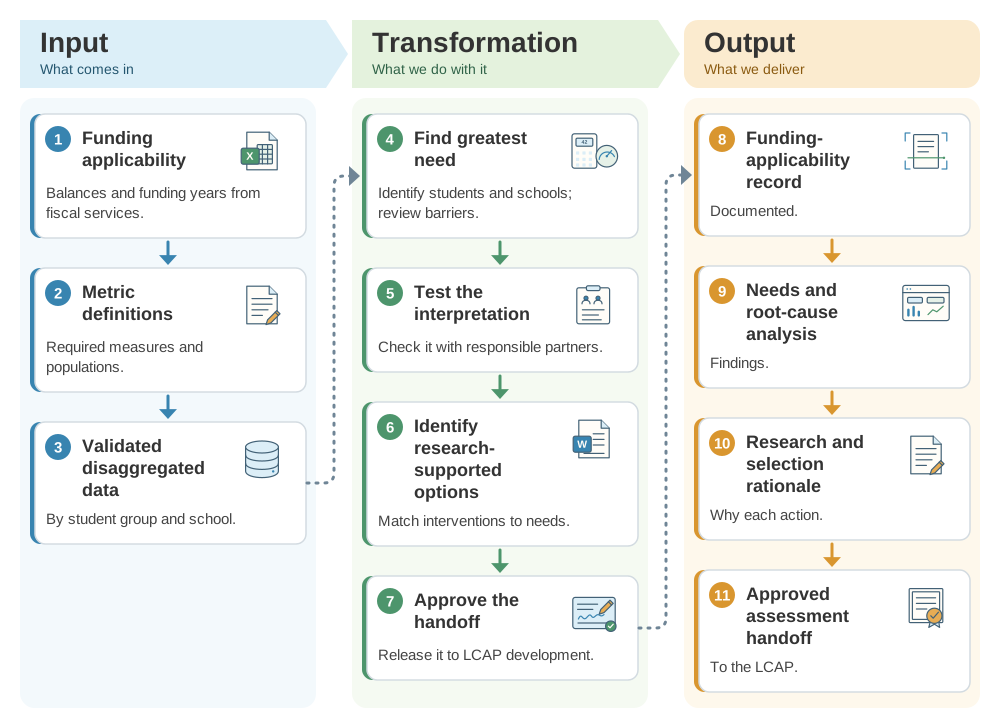
From funding applicability to an approved LREBG needs assessment: the SDLA ITO workflow
The needs assessment comes before the LCAP includes the funds or any spending based on the plan. This SDLA ITO (Input, Transformation, Output) graphic shows how the funding balances and years, metric definitions, and validated disaggregated data become the needs and root-cause analysis, the research and selection rationale, and the approved handoff.
Recommended LEA workflow
- Resolve applicable balances and funding years with fiscal services.
- Define the required metrics and populations and assemble validated, disaggregated data.
- Identify students/schools in greatest need, review barriers and test the interpretation with responsible partners.
- Document needs, research-supported intervention options and the rationale for selected actions.
- Approve the assessment handoff before incorporating funded actions in the LCAP or spending against them.
Evidence to retain
- Funding-applicability record
- Metric definitions and validated data
- Needs/root-cause analysis
- Research and selection rationale
- LCAP/fiscal handoff
Related calendar resources
Official guidance and help
Return to the Annual Compliance Calendar
Reviewed October 21, 2026. Confirm the current agency instructions, applicable funding year, recipient scope, local policy and final submitted or approved state before acting. Recommended preparation steps support the named requirement and do not create an additional statewide filing deadline.