


SDLA Compliance Resource
Report 2027–28 ELO‑P Operational Intent in PADC
A forward-looking principal-apportionment declaration backed by governing plans, school calendars, staffing/provider capacity, access design, and fiscal readiness.
In Plain Language: Determine the LEA’s 2027–28 intent using current program and funding requirements, secure executive/fiscal/program agreement, and report accurately in PADC by May 3.
Why this matters
An intent response influences funding and public expectations. It should not be a data-office guess disconnected from the LEA’s ability to offer access, hours/days, staff, sites, transportation, and providers.
Primary ownership
Primary owner: expanded-learning program lead with PADC/principal-apportionment data owner. Partners: business, superintendent, sites, HR, facilities, transportation, procurement, and community providers.
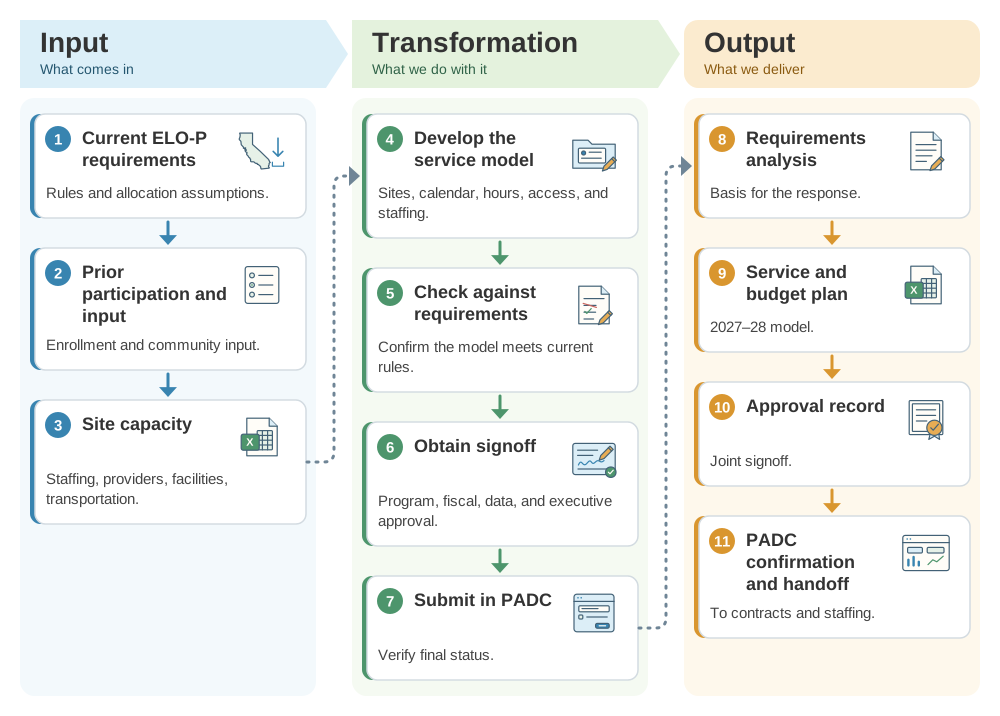
From 2027–28 capacity to a submitted ELO-P operational intent: the SDLA ITO workflow
The intent response is a forward-looking declaration that must be backed by plans, capacity, and signoff. This SDLA ITO (Input, Transformation, Output) graphic shows how current ELO-P rules, prior participation, community input, and site capacity become the requirements analysis, the approval record, and the PADC confirmation.
Operational workflow
- Review current ELO‑P rules, allocation assumptions, prior participation, community input, and site capacity.
- Develop the 2027–28 service model: sites, calendar, hours/days, access, staffing, providers, facilities, transportation, and budget.
- Obtain program, fiscal, data, and executive signoff on the exact intent response.
- Submit in PADC between March 15 and May 3 and verify final status.
- Carry the response into contracts, staffing, communications, enrollment, and later reporting.
Implementation pathway
Evidence to retain
- Requirements analysis
- Service/budget plan
- Approval record
- PADC confirmation
- Implementation handoff
Official guidance and help
- CDE ELO‑P TimelineCurrent window and reporting period
- CDE ELO‑PProgram and annual reporting guidance
- CDE PADCReporting-system context
Source review completed August 30, 2026. Verify current federal and California requirements, live reporting instructions, grant or audit year, local policy, source records, and final submitted state before acting.