



SDLA Compliance Resource
Make the Alternate-Assessment Assignment Through an Individual IEP Decision
A documented team decision based on the student’s individual characteristics—not disability label, placement, low achievement, attendance, language status, or anticipated score.
In Plain Language: The IEP team uses current, multiple sources of evidence and the state decision tool. The student must have the most significant cognitive disability and meet every participation criterion; no disability category automatically qualifies.
Why this matters
The assignment changes what standards and assessment evidence will represent the student. It must preserve high expectations and access to grade-level content while matching how the student demonstrates learning.
Joint ownership
Decision owner: full IEP team, including parent and student when appropriate. Partners: general/special educators, assessors, related services, EL staff, and assessment coordinator.
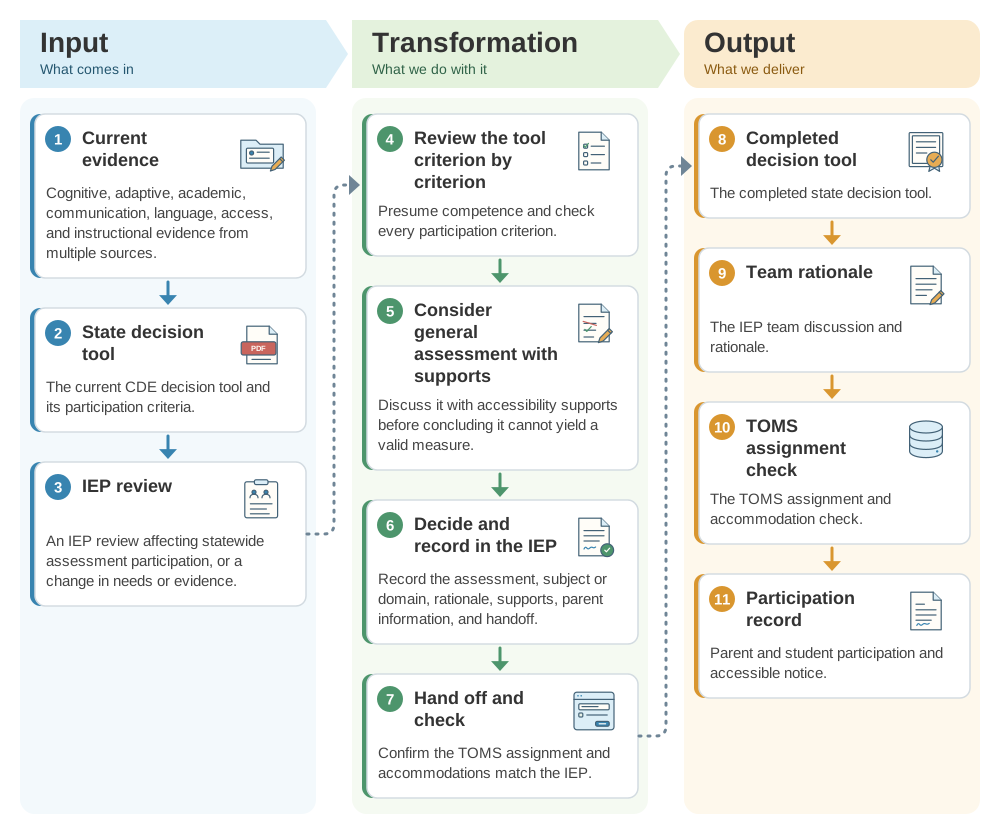
From evidence to an IEP assignment: the SDLA ITO workflow
The alternate-assessment assignment is a documented team decision based on the student's individual characteristics. This SDLA ITO (Input, Transformation, Output) graphic shows how current evidence, the state decision tool, and the IEP review become the completed decision tool, the team rationale, the TOMS assignment check, and the participation record.
Operational workflow
- Gather current cognitive, adaptive, academic, communication, language, access, and instructional evidence from multiple sources.
- Review the current CDE decision tool criterion by criterion and presume competence.
- Discuss general assessment with accessibility supports before concluding it cannot yield a valid measure.
- Record the assessment, subject/domain, rationale, supports, parent information, and implementation handoff in the IEP.
IEP decision path
Evidence to retain
- Completed state decision tool
- Current assessments and classroom evidence
- IEP team discussion and rationale
- Parent/student participation and accessible notice
- TOMS assignment and accommodation check
Official guidance and help
- CDE IEP Team GuidanceCurrent eligibility criteria and parent information
- CDE Alternate Assessment Decision ToolRequired decision support
- SDLA Annual IEP ResourceRelated operational control
Source review completed August 30, 2026. Verify current federal and California law, CDE and test-contractor manuals, local board policy, adopted instruments, individual student circumstances, and live system status before acting.