



SDLA Compliance Resource
Complete Summative Alternate ELPAC During the Statewide Window
An IEP-aligned annual assessment process for enrolled English learners with the most significant cognitive disabilities.
In Plain Language: Verify the IEP assignment and administer the alternate ELP assessment during the annual window with a trained examiner who knows the pupil’s communication and access needs.
Why this matters
Validity depends on both a lawful individualized assignment and an administration that lets the pupil communicate what they know. The alternate assessment is not a blanket disability exemption.
Primary ownership
Primary owner: ELPAC coordinator with special education administrator/case manager. Handoff partners: IEP team, examiner, CALPADS, site, assistive technology/AAC staff, parent, and EL program.
From IEP assignment to a reconciled Summative Alternate ELPAC: the SDLA ITO workflow
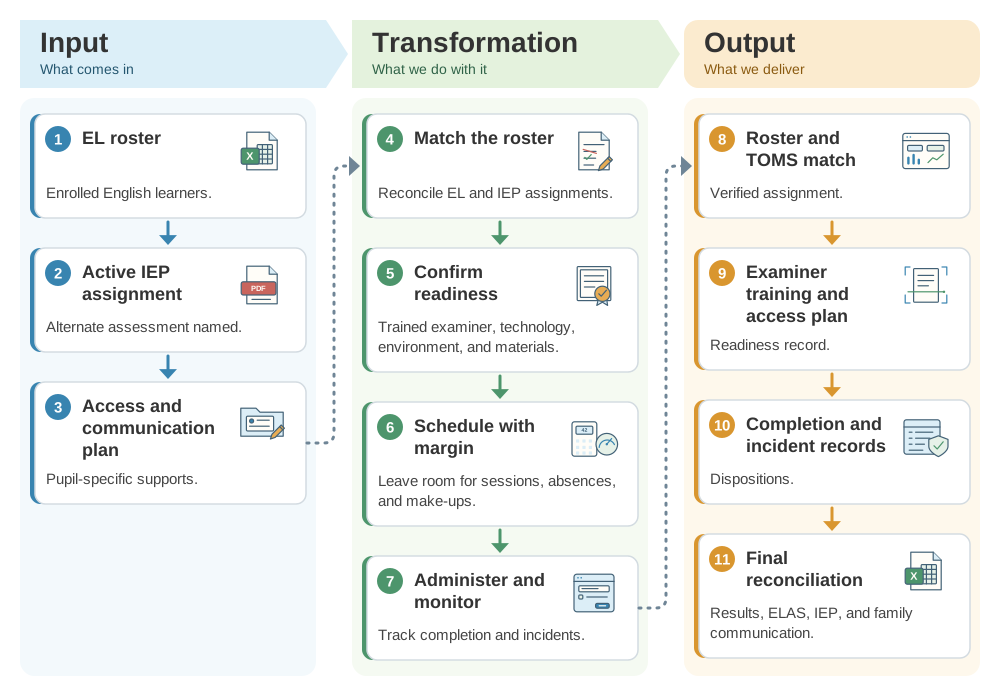
Only an active IEP assigns the alternate assessment, and a trained examiner who knows the pupil must administer it. This SDLA ITO (Input, Transformation, Output) graphic shows how the EL roster, active IEP assignments, and the access plan become the roster match, the completion and incident records, and the result handoff.
Operational workflow
- Reconcile the EL roster with active IEP alternate-assessment assignments.
- Confirm trained examiners, pupil-specific access/communication supports, technology, environment, and materials.
- Schedule early enough for multiple sessions, absences, transfers, and make-ups.
- Monitor completion and incidents; follow official disposition instructions.
- Reconcile results, ELAS, IEP/program records, and family communication before closeout.
Implementation pathway
Evidence to retain
- Active IEP assignment
- Roster and TOMS match
- Examiner training/access plan
- Completion and incident records
- Final reconciliation and result handoff
Official guidance and help
- CDE 2026 ELP Assessment Requirement LetterAnnual requirement
- CDE Alternate ELPACCurrent alternate assessment resources
- ELPAC Test AdministrationCurrent manuals and training
Source review completed August 30, 2026. Verify current federal and California requirements, CDE and ELPAC manuals, local policy, pupil records, and live CALPADS/TOMS status before acting.