



SDLA Compliance Resource
Submit 2026 Local-Indicator Results to the Dashboard
The final public-reporting control that converts completed self-reflection tools and governing-board evidence into the LEA’s Dashboard local-indicator ratings and narratives.
In Plain Language: When CDE opens the window, enter each applicable current self-reflection tool, the exact board/body presentation and LCAP-adoption date, and required narratives; independently review, submit, and preserve confirmation before the published close.
Why this matters
Missing the window or one performance-standard element produces “Standard Not Met” or, after repeated failure, “Not Met for Two or More Years,” which may affect differentiated-assistance eligibility.
Primary ownership
Primary owner: approved Dashboard Coordinator. Partners: LCAP/accountability lead, indicator data owners, superintendent/Main Authorizer, board office, data reviewer, communications, and charter leadership.
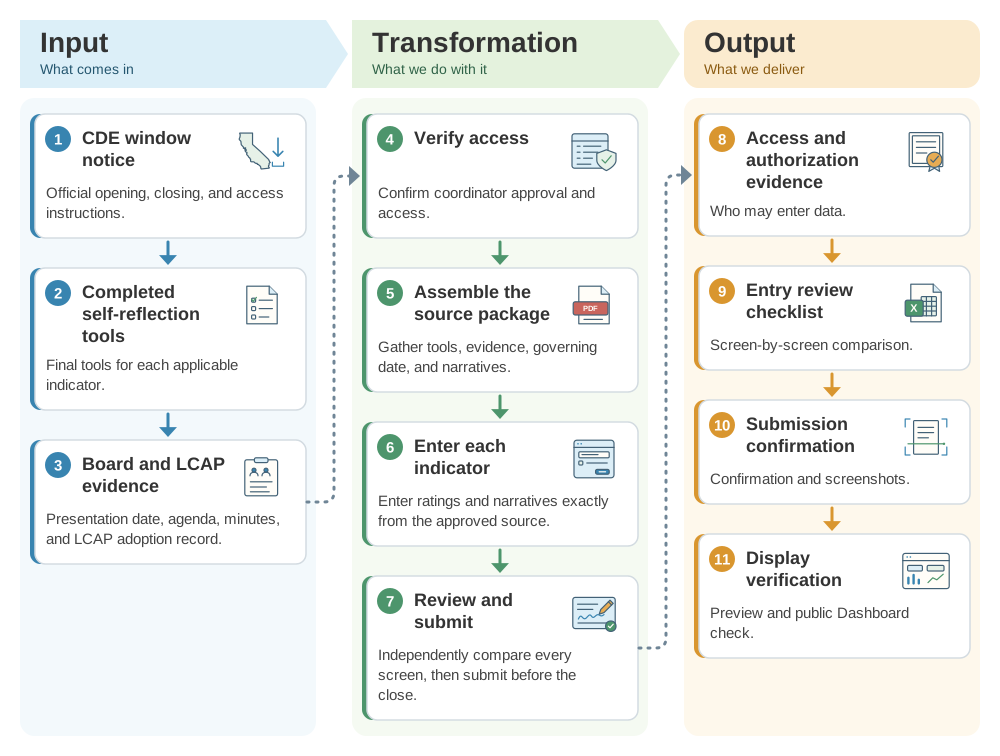
From completed tools to Dashboard local-indicator ratings: the SDLA ITO workflow
Entries come exactly from the approved source package, and a second person compares every screen before submission. This SDLA ITO (Input, Transformation, Output) graphic shows how CDE's window notice, the completed self-reflection tools, and the board and LCAP adoption evidence become the source package, the entry review checklist, and the submission and display verification.
Operational workflow
- Monitor the LCFF/CDE notice and record the official opening, closing, and access instructions.
- Verify coordinator approval and assemble final tools, evidence, governing date, agenda/minutes, and LCAP adoption record.
- Enter each applicable indicator and narrative exactly from the approved source; address charter nonapplicability only through current guidance.
- Independently compare every screen with the source package, then submit before the close.
- Save confirmation/screenshots and review the preview/public Dashboard for correct display.
Implementation pathway
Evidence to retain
- CDE window notice
- Access/authorization evidence
- Final tools and board/LCAP record
- Entry review checklist
- Submission confirmation
- Preview/public display verification
Official guidance and help
- CDE Local Indicator FAQsWindow, submission, and consequences
- CDE Local IndicatorsCurrent tools and standards
- CDE Dashboard Technical GuideReporting/display context
- myCDEconnectOfficial access system
Source review completed August 30, 2026. Verify current CDE, governing, Dashboard, school-plan, SARC, safety, instructional-materials, local-calendar, and legal instructions before acting.