



SDLA Compliance Resource
Give the Student a Useful Summary of Performance at Graduation or Age Exit
An exit document that translates assessment and IEP history into current academic achievement, functional performance, accommodations, technology, and practical recommendations for adult goals.
In Plain Language: Provide the student a summary of academic achievement and functional performance, with recommendations to help meet postsecondary goals. The document should be current and usable for college disability services, vocational rehabilitation, training, employment, independent living, and other adult supports.
Why this matters
Adult systems do not automatically receive or implement an IEP. A generic transcript or disability label does not explain effective accommodations, assistive technology, communication, mobility, executive-function, behavior, or self-advocacy needs.
Joint ownership
Owner: case manager/transition specialist. Contributors: student, parent as appropriate, teachers, assessors, related-service and AT providers, counselor, and adult-agency partners.
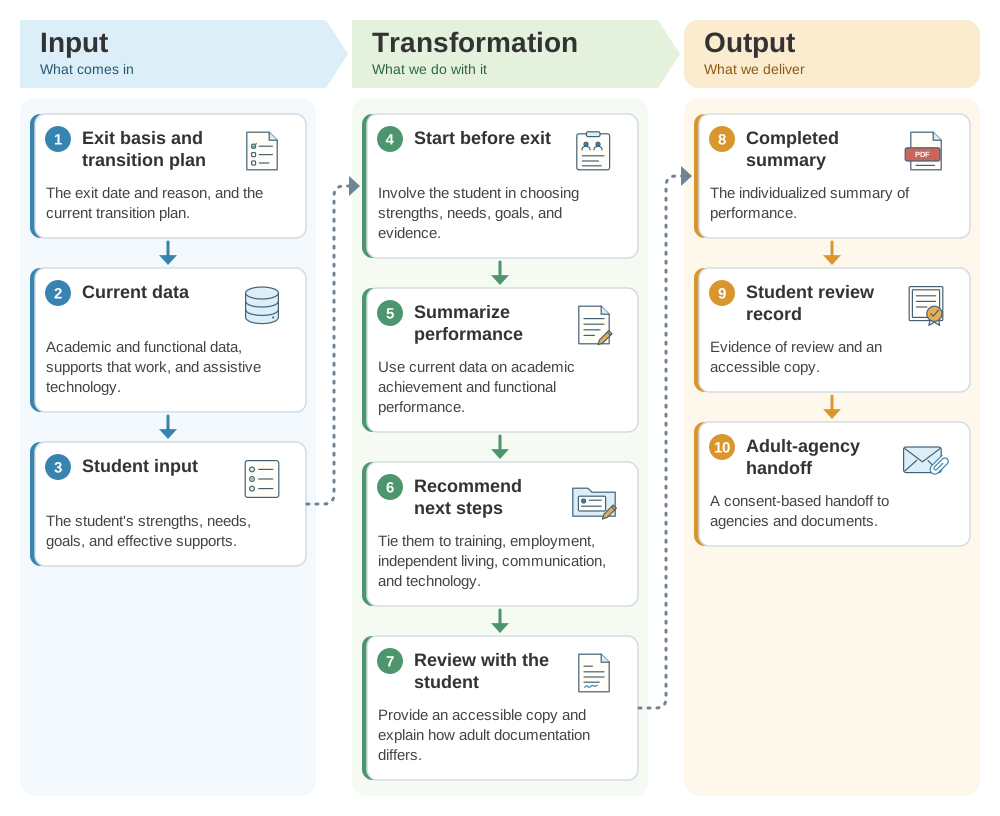
From exit eligibility to a student-ready summary of performance: the SDLA ITO workflow
The summary should be current and usable by college disability services, vocational rehabilitation, and employers. This SDLA ITO (Input, Transformation, Output) graphic shows how the exit basis, current data, and the student's own input become the individualized summary, the student review, and the adult-agency handoff.
Operational workflow
- Start before exit and involve the student in selecting current strengths, needs, goals, effective supports, AT, and relevant evidence.
- Summarize academic achievement and functional performance using current data, not a copied historical eligibility narrative.
- Make concrete recommendations tied to education/training, employment, independent living, communication, mobility, health, and technology as applicable.
- Review the summary with the student, provide an accessible copy, explain adult documentation differences, and connect agencies with consent.
Exit bridge
Evidence to retain
- Exit basis/date and transition plan
- Current data and contributor input
- Completed individualized summary
- Student review and accessible copy delivery
- Consent-based adult-agency/document handoff
Official guidance and help
- 34 CFR section 300.305(e)(3)Federal summary-of-performance requirement
- CDE Secondary Transition PlanningExit and adult-life resources
Source review completed August 30, 2026. Verify current federal and California law, court or OAH instructions, local SELPA procedures, individual circumstances, and the exact service and records state before acting.