


SDLA Compliance Resource
Build a Results-Oriented Secondary Transition Plan Into the IEP
A student-centered planning cycle that turns age-appropriate assessment into measurable postsecondary goals, coordinated services, courses of study, agency connections, and real preparation for adult life.
In Plain Language: Transition planning is not a single form at age 16. The IEP uses age-appropriate transition assessment and student preferences/interests to establish measurable adult goals and the courses, instruction, services, experiences, skills, and agency coordination needed to move toward them.
Why this matters
A goal such as “attend college” or “get a job” is not a program. Students need opportunities, instruction, accommodations, self-advocacy, credentials, work experience, and interagency handoffs before exit.
Joint ownership
Center: student. Team: parent, case manager, educators, counselor, transition specialist, CTE/work-based learning, adult agency representatives with consent, rehabilitation, college/access staff, and community partners.
From transition assessment to adult-life preparation: the SDLA ITO workflow
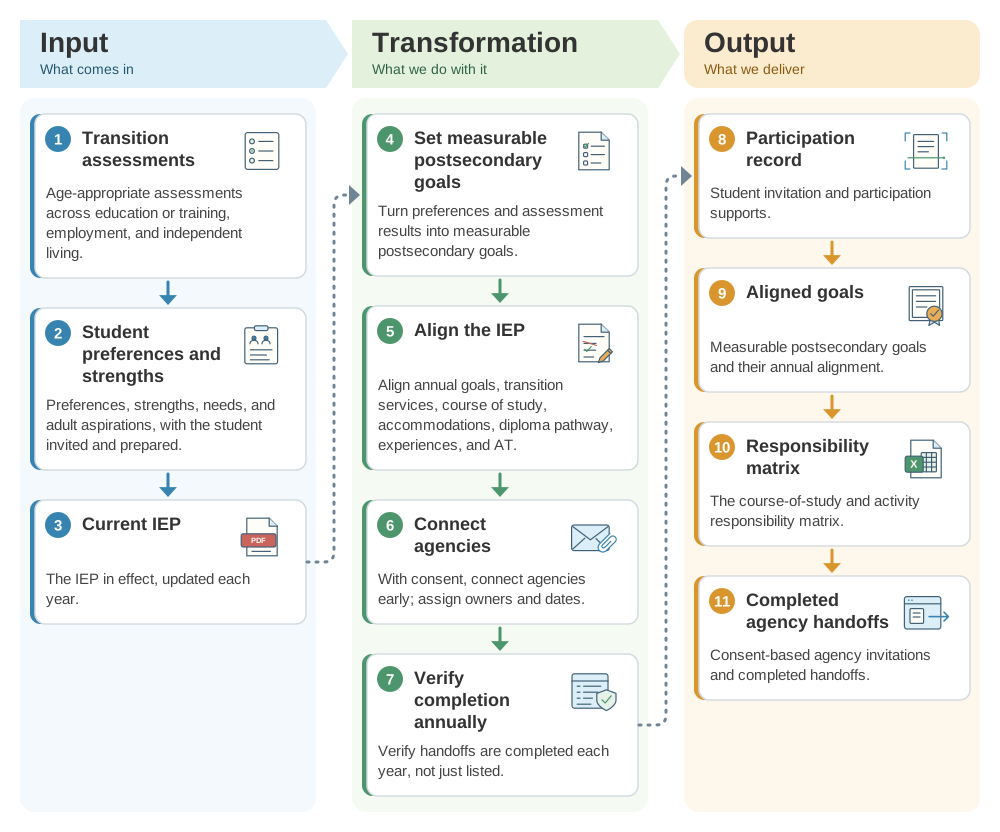
Transition planning is not a single form at age 16; the IEP builds measurable adult goals from assessment and the student's own preferences. This SDLA ITO (Input, Transformation, Output) graphic shows how transition assessments, the student's preferences and strengths, and the current IEP become the participation record, the aligned goals, the responsibility matrix, and completed agency handoffs.
Operational workflow
- Start before the compliance year: gather age-appropriate transition assessments across education/training, employment, and independent living where appropriate.
- Invite and prepare the student; translate preferences, strengths, needs, and adult aspirations into measurable postsecondary goals.
- Align annual IEP goals, transition services/activities, course of study, accommodations, diploma pathway, work/college experiences, travel/community skills, and AT.
- With consent, connect agencies early; assign owners/dates and verify completion annually—not just listing referrals.
Transition planning arc
Evidence to retain
- Student invitation and participation supports
- Age-appropriate transition assessments
- Measurable postsecondary goals and annual alignment
- Course-of-study and activity responsibility matrix
- Consent-based agency invitations and completed handoffs
Official guidance and help
- 34 CFR section 300.320(b)Federal secondary-transition content
- 34 CFR section 300.321(b)Student and agency participation
- CDE Secondary Transition PlanningCalifornia resources
Source review completed August 30, 2026. Verify current federal and California law, court or OAH instructions, local SELPA procedures, individual circumstances, and the exact service and records state before acting.