



SDLA Compliance Resource
Provide Parent Access and Complete Copies of Special Education Records Within Five Business Days
A fast records-response workflow for verifying educational rights, searching every system, protecting third-party information, providing interpretation, and meeting upcoming IEP or hearing needs.
In Plain Language: Log an oral or written request and provide access and complete copies within five business days. Search beyond the IEP platform: assessments, service logs, progress data, emails maintained as records, behavior documents, provider files, recordings, discipline, health, transportation, and vendor systems may be responsive.
Why this matters
Records access supports informed participation. A partial export or delayed production can make an upcoming IEP or hearing unfair.
Joint ownership
Coordinator: special education records custodian. Search owners: case manager, assessors, providers, schools, district departments, IT/e-discovery, and vendors as applicable.
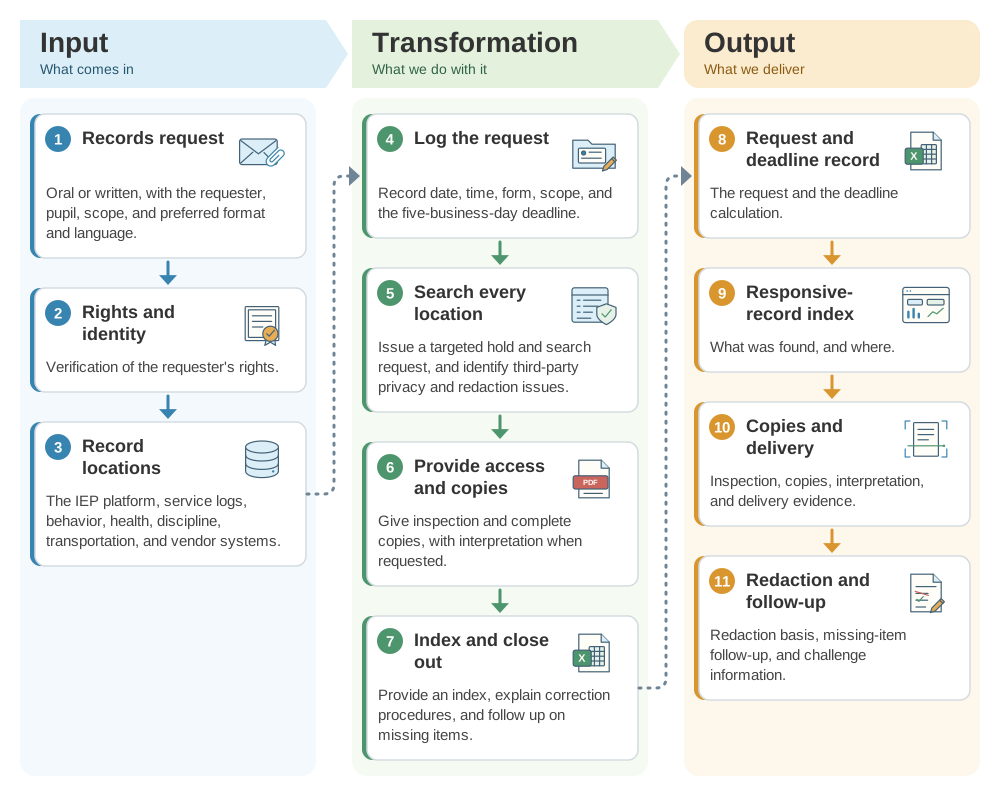
From a records request to complete copies in five business days: the SDLA ITO workflow
A records request reaches beyond the IEP platform, so a documented search of every system is the control. This SDLA ITO (Input, Transformation, Output) graphic shows how the oral or written request, the requester's rights, and every record location become the request log, the search index, and the copies with delivery evidence.
Operational workflow
- Log date/time, oral or written form, requester, pupil, scope, preferred format/language, and five-business-day deadline.
- Issue a targeted hold/search request to every record location and identify third-party privacy/redaction issues lawfully.
- Provide inspection and complete copies, with explanation/interpretation when requested and accessible delivery.
- Give an index, preserve what was supplied, explain correction/challenge procedures, and close missing-item follow-up.
Search map
Evidence to retain
- Request and deadline calculation
- Rights/identity verification
- Search-location and responsive-record index
- Copies/inspection, interpretation, and delivery
- Redaction basis, missing-item follow-up, and challenge information
Official guidance and help
- Education Code section 56504Special education records access
- Education Code section 56043(n)Five-day state timeline summary
- U.S. ED FERPA ResourcesFederal education-record protections
Source review completed August 30, 2026. Verify current federal and California law, court or OAH instructions, local SELPA procedures, individual circumstances, and the exact service and records state before acting.