


SDLA Compliance Resource
Provide the Full Procedural Safeguards Notice at Every Required Event
A trigger-based distribution control for supplying a current, understandable rights notice and practical assistance without mistaking delivery for comprehension or consent.
In Plain Language: Give the parent the complete current safeguards notice at the required events, in an understandable language and accessible format. Explain where to ask questions and how to use the rights; do not hide the notice in a portal or substitute a summary for the full notice.
Why this matters
The notice covers evaluation, records, consent, IEE, complaints, due process, stay put, discipline, private placement, attorneys' fees, and other protections. Timing matters because families need it when decisions arise.
Joint ownership
Owner: special education compliance/case staff. Partners: assessment intake, discipline, complaint/due-process staff, records, language/access services, and parent support contacts.
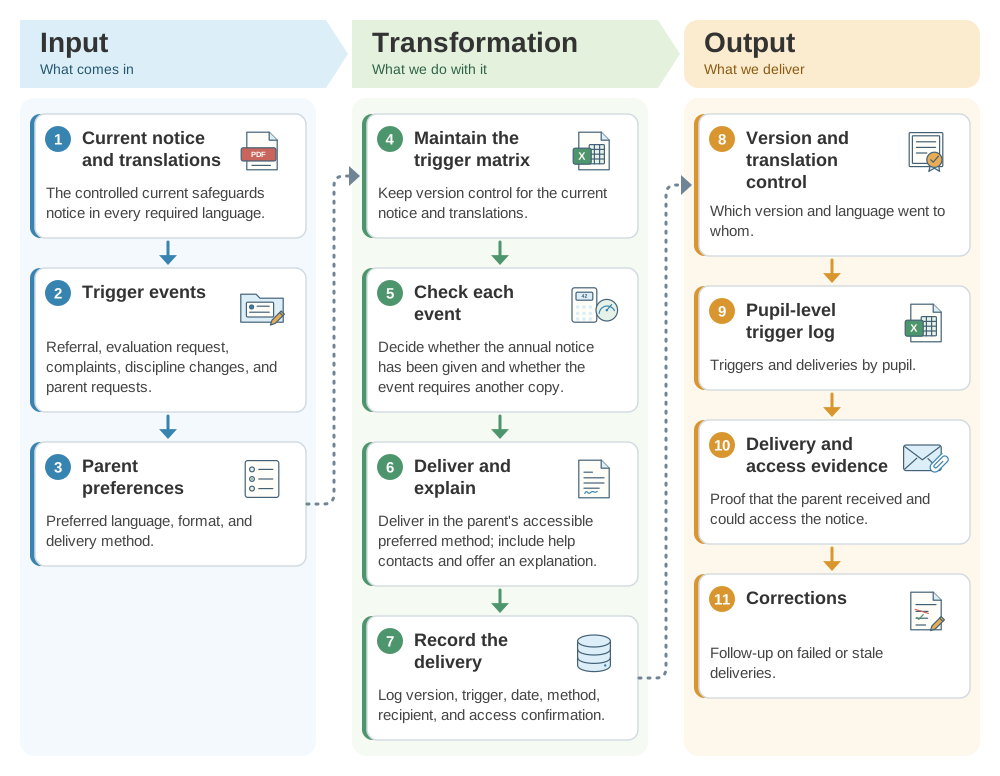
From a notice trigger to the full safeguards notice delivered: the SDLA ITO workflow
Delivery of the full notice is tied to specific events, and delivery alone does not prove understanding. This SDLA ITO (Input, Transformation, Output) graphic shows how the current notice versions, the pupil's trigger events, and the parent's access preferences become the version control record, the trigger log, and delivery and access evidence.
Operational workflow
- Maintain a trigger matrix and current controlled safeguards versions/translations.
- At each event, verify whether the annual notice has already been provided and whether the event independently requires another copy.
- Deliver through the parent's accessible preferred method and language; include help contacts and offer explanation.
- Record version, trigger, date, method, recipient, access confirmation, and follow-up.
Federal trigger map
Evidence to retain
- Current version/translation control
- Pupil-level trigger log
- Delivery and access evidence
- Interpreter/explanation support
- Correction of failed or stale delivery
Official guidance and help
- 34 CFR section 300.504Federal safeguards notice triggers
- CDE Procedural SafeguardsCurrent California model notice
- Education Code section 56321California assessment-plan safeguards delivery
Source review completed August 30, 2026. Verify current federal and California law, court or OAH instructions, local SELPA procedures, individual circumstances, and the exact service and records state before acting.