


SDLA Compliance Resource
Issue Complete Prior Written Notice Before Proposing or Refusing an IDEA Action
A decision-explanation control that tells the parent what the LEA proposes or refuses, why, what evidence it used, which alternatives it rejected, and how safeguards apply.
In Plain Language: PWN is the LEA's understandable explanation of a decision—not merely the IEP itself or a checked box. It identifies the action, reasons, records/evaluations relied on, other options considered and rejected, relevant factors, safeguards, and sources of help.
Why this matters
Parents can participate and challenge decisions only when they can see what was decided and the basis for it.
Joint ownership
Decision owner: authorized LEA representative/IEP team as applicable. Writer: case manager or administrator who understands the decision. Reviewers: relevant assessors/providers and language/access staff.
From a proposal or refusal to a delivered notice: the SDLA ITO workflow
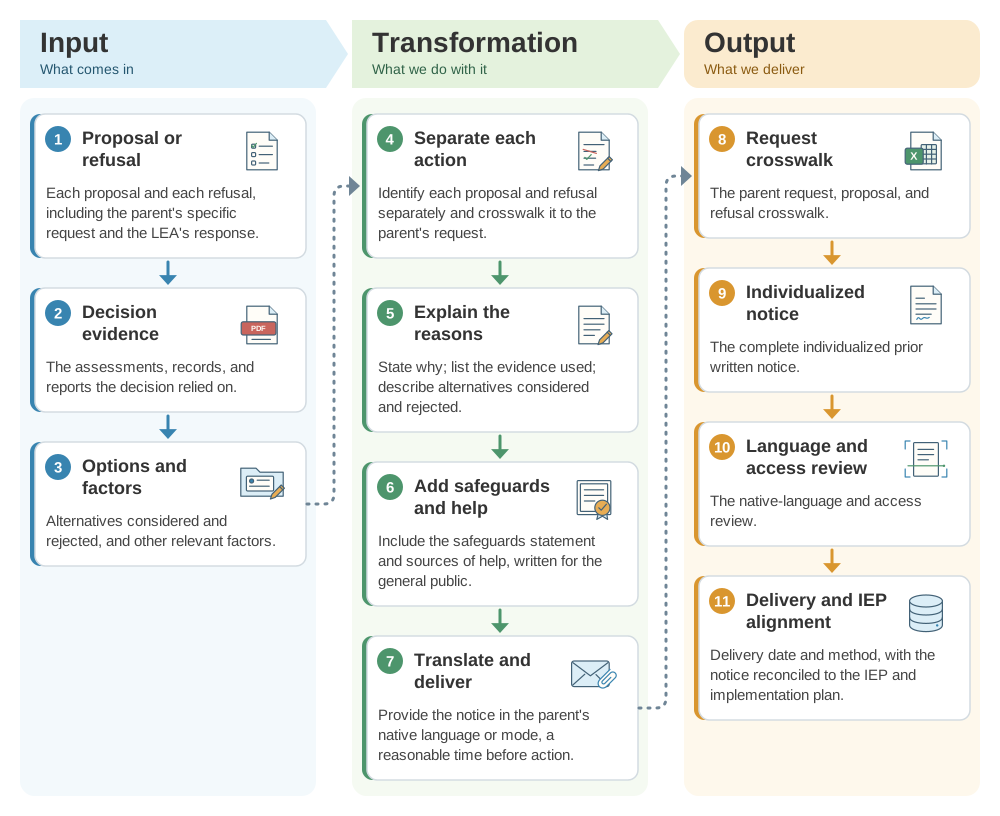
Prior written notice is the LEA's understandable explanation of a decision, not merely the IEP itself or a checked box. This SDLA ITO (Input, Transformation, Output) graphic shows how each proposal or refusal, the evidence the decision relied on, and the options considered become the request crosswalk, the individualized notice, the language and access review, and the delivery record.
Operational workflow
- Identify each proposal and refusal separately, including the parent's specific request and the LEA's response.
- State why, list the assessments/records/reports used, describe alternatives considered and rejected, and identify other relevant factors.
- Include safeguards statement and assistance sources; write for the general public and translate/provide in the parent's native language or mode unless clearly infeasible.
- Deliver a reasonable time before action, preserve proof, and reconcile the notice with the IEP and implementation plan.
Seven questions PWN should answer
Evidence to retain
- Parent request/proposal/refusal crosswalk
- Decision evidence and alternatives record
- Complete individualized PWN
- Native-language/access review
- Delivery date/method and IEP alignment
Official guidance and help
- 34 CFR section 300.503Federal PWN content and language
- CDE Procedural SafeguardsParent-facing PWN explanation
Source review completed August 30, 2026. Verify current federal and California law, court or OAH instructions, local SELPA procedures, individual circumstances, and the exact service and records state before acting.