


SDLA Compliance Resource
Provide Special Education Notices, Assessment, and Participation in an Understandable Language
A meaningful-access system for identifying the parent's communication needs, translating required documents, arranging qualified interpretation, using appropriate assessment language, and confirming understanding.
In Plain Language: Special education information must be understandable. Required notices are provided in the parent's native language or other mode unless clearly not feasible; meetings require interpretation when needed; assessments must be selected and administered to measure disability-related needs rather than limited English proficiency.
Why this matters
A translated form without a qualified interpreter, or an interpreter without translated decisions and consent materials, can still prevent informed participation.
Joint ownership
Coordinator: case manager. Language owner: qualified interpretation/translation service. Partners: parent, assessors, multilingual specialists, IEP facilitator, records, and accessibility staff.
From language needs to meaningful participation: the SDLA ITO workflow
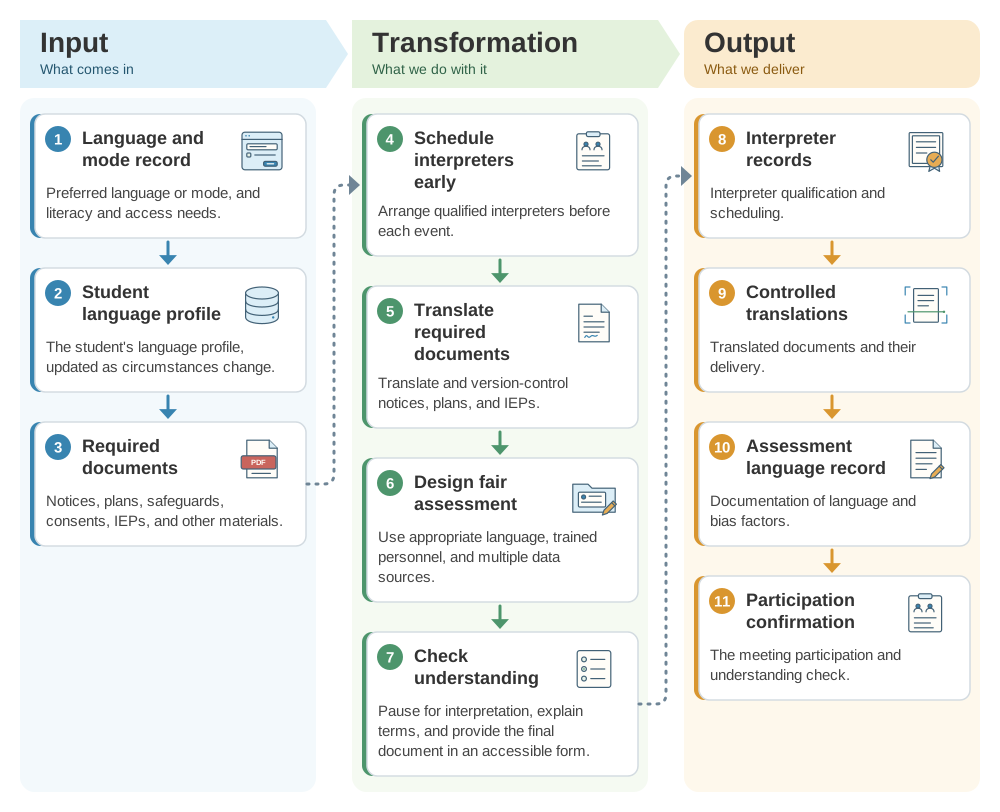
Meaningful participation means notices, interpretation, and assessments all work in the language the family uses. This SDLA ITO (Input, Transformation, Output) graphic shows how the language and access records, required documents, and interpreter resources become the language record, the controlled translations, the assessment documentation, and the participation check.
Operational workflow
- Record the parent's preferred language/mode, literacy/access needs, and the student's language profile; update when circumstances change.
- Schedule qualified interpreters early and translate notices, plans, safeguards, consent documents, IEPs, and other required materials as applicable.
- Design nondiscriminatory assessment using appropriate language, trained personnel, multiple data sources, and documentation of linguistic factors.
- During meetings, pause for interpretation, explain technical terms, verify understanding, and provide the final document in an accessible form.
- Audit interpreter quality, translated-version control, delivery, and parent participation.
Meaningful participation requires all four
Evidence to retain
- Language/mode and access-preference record
- Interpreter qualification/scheduling
- Controlled translations and delivery
- Assessment language/bias documentation
- Meeting participation and understanding check
Official guidance and help
- 34 CFR section 300.503(c)Native-language prior written notice
- 34 CFR section 300.304Nondiscriminatory evaluation
- CDE ELs with Disabilities GuideCalifornia language and assessment guidance
Source review completed August 30, 2026. Verify current federal and California law, court or OAH instructions, local SELPA procedures, individual circumstances, and the exact service and records state before acting.