



SDLA Compliance Resource
Provide Comparable Services Immediately After a California Transfer
A same-year transfer handoff for immediate FAPE, consultation with the parent, comparable services, records retrieval, AT continuity, and adoption or replacement of the prior IEP within the applicable 30-day period.
In Plain Language: The receiving LEA does not wait for a full file or a new IEP meeting to begin support. In consultation with the parent, it provides services comparable to the prior IEP while obtaining records and completing the correct same-SELPA or outside-SELPA process.
Why this matters
The first days after transfer are when transportation, related services, behavior supports, communication systems, medication plans, and accessible curriculum are most likely to fail.
Joint ownership
Receiving owner: enrollment and special education administrator/case manager. Sending owner: prior LEA records/case team. Partners: parent, SELPAs, service providers, transportation, AT/IT, health, and CALPADS staff.
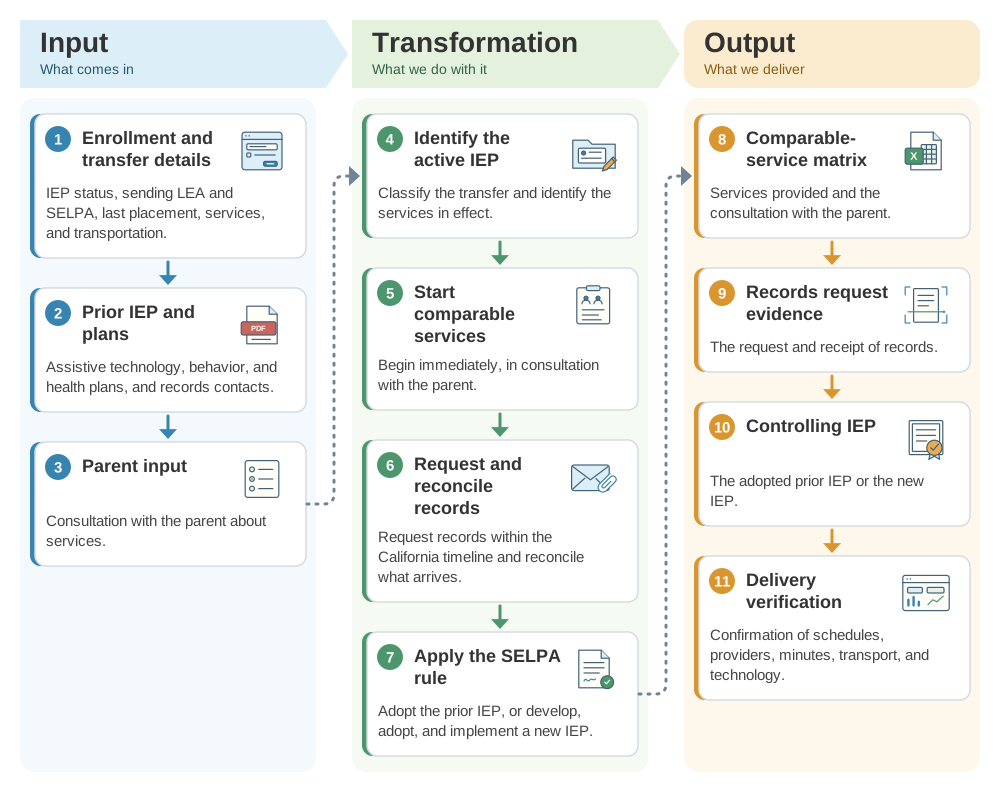
From enrollment to comparable services after a transfer: the SDLA ITO workflow
A transferring student does not wait for a full file or a new IEP meeting to receive support. This SDLA ITO (Input, Transformation, Output) graphic shows how the enrollment information, the prior IEP, and the sending LEA's records become the comparable-service record, the controlling IEP, and verified delivery.
Operational workflow
- At enrollment, identify IEP status, sending LEA/SELPA, last placement, services, transportation, AT, behavior/health plans, and records contacts.
- Consult the parent and begin comparable services immediately; document any temporary logistics and how they preserve access.
- Request records within the California timeline and reconcile the received IEP, assessment, service, and device information.
- Apply the same-SELPA or outside-SELPA rule; where applicable, adopt the prior IEP or develop/adopt/implement a new IEP within 30 days.
- Verify schedules, providers, minutes, transport, AT, CALPADS plan data, and parent communication.
Transfer pathway
Evidence to retain
- Enrollment and transfer classification
- Parent consultation and comparable-service matrix
- Five-day records request/receipt evidence
- AT/transport/health/behavior handoff
- IEP adoption/new IEP and implementation verification
Official guidance and help
- Education Code section 56325California transfer services and records
- CDE CALPADS Special Education FAQsTransfer plan and reporting guidance
- Education Code section 56040.3AT continuity
Source review completed August 30, 2026. Verify current federal and California law, court or OAH instructions, local SELPA procedures, individual circumstances, and the exact service and records state before acting.