



SDLA Compliance Resource
Implement Agreed IEP Services and Make the Program Accessible to Responsible Staff
A post-meeting launch and monitoring system that converts the IEP into schedules, assignments, accommodations, materials, transportation, technology, data collection, and actual service delivery.
In Plain Language: Every teacher and provider responsible for implementation must have access to the IEP and know their specific duties. The LEA must arrange staff, schedule, setting, transportation, materials, AT, accommodations, and progress monitoring so the written offer becomes the student's daily program.
Why this matters
An accurate IEP does not provide FAPE by itself. Missed minutes, inaccessible accommodations, vacant positions, or untrained staff are implementation failures that require prompt correction and team review.
Joint ownership
Accountable owner: LEA special education administrator. Coordinator: case manager. Implementers: general/special educators, related-service providers, paraprofessionals, transportation, assessment, technology, behavior, and extracurricular staff as specified.
From a written IEP to daily service: the SDLA ITO workflow
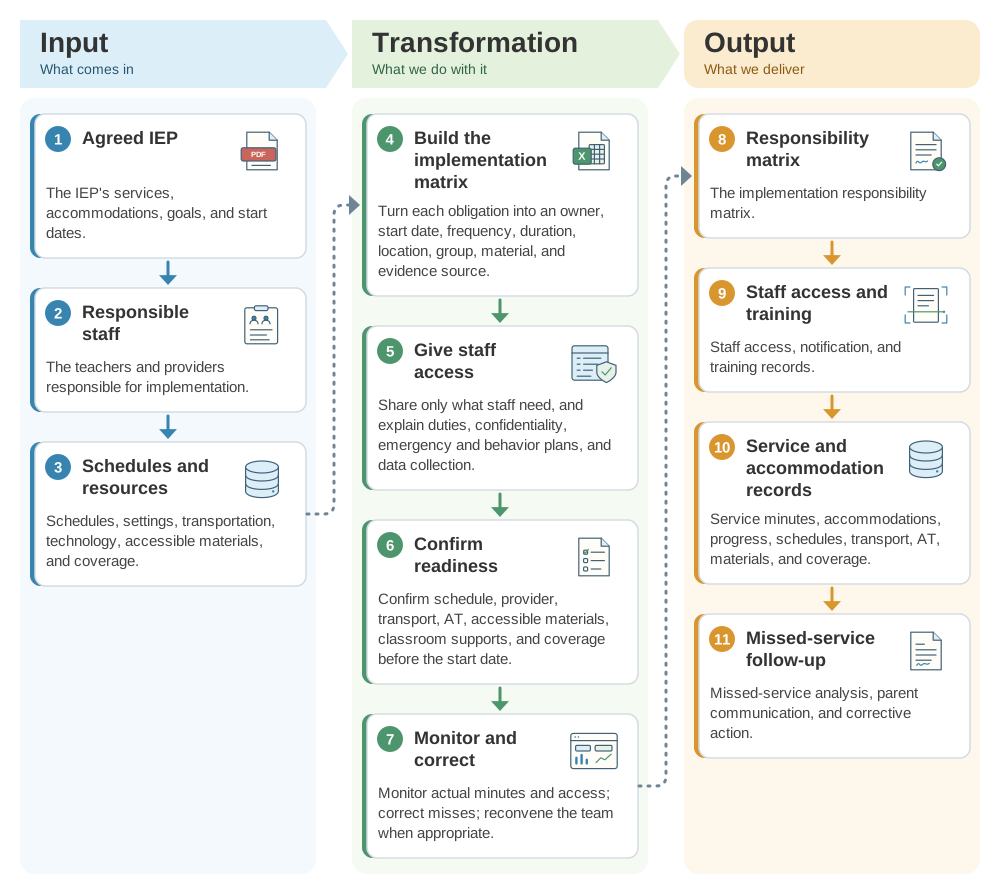
Every teacher and provider responsible for implementation must have access to the IEP and know their specific duties. This SDLA ITO (Input, Transformation, Output) graphic shows how the agreed IEP, the responsible staff, and the schedules and resources become the responsibility matrix, staff access and training records, service records, and missed-service follow-up.
Operational workflow
- Translate each IEP obligation into an implementation matrix: owner, start date, frequency, duration, location, group, accommodation, material, and evidence source.
- Give responsible staff access only to what they need and explain their duties, confidentiality, emergency/behavior plans, and data collection.
- Confirm schedule, provider, transport, AT, accessible materials, classroom supports, and substitute coverage before the start date.
- Monitor actual minutes and access; correct misses promptly, assess compensatory need, inform the parent, and reconvene the team when appropriate.
From document to daily service
Evidence to retain
- Implementation responsibility matrix
- Staff access/notification and training
- Schedules, transport, AT, materials, and coverage
- Service-minute/accommodation/progress records
- Missed-service analysis, parent communication, and corrective action
Official guidance and help
- 34 CFR section 300.323IEP accessibility and implementation
- CDE IEP Implementation Data CollectionCalifornia service-minute implementation framework
- Education Code section 56346Consent and implementation provisions
Source review completed August 30, 2026. Verify current federal and California law, court or OAH instructions, local SELPA procedures, individual circumstances, and the exact service and records state before acting.