



SDLA Compliance Resource
Ensure an Eligible Part C Child Has an IEP Implemented by the Third Birthday
A shared Early Start-to-preschool countdown that coordinates referral, records, transition conference, consent, assessment, eligibility, IEP development, placement, and actual service start.
In Plain Language: The third birthday is a service boundary, not a planning start date. Part C, the LEA, and the family must coordinate early enough to complete referral, consent, assessment, eligibility, IEP, placement, and service arrangements without a gap.
Why this matters
A timely meeting without an available classroom, provider, transportation, device, or consented plan does not produce a timely transition.
Joint ownership
Sending partner: Part C service coordinator/regional center. Receiving owner: LEA child-find/early-childhood special education lead. Team: family, assessors, providers, program/transportation staff, and receiving teacher.
From Part C notification to the first service: the SDLA ITO workflow
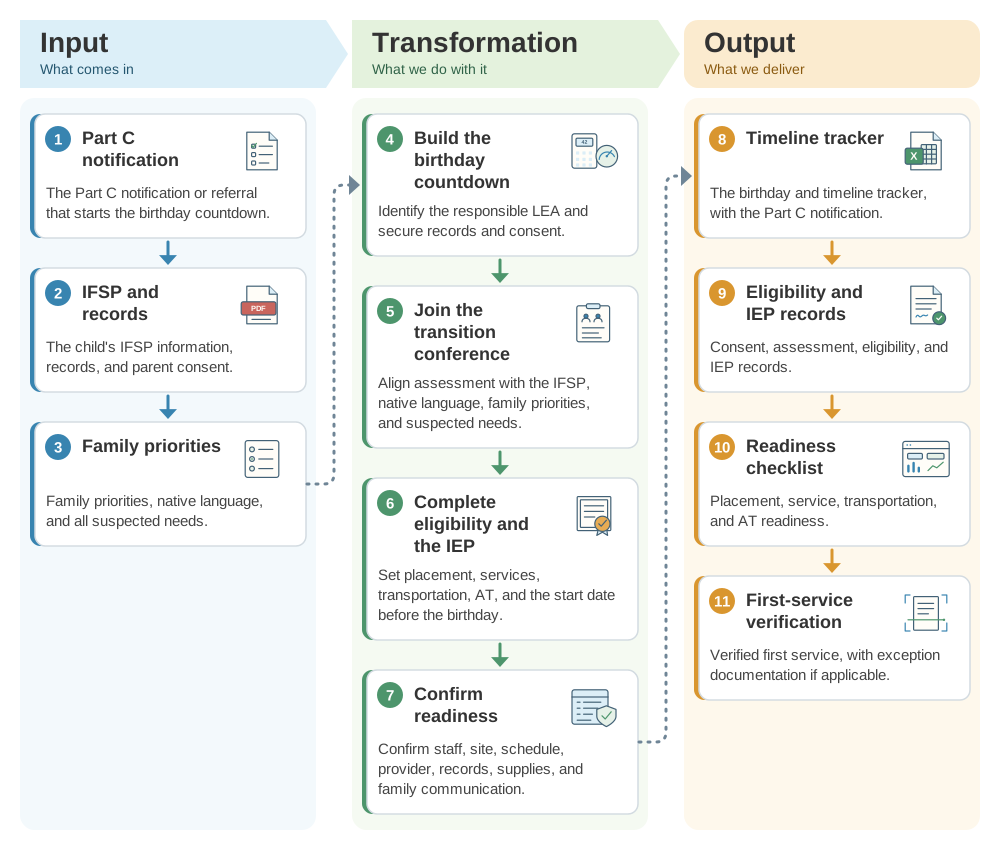
The third birthday is a service boundary, not a planning start date. This SDLA ITO (Input, Transformation, Output) graphic shows how the Part C notification, the child's IFSP and records, and family priorities become the timeline tracker, the eligibility and IEP records, the readiness checklist, and first-service verification.
Operational workflow
- Build a birthday countdown from Part C notification/referral; identify the responsible LEA and secure records/consent.
- Participate in the transition conference and align assessment with the child's IFSP information, native language, family priorities, and all suspected needs.
- Complete eligibility and develop the IEP with placement, services, transportation, AT, and start date before the birthday.
- Confirm staff, site, schedule, provider, records, supplies, and family communication; verify actual first service.
Age-three countdown
Evidence to retain
- Birthday/timeline tracker and Part C notification
- Transition conference and family participation
- Consent, assessment, eligibility, and IEP records
- Placement/service/transport/AT readiness checklist
- First-service verification and exception documentation if applicable
Official guidance and help
- 34 CFR section 300.124Federal Part C-to-B transition duty
- 34 CFR section 300.101FAPE by age three and summer-birthday rule
- CDE Inclusive Early Education ResourcesCalifornia age-three transition resources
Source review completed August 30, 2026. Verify current federal and California law, court or OAH instructions, local SELPA procedures, individual circumstances, and the exact service and records state before acting.