



SDLA Compliance Resource
Preserve Access to Required Assistive Technology When a Student Changes LEAs
A device-and-service handoff that keeps communication, curriculum, mobility, sensory access, and independence available while ownership and replacement arrangements are resolved.
In Plain Language: The receiving and sending LEAs must prevent the transfer from taking away a device the student needs. Continued access may involve transferring the existing device, a comparable temporary device, licenses, settings, accessories, training, repair information, and assistive-technology services.
Why this matters
For some students, technology is how they communicate, read, write, hear, see, move, regulate access, or participate. A missing charger, license, vocabulary file, mounting system, or trained adult can make the device functionally unavailable.
Joint ownership
Sending owner: case manager/AT lead and property custodian. Receiving owner: special education administrator/AT lead. Partners: student, parent, teachers, SLP, OT/PT, vision/hearing specialists, IT, vendor, and transportation.
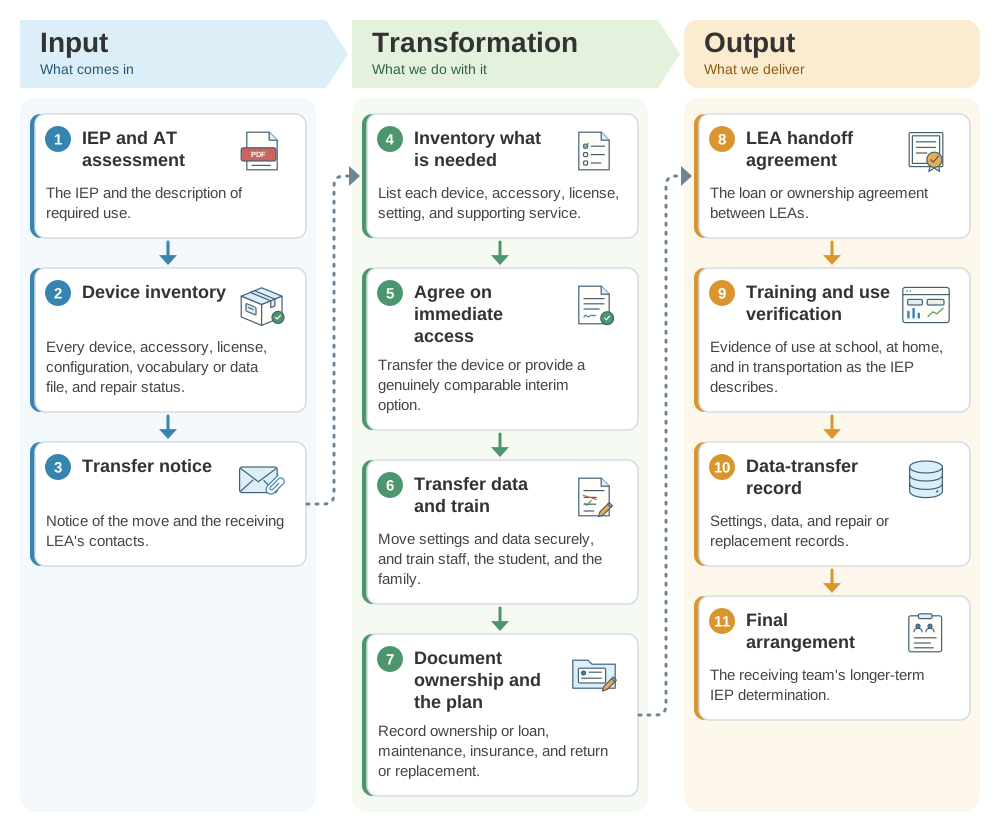
From a transfer notice to continued assistive technology: the SDLA ITO workflow
A device the student needs should not disappear when the student changes LEAs. This SDLA ITO (Input, Transformation, Output) graphic shows how the IEP and device records, and the sending and receiving staff become the inventory, the handoff agreement, the functional-use verification, and the final arrangement.
Operational workflow
- At transfer notice, inventory every required device, accessory, license, configuration, vocabulary/data file, repair status, and supporting service.
- Sending and receiving staff agree on immediate access: transfer the device or provide a genuinely comparable interim option.
- Securely transfer settings/data and train receiving staff, student, and family; verify classroom, home, transportation, and activity use described by the IEP.
- Document ownership/loan, maintenance, insurance, return/replacement, and the receiving team's longer-term IEP determination.
Continuity chain
Evidence to retain
- IEP/AT assessment and required-use description
- Device/accessory/license inventory
- LEA handoff and loan/ownership agreement
- Training and functional-use verification
- Repair, replacement, data-transfer, and final arrangement record
Official guidance and help
- Education Code section 56040.3California AT continuity requirement
- IDEA Assistive Technology Device DefinitionFederal definition
- IDEA Assistive Technology Service DefinitionSelection, acquisition, training, and support
Source review completed August 30, 2026. Verify current federal and California law, court or OAH instructions, local SELPA procedures, individual circumstances, and the exact service and records state before acting.