



SDLA Compliance Resource
Preserve the Parent's Decision Period and Obtain Informed Written Assessment Consent
A consent control that separates receiving an assessment plan, understanding it, agreeing to specified evaluation activities, and starting the 60-day evaluation clock.
In Plain Language: The parent must receive an understandable plan and have at least 15 calendar days to consider it. The parent's informed written consent authorizes the listed assessment; it does not authorize initial special education services or mean agreement with a future eligibility or IEP decision.
Why this matters
Consent is meaningful only when the parent understands what will be assessed, by whom and how, can ask questions, and can accept or challenge the proposal without pressure.
Joint ownership
Owner: assessment coordinator/case manager. Partners: assessors, parent, interpreter/translator, records staff, and administrator responsible for timeline control.
From assessment plan to written consent: the SDLA ITO workflow
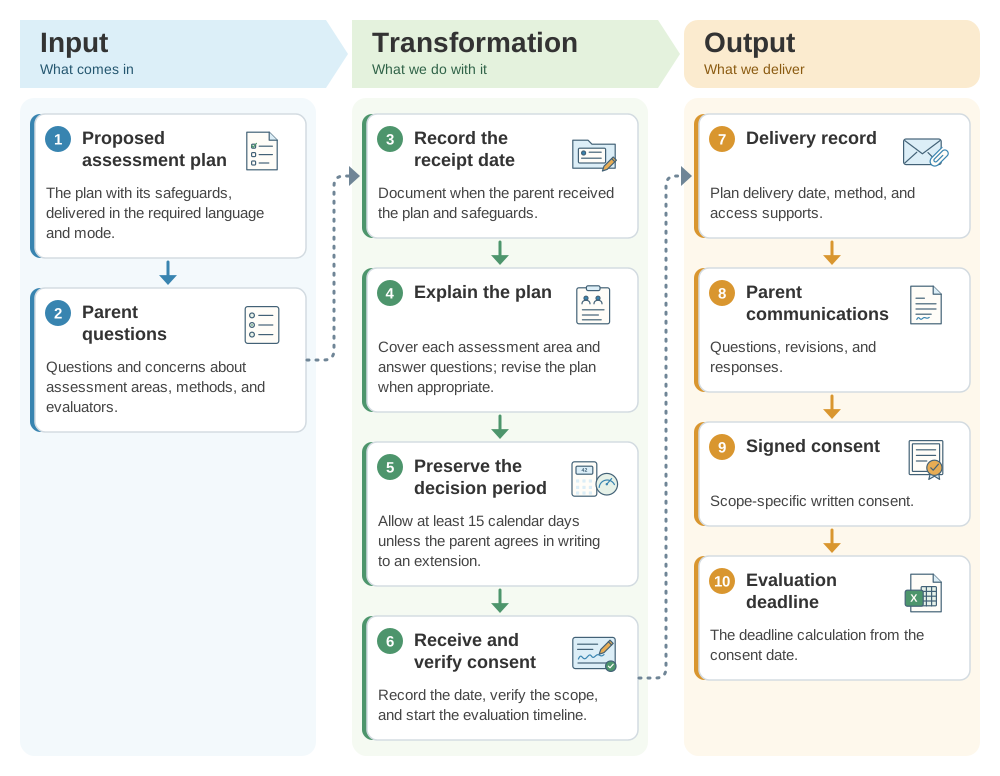
Consent starts the evaluation clock only after the parent has had a real decision period. This SDLA ITO (Input, Transformation, Output) graphic shows how the proposed assessment plan, the parent's questions, and language access needs become the delivery record, the signed scope-specific consent, and the evaluation deadline.
Operational workflow
- Document the date the parent received the plan and safeguards in the required language/mode.
- Explain each assessment area, method, records review, evaluator role, and parent options; answer questions and revise the plan when appropriate.
- Preserve at least 15 calendar days for decision unless the parent voluntarily agrees in writing to an extension; do not predate or pressure.
- When signed consent is received, record the date, verify scope, and start the applicable evaluation/IEP timeline.
Consent sequence
Evidence to retain
- Plan and safeguards delivery date/method
- Native-language/access supports
- Questions, revisions, and parent communications
- Signed scope-specific consent
- Consent date and evaluation deadline calculation
Official guidance and help
- Education Code section 56321Assessment plan and decision period
- 34 CFR section 300.300Federal parental-consent requirements
- CDE Procedural SafeguardsParent-facing assessment and consent explanation
Source review completed August 30, 2026. Verify current federal and California law, court or OAH instructions, local SELPA procedures, individual circumstances, and the exact service and records state before acting.