


SDLA Compliance Resource
Plan Around Scheduled CAASPP and ELPAC System Downtime
A continuity control for pausing dependent testing, scoring, reporting, and configuration work and verifying restoration before resumption.
In Plain Language: Treat scheduled downtime as system-specific. Check the live schedule, identify which workflows depend on each affected system, finish or pause work safely, and verify restoration before resuming.
Why this matters
A calendar label can conceal different start times and affected tools. Scheduling testing, hand scoring, uploads, or deadlines against stale downtime information creates avoidable disruption.
Primary ownership
Primary owner: LEA assessment coordinator with technology lead. Partners: sites, test administrators/examiners, curriculum, EL and special education, communications, and help desk.
From the downtime schedule to a verified restart: the SDLA ITO workflow
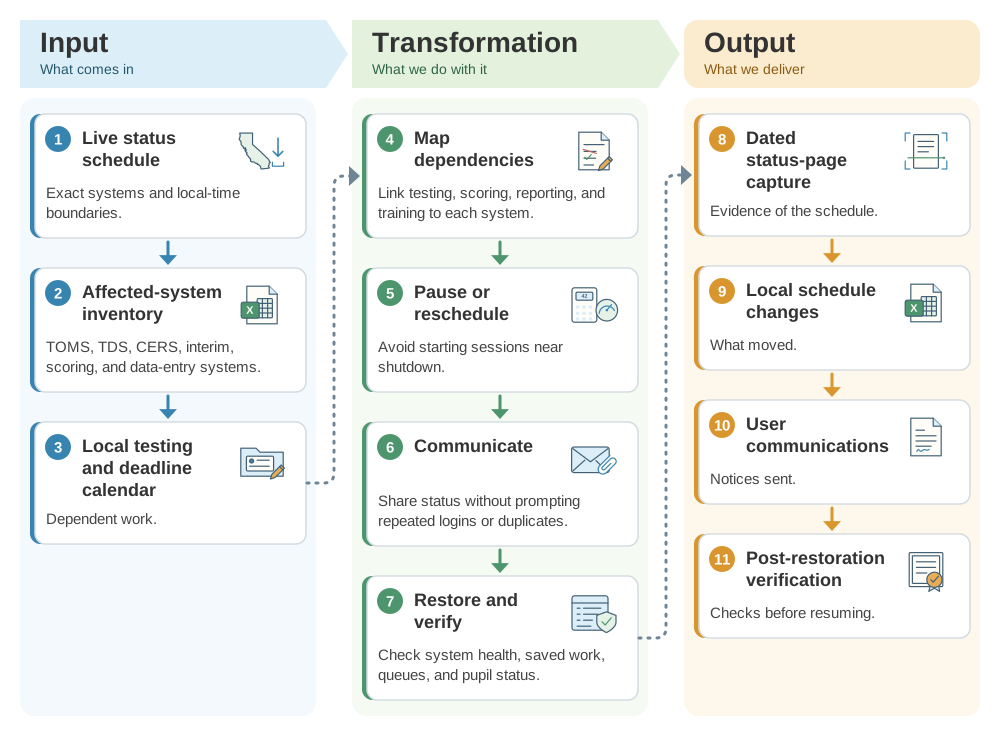
Downtime is system-specific: map what depends on each affected system, then check health before resuming. This SDLA ITO (Input, Transformation, Output) graphic shows how the live status page, the affected systems, and local schedules and deadlines become the status capture and system inventory, the schedule changes and communications, and the post-restoration verification.
Operational workflow
- Review the live schedule and record exact affected systems and local-time boundaries.
- Map testing, scoring, reporting, training, and deadline dependencies.
- Move work or establish a safe pause/communication plan; avoid starting sessions near shutdown.
- During downtime, communicate status without encouraging repeated logins or duplicate submissions.
- After restoration, verify system health, saved work, queues, and pupil status before resuming.
Implementation pathway
Evidence to retain
- Dated status-page capture
- Affected-system inventory
- Local schedule changes
- User communications
- Post-restoration verification
Official guidance and help
- System Downtime ScheduleLive controlling schedule
- CAASPP & ELPAC HomeCurrent announcements and systems
- TOMS ResourcesSystem guidance
Source review completed August 30, 2026. Verify current California requirements, CAASPP and ELPAC manuals, live system status, local policy, pupil records, and final system state before acting.