



SDLA Compliance Resource
Contain and Report a CAASPP Testing Incident Through STAIRS
A rapid incident workflow that protects pupils and secure content, preserves facts, reports within the required period, and implements only the authorized appeal or disposition.
In Plain Language: Stop the immediate problem, secure materials and sessions, notify the coordinator, document facts without circulating secure content, submit STAIRS promptly, and follow the resulting appeal/disposition.
Why this matters
Delay can prevent correction, expose content, or leave a pupil in the wrong test state. Improvised resets, retests, or invalidations can compound the incident.
Primary ownership
Primary owner: LEA CAASPP coordinator; site coordinator reports immediately. Partners: test administrator/examiner, technology, principal, privacy/security, CALPADS/special education when relevant, and contractor support.
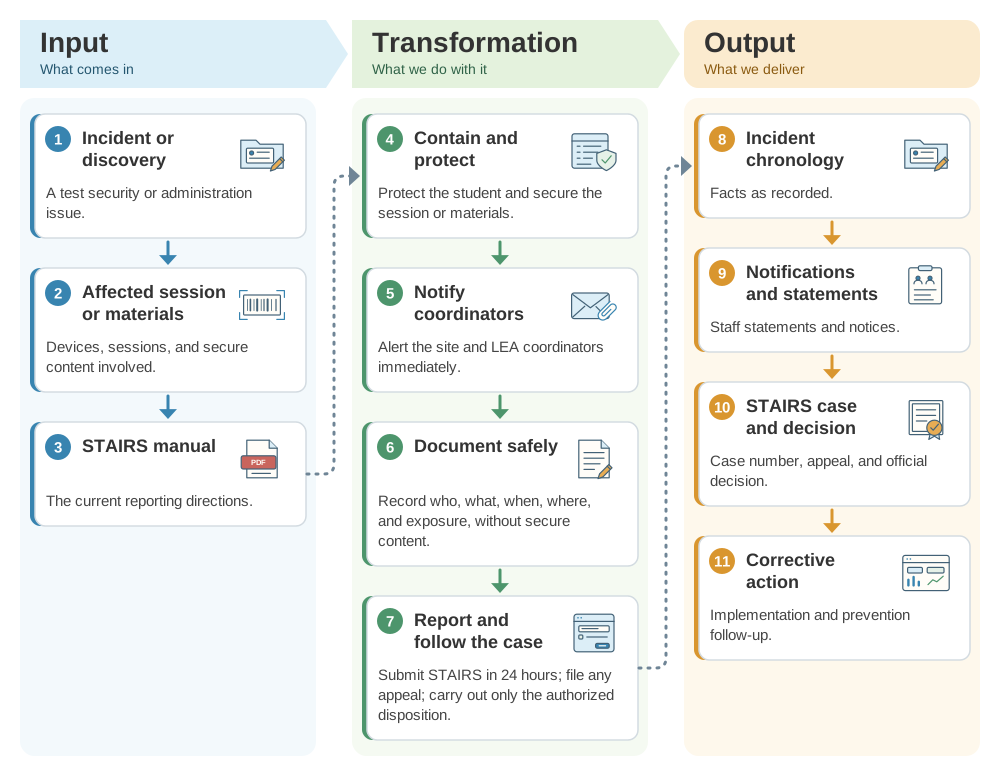
From a testing incident to a STAIRS report and disposition: the SDLA ITO workflow
Protect the student and secure content first, and document the facts without reproducing secure material. This SDLA ITO (Input, Transformation, Output) graphic shows how the incident or discovery, the affected session or materials, and the current STAIRS manual become the incident chronology, the STAIRS case, and the disposition and corrective action.
Operational workflow
- Protect the student and stop/secure the affected session or materials.
- Notify the site and LEA coordinators immediately.
- Record who, what, when, where, test/session, devices, exposure, and actions—without reproducing secure content.
- Submit STAIRS within 24 hours and file the prompted appeal when applicable.
- Track the case, implement only the authorized disposition, and document prevention follow-up.
Implementation pathway
Evidence to retain
- Incident chronology
- Staff notifications/statements
- STAIRS case number
- Appeal/official decision
- Implementation and corrective action
Official guidance and help
- Test Security and STAIRSCurrent incident and appeal process
- TOMS ResourcesSystem workflow
- CDE CAASPPState administration guidance
Source review completed August 30, 2026. Verify current California requirements, CAASPP and ELPAC manuals, live system status, local policy, pupil records, and final system state before acting.