



SDLA Compliance Resource
Submit P‑2 Taxes, Excess ERAF, and Charter Location Revisions
A local-revenue and charter-control deadline whose separate data streams affect state-aid offsets, oversight, and final current-year location records.
In Plain Language: Reconcile P‑2 taxes and excess ERAF to authoritative county/local-revenue records. Charter schools submit a physical-location file only when a revision is required and must request PADC access in advance while copying the oversight entity.
Why this matters
Taxes and ERAF change the state-aid calculation; charter physical location can affect oversight and funding context. Combining them under one date must not blur their different sources, owners, or applicability.
Primary ownership
Primary owner: local-revenue/PADC fiscal lead. Charter revision owner: charter business lead. Partners: county auditor-controller, COE/authorizer, facilities/address data, legal, fiscal, PADC certifier, and CDE.
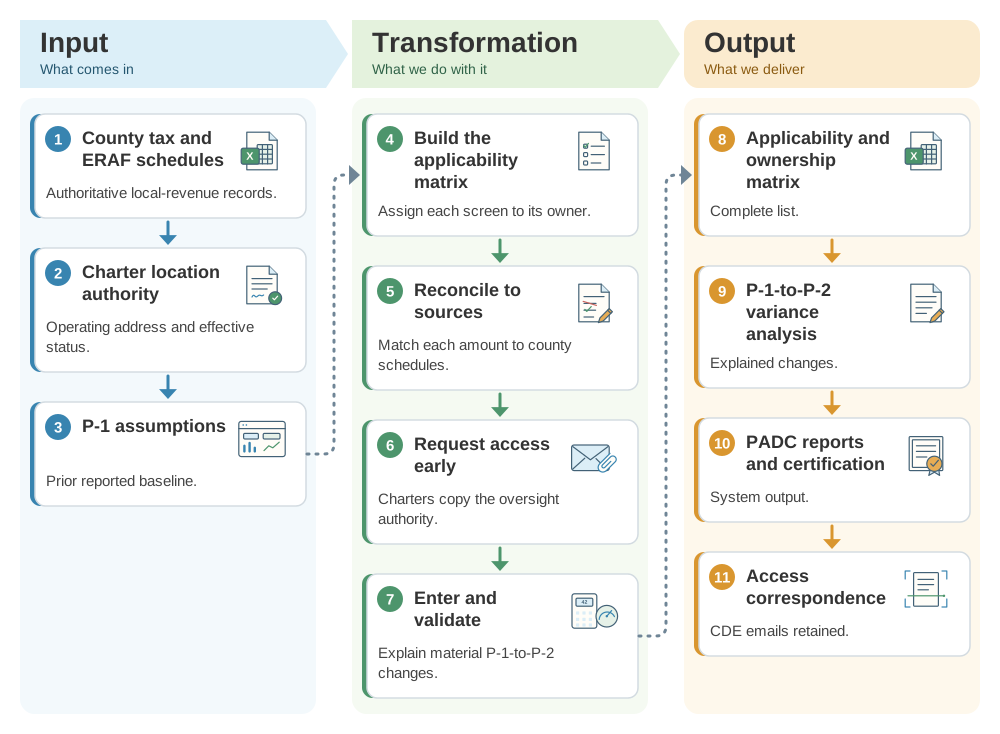
From local-revenue records to certified P-2 revisions: the SDLA ITO workflow
Taxes, excess ERAF, and charter location revisions are separate data streams with separate authorities. This SDLA ITO (Input, Transformation, Output) graphic shows how county tax and ERAF schedules, charter location authority, and the P-1 baseline become the applicability matrix, the P-1-to-P-2 variance analysis, and the PADC certification.
Operational workflow
- Build an applicability matrix for taxes, excess ERAF, and charter physical-location revision.
- Reconcile each applicable local-revenue amount to county schedules and prior P‑1/forecast assumptions.
- For a charter revision, validate the operating address/effective status and request PADC access early, copying the oversight entity.
- Enter and independently validate each applicable screen; explain material P‑1-to-P‑2 changes.
- Certify by April 15 and retain source schedules, access correspondence, reports, and approvals.
Implementation pathway
Evidence to retain
- Applicability/ownership matrix
- County tax and ERAF schedules
- Charter location authority/source record
- P‑1-to-P‑2 variance analysis
- PADC reports, certification, and CDE correspondence
Official guidance and help
- CDE PA DeadlinesOfficial April 15 requirements
- CDE PADC Due DatesEntity and screen applicability
- CDE PADCApplication resources
- CDE Principal ApportionmentProgram context
Source review completed August 30, 2026. Verify current CDE, PADC, ASSIST, entity-specific, grant, fiscal, attendance, and partner instructions before acting.