



SDLA Compliance Resource
Maintain a Functioning School English Learner Advisory Committee
A parent-elected advisory body with lawful composition, training, open meetings, required advice, and an effective handoff to school planning and DELAC.
In Plain Language: Ensure EL parents elect parent members, the committee’s composition reflects the required EL-parent proportion, members receive consultation-based training, meetings follow open-meeting rules, and the school responds to required advice.
Why this matters
ELAC is not a staff presentation audience. It creates a formal route for families closest to the program to examine needs, attendance, planning, and services and to influence school decisions.
Primary ownership
Primary owner: principal or EL program designee for support and compliance; ELAC members own their advice and elections. Partners: EL parents, teachers, SSC/SPSA lead, attendance, DELAC representative, interpreters, and district EL staff.
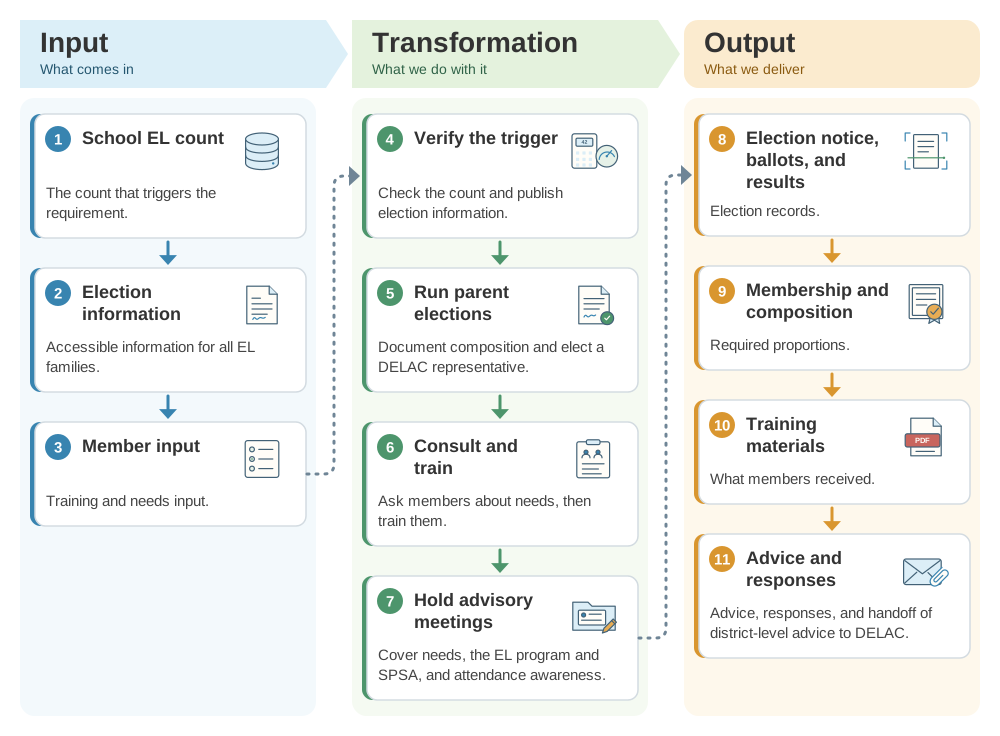
From the 21-pupil trigger to a functioning school ELAC: the SDLA ITO workflow
Parents elect the members, and the school responds to the advice the committee must give. This SDLA ITO (Input, Transformation, Output) graphic shows how the school's English learner count, election information, and member input become the election and membership records, the training materials, and the advice and responses.
Operational workflow
- Verify the 21-EL trigger and publish accessible election information to all EL families.
- Conduct parent elections; document composition and elect at least one DELAC representative or use the authorized representation scheme.
- Consult members about needs, then provide adequate training and materials.
- Calendar open meetings for required advisory work, including school needs, EL program/SPSA, attendance awareness, and other current duties.
- Record recommendations and the school/district response; hand district-level advice to DELAC.
Implementation pathway
Evidence to retain
- EL count and trigger
- Election notice/ballots/results
- Membership/composition
- Training materials
- Agendas, minutes, advice, and responses
Official guidance and help
- CDE ELACCurrent composition, election, training, and duties
- CDE ELAC/DELAC FAQsImplementation guidance
- Education Code section 35147Open-meeting requirements
Source review completed August 30, 2026. Verify current federal and California requirements, CDE/FCC guidance, local policy, public-meeting procedures, records, and final submitted or adopted state before acting.