



SDLA Compliance Resource
Maintain a Functioning District English Learner Advisory Committee
A districtwide parent-representative body that receives site voices, training, data, and timely opportunities to advise on programs, plans, needs, reclassification, and family notification.
In Plain Language: Maintain a DELAC—or lawful subcommittee—with parents/guardians of current or former English learners comprising a majority, selected through ELAC representation or the authorized local structure, and give it training and real opportunities to advise before decisions.
Why this matters
DELAC connects school-level experience to district policy. It can reveal patterns in identification, program access, attendance, reclassification, staffing, and notices that a district aggregate alone cannot explain.
Primary ownership
Primary owner: district EL/multilingual programs administrator for support and response; DELAC members own their advice. Partners: ELAC representatives, superintendent/cabinet, LCAP/federal programs, assessment/data, family engagement, translators, and governing board.
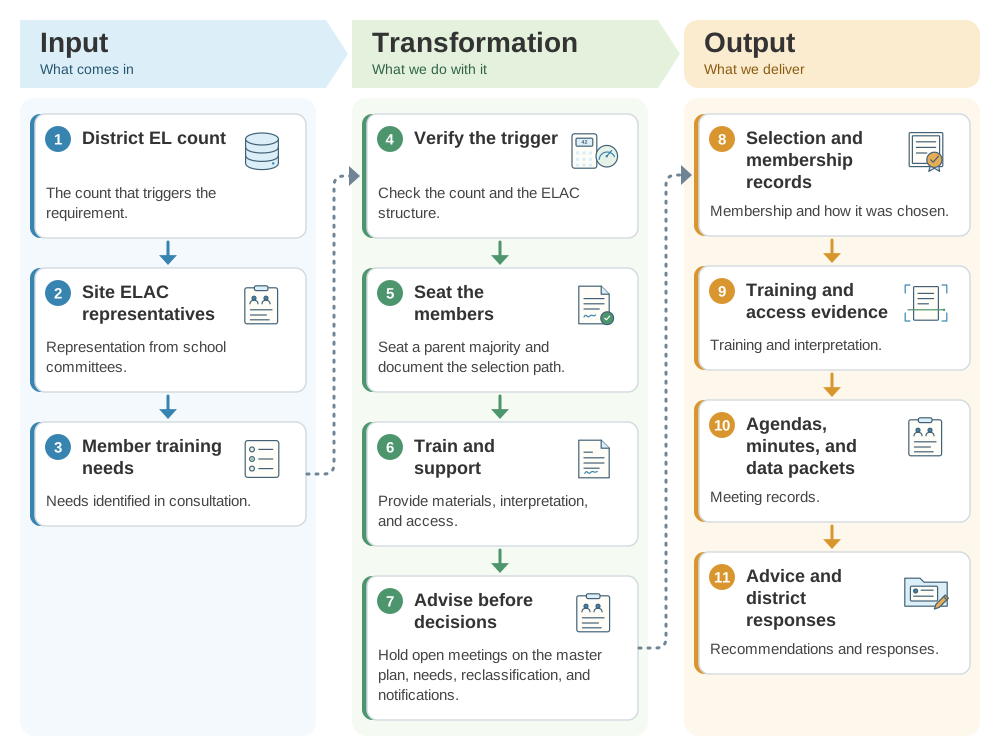
From the 51-pupil trigger to a functioning DELAC: the SDLA ITO workflow
The committee needs a parent majority, training, and genuine chances to advise before decisions. This SDLA ITO (Input, Transformation, Output) graphic shows how the district's English learner count, site ELAC representation, and member input become the membership records, the training and access evidence, and the advice and district responses.
Operational workflow
- Verify the 51-EL trigger and current site ELAC/representation structure.
- Seat members with the required parent/guardian majority and document the selection path.
- Consult members on training needs and provide adequate materials, interpretation, and access.
- Calendar open meetings to advise on the district master plan/programs, needs assessment, goals/objectives, reclassification procedures, parent notifications, and applicable LCAP work.
- Document recommendations, district responses, unresolved items, and board/plan handoffs.
Implementation pathway
Evidence to retain
- District EL count
- Selection and membership records
- Training/access evidence
- Agendas/minutes/data packets
- Advice and district responses
Official guidance and help
- CDE DELACCurrent composition and advisory duties
- CDE ELAC/DELAC FAQsImplementation guidance
- Education Code section 35147Open-meeting requirements
Source review completed August 30, 2026. Verify current federal and California requirements, CDE/FCC guidance, local policy, public-meeting procedures, records, and final submitted or adopted state before acting.