



SDLA Compliance Resource
Consult the SELPA and Review LCAP and School-Plan Consistency
An implementation guide for completing the required special-education consultation, confirming that the LCAP includes specific actions for pupils with disabilities, and reconciling those commitments with special-education and school-level strategies.
In Plain Language: SELPA means Special Education Local Plan Area. The superintendent must consult the applicable SELPA administrator to determine that the LCAP contains specific actions for individuals with exceptional needs and that those actions are consistent with strategies in the annual assurances support plan. The superintendent must also review applicable School Plans for Student Achievement (SPSAs) for consistency with LCAP actions.
Why this matters
Listing “students with disabilities” in an engagement paragraph is not the same as including specific actions for them. A consultation that occurs after the plan is functionally complete cannot reliably test alignment. The control protects against disconnected plans, untraceable services, inconsistent site strategies, and promises that do not match special-education implementation.
Joint ownership
Accountable owner: district superintendent or county superintendent. Required consultant: SELPA administrator or administrators. Process owner: LCAP coordinator. Operational partners: special-education leadership, fiscal staff, data leads, school-plan coordinators, principals, program owners, and educational partners representing pupils with disabilities.
Three-plan consistency map
From the SELPA consultation to a consistent LCAP and school plans: the SDLA ITO workflow
The LCAP must include specific actions for pupils with exceptional needs and align with the SELPA and school plans. This SDLA ITO (Input, Transformation, Output) graphic shows how the SELPA and annual assurances plan, the draft LCAP, and the SPSA strategies become the dated consultation record, the final crosswalk, and the implementation-monitoring records.
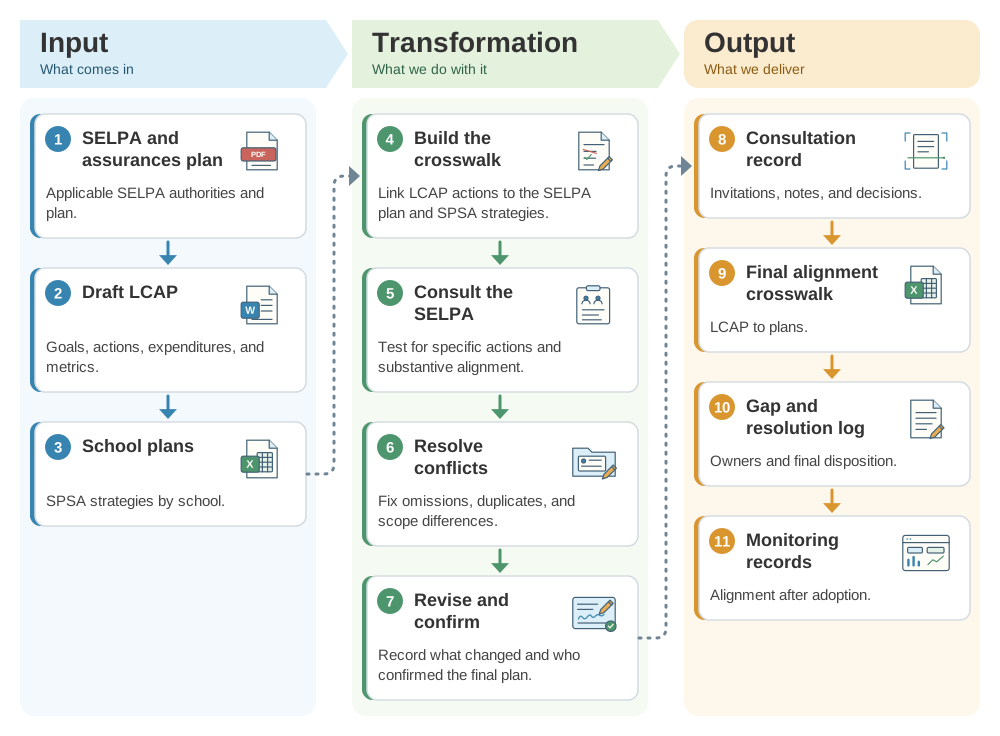
Consultation and review workflow
- At the start of developmentIdentify the applicable planning authorities.Confirm the SELPA or SELPAs, annual assurances support plan, district or COE LCAP, applicable SPSAs, and current performance evidence.
- Before drafting is fixedProvide a decision-ready crosswalk.Show proposed goals, actions, expenditures, metrics, student groups, school locations, and corresponding special-education and SPSA strategies.
- During SELPA consultationTest for specific actions and substantive alignment.Identify omissions, conflicts, unclear ownership, duplicate promises, access barriers, and measures that cannot show results for pupils with disabilities.
- During school-plan reviewCompare LCAP actions with SPSA strategies.Resolve contradictory scope, timing, population, funding, staffing, or outcome expectations.
- Before committee presentationRevise and document decisions.Record what changed, what did not change, why, and who confirmed the final consistency determination.
- During implementationMonitor the same crosswalk.Use implementation and outcome evidence to ensure the aligned commitments remain aligned in practice.
What to compare
| Control point | Ask | Evidence of resolution |
|---|---|---|
| Specificity | Does the LCAP identify concrete actions for individuals with exceptional needs, rather than only naming the population? | Action number, description, scope, owner, location, resources, and implementation evidence. |
| Strategy | Are the actions compatible with applicable annual assurances support-plan and school-plan strategies? | Crosswalk with corresponding strategy references and resolved differences. |
| Access and inclusion | Can pupils with disabilities access and benefit from broader LCAP actions, and are needed supports explicit? | Program-design decisions, accessibility controls, staffing, professional learning, and service records. |
| Fiscal alignment | Are funding sources, planned expenditures, staffing, contracts, and site allocations consistent across implementation records? | Budget mapping and explanation of intentional differences without improper duplication. |
| Outcomes | Can metrics reveal implementation and outcomes for pupils with disabilities where applicable? | Defined measures, disaggregation, baseline, expected outcome, data owner, and review cadence. |
| Ownership | Do the LEA, SELPA, school, and program roles agree about who will do what? | Named owners, handoffs, timelines, decision rights, and escalation path. |
District and county-office distinction
| Control | School district | County office of education |
|---|---|---|
| Statutory section | Education Code section 52062(a)(4)–(5) | Education Code section 52068(a)(4)–(5) |
| School plans reviewed | SPSAs for schools within the district. | SPSAs for schools operated by the county superintendent—not every school plan in the county. |
| Special-education consultation | Consult the district's applicable SELPA administrator or administrators. | Consult the COE's applicable SELPA administrator or administrators for the COE LCAP. |
Evidence to retain
- Dated consultation invitations, participants, agendas, materials, notes, and decisions.
- Final crosswalk linking LCAP actions to annual assurances support-plan and applicable SPSA strategies.
- Student-performance, access, implementation, and expenditure evidence used in the review.
- Identified gaps or conflicts, assigned resolution owners, revised language, and final disposition.
- Confirmation that specific actions for individuals with exceptional needs appear in the version presented for review and adoption.
- Implementation-monitoring records showing that plan consistency continued after adoption.
Official guidance and help
- CDE LCAP Template InstructionsCurrent LCAP planning, engagement, action, metric, and analysis requirements.
- CDE Planning for the LCAP and School PlanGuidance for integrated planning, consistency, implementation, effectiveness, and outcomes.
- Education Code section 52062District SPSA review and SELPA consultation requirements.
- Education Code section 52068Parallel COE requirements for schools operated by the county superintendent.
Source review completed August 30, 2026. Verify current statutes, the applicable SELPA structure and plans, adopted SPSAs, the State Board-adopted LCAP template, and local records before acting.