



SDLA Compliance Resource
Monitor LCAP Action Implementation, Expenditures, Metrics, and Emerging Adjustments
A year-round operating guide for living the Local Control and Accountability Plan: assigning ownership, checking whether actions occurred, reconciling spending, reading outcomes, addressing disparities, and escalating changes before annual reporting.
In Plain Language: An adopted LCAP is not a document to shelve until spring. The local educational agency (LEA) must live the plan: carry out each action, use resources as intended, watch the promised metrics, identify unequal implementation or outcomes, engage the people affected, and make accountable decisions when reality differs from the plan.
Why this matters
The annual update asks what was implemented, whether actions were effective, why actual expenditures differed from budgeted expenditures, and what will change. Those answers cannot be reconstructed reliably at year end. Weak monitoring produces unsupported narratives, unexplained variances, late surprises, and plans disconnected from student experience.
Joint ownership
Executive owner: superintendent or charter leader. Process owner: LCAP coordinator. Operational owners: action leads and site leaders. Fiscal owner: business office. Evidence partners: data, program, human resources, special education, multilingual education, and educational-partner engagement staff.
The annual implementation cycle
- Immediately after adoptionTranslate the plan into accountable work.Assign an owner, implementation milestones, evidence source, expenditure code, metric steward, and review cadence to every action.
- Monthly or quarterlyCheck implementation and spending together.Compare planned work with actual delivery and budgeted expenditures with posted expenditures; explain timing, scope, staffing, contracting, or coding differences.
- As data become availableRead outcomes by student group and school.Update available metrics, test progress toward expected outcomes, and look for disparities hidden by LEA-wide averages.
- When a variance emergesDiagnose before adjusting.Determine whether the problem is implementation, theory of action, data quality, capacity, procurement, staffing, fiscal coding, or a changed student need.
- By February 28Present the required midyear report.At a regularly scheduled governing meeting, present all available midyear outcome data and all available expenditure and implementation data for every current-year action.
- During annual update developmentEvaluate and decide.Use accumulated evidence to explain implementation, effectiveness, expenditure differences, and changes for the ensuing year.
- If a formal revision is neededUse the applicable public process.Do not silently rewrite an adopted commitment; determine whether governing-body action and the statutory revision process are required.
Four questions for every action
District, county-office, and charter responsibilities
| LEA type | Core operating responsibility | Formal midyear checkpoint | Important distinction |
|---|---|---|---|
| School district | Monitor district actions, expenditures, metrics, student-group results, and alignment with school plans. | Superintendent reports to the governing board under Education Code section 52062(a)(6). | A formal revision during the plan period uses the adoption process in section 52062. |
| County office of education (COE) | Monitor the COE's own LCAP commitments for pupils and programs it serves—not the LCAP implementation of every district in the county. | County superintendent reports to the county board under section 52068(a)(6). | COE plan duties are separate from county oversight of district LCAPs. |
| Charter school | Monitor the charter's goals, actions, expenditures, metrics, and student consultation under its applicable LCAP requirements. | The charter presents the required report to its governing body under section 47606.5. | Charters do not automatically follow every district/COE committee procedure; a charter using its LCAP as its SPSA has additional section 52062(a) obligations. |
Minimum action-level monitoring record
- LCAP goal and action number, full action title, responsible executive, and day-to-day owner.
- Planned population, school location, service level, start date, milestones, and completion evidence.
- Budgeted expenditure, funding source, accounting string, encumbrances, actual expenditures, and variance explanation.
- Metric definition, data owner, reporting frequency, expected outcome, actual available result, and student-group or school disaggregation.
- Implementation status stated with evidence—not only a color or unsupported percentage.
- Barrier, corrective action, decision date, responsible owner, follow-up date, and governing or public action required.
- Educational-partner feedback and a traceable explanation of how it affected implementation or the next plan.
From an adopted LCAP to monitored, adjusted implementation: the SDLA ITO workflow
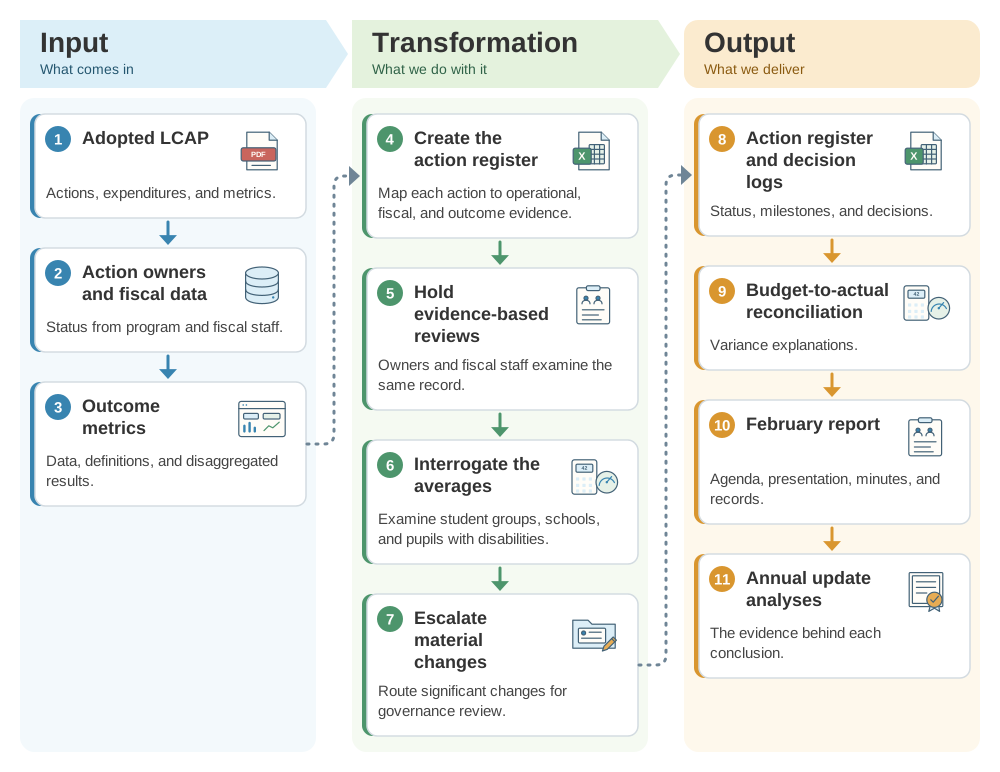
The adopted plan must be carried out and watched all year, so the February report can use real evidence. This SDLA ITO (Input, Transformation, Output) graphic shows how the adopted LCAP, action owners, fiscal data, and outcome metrics become the action register and decision logs, the budget-to-actual reconciliation, and the midyear and annual reports.
Recommended LEA workflow
- Create one controlled action register.Use the adopted LCAP as the authority and map each action to its operational, fiscal, and outcome evidence.
- Hold evidence-based implementation reviews.Require action owners and fiscal staff to examine the same record and resolve mismatches.
- Interrogate averages.Review outcomes and access for named student groups, relevant schools, and pupils with disabilities rather than relying only on an LEA-wide result.
- Separate lag from failure.Document timing differences, incomplete implementation, ineffective design, and unavailable data as different conditions requiring different responses.
- Escalate material changes.Identify fiscal, programmatic, staffing, or service changes that exceed routine implementation management and obtain legal or governance review.
- Build the February report from the register.Present all available data for every action; do not limit the report to highlights.
- Build the annual update from retained evidence.Carry forward the actual implementation record, expenditure reconciliation, effectiveness analysis, and documented decisions.
Evidence to retain
- Board-adopted LCAP and any formally adopted revisions.
- Action register, review agendas, status evidence, milestone records, and decision logs.
- Budget-to-actual reports and action-level variance explanations.
- Metric extracts, definitions, calculation notes, disaggregated results, and data-quality resolutions.
- February 28 governing-meeting agenda, presentation, minutes, and supporting records.
- Educational-partner input and evidence showing its impact on decisions.
- Annual-update analyses and the evidence used to support each conclusion.
Official guidance and help
- CDE LCAP Template InstructionsCurrent instructions for strategic planning, annual review, engagement, goals, actions, metrics, and analysis.
- CDE LCFF Frequently Asked Questions: Mid-Year UpdateRequired timing and content for the February report.
- Education Code section 52062District midyear reporting and revision process.
- Education Code section 52068County-office midyear reporting and revision process.
- Education Code section 47606.5Charter-school LCAP requirements.
Source review completed August 30, 2026. Verify the current State Board-adopted template, statutes, local board policy, adopted LCAP, and fiscal records before acting.