



SDLA Compliance Resource
Communicate Initial ELPAC Identification and Results Promptly
A results-to-services handoff that tells the family the pupil’s status, score meaning, language program information, and next steps within the initial-identification timeline.
In Plain Language: Validate the official result, update the pupil’s English language acquisition status, and give the family understandable written information about the result, identification, program, rights, and contact for questions.
Why this matters
The score is not merely an assessment artifact; it initiates or confirms EL services and future annual assessment, or establishes initial fluent English proficiency.
Primary ownership
Primary owner: EL program coordinator. Handoff partners: ELPAC coordinator, CALPADS/SIS, teacher, enrollment, special education, translator/interpreter, and family liaison.
From an official initial result to a family notice and service handoff: the SDLA ITO workflow
The family is told the result, the identification, and the program, and the pupil's instruction should reflect it. This SDLA ITO (Input, Transformation, Output) graphic shows how the official score report, ELAS data in TOMS, CALPADS, and the SIS, and CDE notice content become the verified result, the notice and delivery proof, and the service handoff.
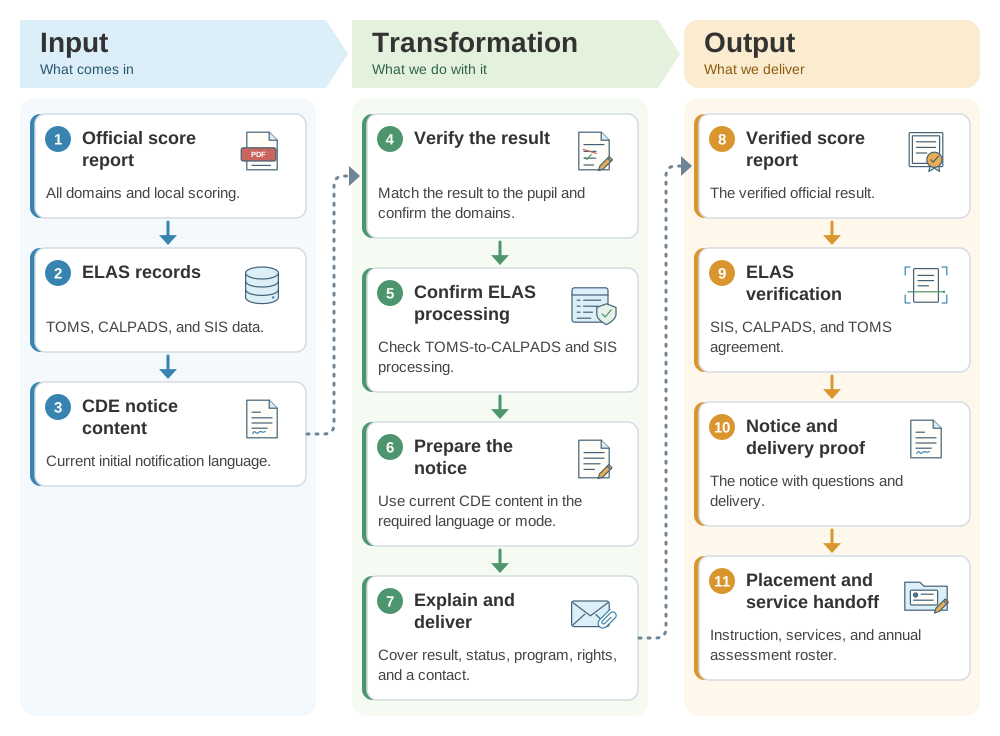
Operational workflow
- Verify all domains/local scoring and match the official result to the pupil.
- Confirm TOMS-to-CALPADS/SIS ELAS processing and resolve discrepancies.
- Prepare the current CDE-based initial notification in the required language/mode.
- Explain result, status, program, family rights, and contact; document delivery.
- Confirm that instruction, services, annual-assessment roster, and records reflect the final status.
Implementation pathway
Evidence to retain
- Official score report
- ELAS/SIS/CALPADS verification
- Notice and translation
- Delivery and questions
- Program-placement/service handoff
Official guidance and help
- CDE Identification and Parent Notification ResourcesCurrent sample notices and required content
- CDE Initial ELPACScores and identification resources
- CDE 2026–27 EL Program AssurancesIdentification and annual duties
Source review completed August 30, 2026. Verify current federal and California requirements, CDE and ELPAC manuals, local policy, pupil records, and live CALPADS/TOMS status before acting.