



SDLA Compliance Resource
Administer the Initial ELPAC or Initial Alternate ELPAC
A pupil-level identification workflow inside a yearlong statewide window—triggered by the original Home Language Survey, prior-record reconciliation, and, for the alternate assessment, an active IEP decision.
In Plain Language: After resolving the original HLS and prior California enrollment/testing history, notify the family, assign the correct initial assessment, prepare trained staff and accessibility resources, administer promptly, locally score as required, enter or verify the resulting ELAS, and provide the required initial-identification notice.
Why this matters
The statewide window is not permission to wait until June. Delayed or duplicate identification can postpone language services, distort CALPADS records, and leave classroom staff without the information needed to support the pupil from the beginning of enrollment.
Primary ownership
Primary owner: LEA ELPAC coordinator. Identification owner: English learner program lead. Partners: enrollment, CALPADS/SIS, trained test examiner, site coordinator, special education/IEP team, technology, teacher, records staff, and parent/guardian.
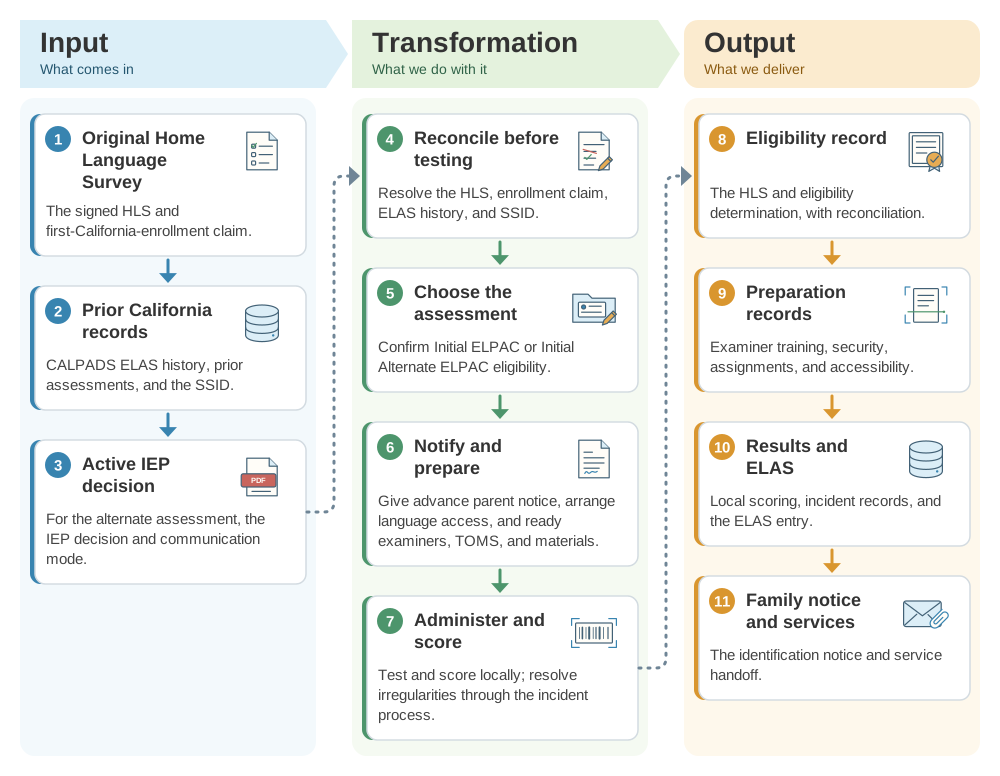
From a Home Language Survey to the right initial ELPAC: the SDLA ITO workflow
A pupil's identification timeline starts with the original survey and a check of prior California history. This SDLA ITO (Input, Transformation, Output) graphic shows how the original Home Language Survey, prior records, and any active IEP decision become the eligibility record, the results and ELAS, and the family notice and service handoff.
Operational workflow
- Reconcile the signed HLS, first-California-enrollment claim, CALPADS ELAS history, prior assessment records, and SSID before testing.
- Confirm Initial ELPAC versus Initial Alternate ELPAC eligibility; for the alternate assessment, verify the active IEP decision and established communication mode.
- Provide advance written parent/guardian notice and arrange language access; schedule within the applicable identification timeline.
- Verify trained examiner, security affidavits, TOMS assignments, devices/materials, domain exemptions or accessibility resources, and one-to-one conditions when required.
- Administer and locally score according to current directions; resolve irregularities through the required incident process.
- Enter or verify the resulting ELAS and assessment data, provide the required initial-identification/results notice, begin appropriate services, and transfer the complete record when the pupil moves.
Implementation pathway
Evidence to retain
- Original HLS and eligibility determination
- CALPADS/SSID and prior-assessment reconciliation
- Parent pre-assessment notice and language-access record
- Active IEP alternate-assessment decision, when applicable
- Examiner training, security, assignment, and accessibility records
- Administration/local scoring and incident records
- ELAS entry, results, parent identification notice, and service handoff
Official guidance and help
- CDE ELPAC ProgramCurrent manuals, guides, communications, and administration resources
- CDE ELPAC FAQsEligibility and administration guidance
- CDE Identification and Parent Notification RequirementsRequired notification resources
- CDE CALPADS FAQsPrior history and ELAS reconciliation
- CDE Alternate ELPACInitial Alternate ELPAC resources
Source review completed August 30, 2026. Verify current CDE ELPAC, English learner identification, CALPADS, parent-notification, and local procedures before acting.