



SDLA Compliance Resource
Administer the Initial Alternate ELPAC Within 30 Calendar Days
A coordinated enrollment, IEP, CALPADS, and assessment control for an eligible newly enrolled pupil with the most significant cognitive disability.
In Plain Language: Complete the same 30-day initial-identification duty using the Initial Alternate ELPAC only when the pupil’s active IEP supports that individualized assignment.
Why this matters
The assessment assignment must be correct before administration. Enrollment staff, the IEP team, CALPADS, and assessment staff each hold a different piece of the decision.
Primary ownership
Primary owner: LEA ELPAC coordinator with the IEP case manager. Handoff partners: registrar, CALPADS, trained test examiner, parent, and special education administrator.
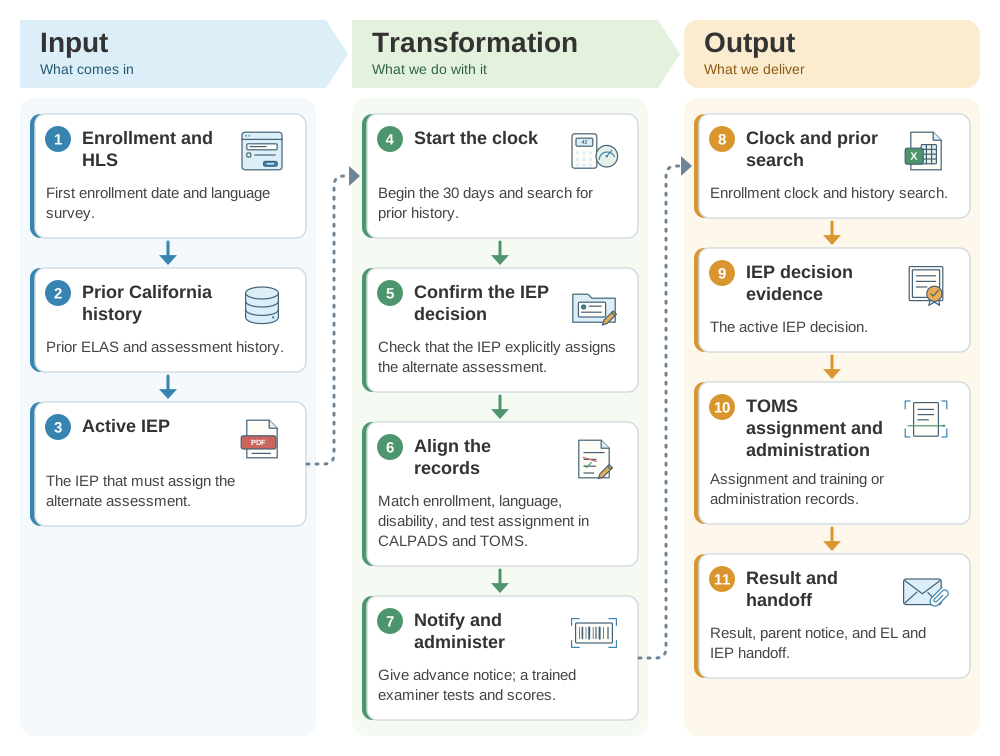
From enrollment to an Initial Alternate ELPAC result: the SDLA ITO workflow
The alternate assessment is used only when the pupil's active IEP assigns it. This SDLA ITO (Input, Transformation, Output) graphic shows how the enrollment date, the Home Language Survey, and the active IEP become the clock and IEP decision, the TOMS assignment, and the result with family and program handoffs.
Operational workflow
- Start the 30-day clock and search for prior California ELAS/assessment history.
- Confirm the active IEP explicitly assigns the alternate English language proficiency assessment.
- Align enrollment, language, disability, and test-assignment records in CALPADS/TOMS.
- Give advance parent notice; have a trained examiner administer and score the assessment using current instructions.
- Verify the result, notify the family, and implement the EL and IEP handoffs.
Implementation pathway
Evidence to retain
- Enrollment clock and prior search
- Active IEP and decision evidence
- TOMS alternate assignment
- Training/administration record
- Result, parent notice, and program handoff
Official guidance and help
- CALPADS Update Flash 327Current 30-day and data-flow guidance
- CDE Alternate ELPACEligibility and administration resources
- CDE Parent Notification ResourcesCurrent alternate notification templates
Source review completed August 30, 2026. Verify current federal and California requirements, CDE and ELPAC manuals, local policy, pupil records, and live CALPADS/TOMS status before acting.