


SDLA Compliance Resource
Train at Least Two Staff at Each Required Site When Receiving COE Opioid Antagonists
A conditional statutory control connecting COE-supplied emergency opioid antagonist units to site-specific trained coverage, storage, overdose response, EMS activation, use documentation, and replacement.
In Plain Language: When an LEA receives units through the COE program, it must ensure no fewer than two staff members at each required site meet the statutory training standard or complete recognized opioid-overdose prevention/treatment training and review CDPH materials.
Why this matters
A medication cabinet does not reverse an overdose. People must recognize signs, call 911, administer the product correctly, provide follow-up care, and ensure replacement.
Joint ownership
Program owner: district health/safety lead. Site owners: principal and at least two trained staff. Partners: COE, school nurse, EMS, HR/training, facilities, athletics, student services, and communications.
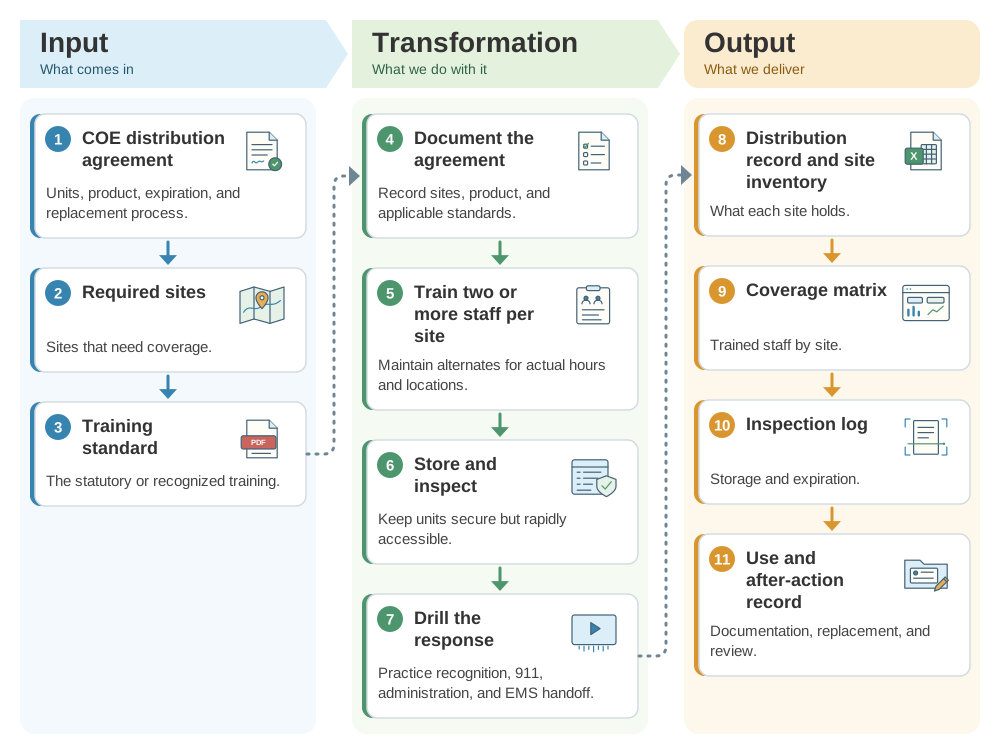
From COE-supplied units to two trained staff at every site: the SDLA ITO workflow
Coverage is site-specific, so each required site needs at least two trained staff. This SDLA ITO (Input, Transformation, Output) graphic shows how the COE agreement, required sites, and the training standard become the site inventory, the coverage matrix, and the use and replacement record.
Operational workflow
- Document the COE distribution/agreement, required sites, product, expiration, replacement process, and applicable training standard.
- Train at least two staff at every required site; maintain alternates sufficient for actual hours and locations.
- Store units securely but rapidly accessibly and inspect inventory/expiration on a scheduled log.
- Drill recognition, 911 activation, administration, rescue breathing/CPR as trained, repeat-dose/product instructions, and EMS handoff.
- After use, document the response, protect confidentiality, replace the unit, support affected people, and review system performance.
Site readiness test
- Can two trained people be identified today?
- Can they reach an unexpired unit quickly?
- Do they know to call 911 and follow the product/training sequence?
- Is replacement ownership documented before an emergency occurs?
Evidence to retain
- COE distribution/agreement and site inventory
- Two-or-more trained staff per required site
- Training content, dates, and coverage matrix
- Storage/expiration inspection log
- Use, EMS, notification, replacement, and after-action record
Official guidance and help
- CDE Reversing Opioid Overdose Apportionment LetterCurrent two-staff condition and training resources
- Education Code section 49414.8COE distribution and LEA responsibilities
- Education Code section 49414.3Emergency opioid antagonist administration and training
Source review completed August 30, 2026. Verify current law, official health guidance, local health-department instructions, licensed-provider orders, individual pupil circumstances, and local policy before acting. This operational resource does not replace clinical judgment or emergency services.