



SDLA Compliance Resource
Complete Required School Hearing Screening, Referral, Follow-Up, and Records
An implementation guide for finding every pupil in the required annual cohorts, conducting compliant hearing screening, resolving missed or failed tests, documenting follow-up, and submitting the district’s annual state report.
In Plain Language: California does not require every pupil to receive a hearing screening every year. It does require every district, each school year, to identify and screen the pupils who are currently in the required grade-level and individual groups. The district must also address missed and failed tests, notify families when referral criteria are met, maintain pupil health records, and submit one districtwide annual report.
Why this matters
A child may pass newborn screening and later develop temporary, progressive, noise-related, or previously unidentified hearing loss. Even a limited loss can reduce access to spoken instruction, language, peer interaction, and classroom cues. Screening is the gateway to appropriate medical, audiological, and educational follow-up; it is not itself a diagnosis.
Joint ownership
Accountable owner: district health-services administrator or lead credentialed school nurse. Testing lead: properly qualified and registered school audiometrist or authorized provider. Site partners: health-office staff and administrators. Downstream partners: families, medical and audiology providers, educational audiology, deaf/hard-of-hearing, Section 504, and special education staff when concerns require them.
Who is screened each school year?
The grade cycle applies to the pupils who are in the listed cohorts during that school year—not to every pupil annually.
| Pupil group | Required treatment | Local control |
|---|---|---|
| Kindergarten or grade 1 | Screen the district’s selected cohort. | Document whether the district uses kindergarten or first grade and apply the choice consistently. |
| Grades 2, 5, and 8 | Screen pupils in each of these grades. | Reconcile enrollment, screening, absences, makeups, and results by school. |
| Grade 10 or grade 11 | Screen the district’s selected high-school cohort unless an approved annual waiver controls. | Document the selected grade. Do not treat a local decision to omit both grades as a waiver. |
| First entry into the California public school system | Screen upon first California public-school entry. | Use enrollment history—not merely the pupil’s current grade—to identify this group. |
| Special education program entry and every third year thereafter | Screen pupils enrolled in special education other than those enrolled for a hearing problem, with frequency adjusted when the IEP team determines a need. | Coordinate the health-screening roster with the IEP cycle without assuming the special education office owns the districtwide program. |
| Risk, referral, or prior concern | Test pupils referred by a parent or teacher, pupils with a previously documented problem, and other pupils at risk as required by the applicable protocol. | Maintain a route for concerns outside the ordinary grade cycle. |
What the basic screening setup looks like
What happens during a California pure-tone screen?
The state manual supplies the controlling California frequencies, levels, threshold-test procedure, and referral criteria. ASHA describes additional screening technologies and broader professional practices, but the LEA must apply California’s requirements to its mandated program.
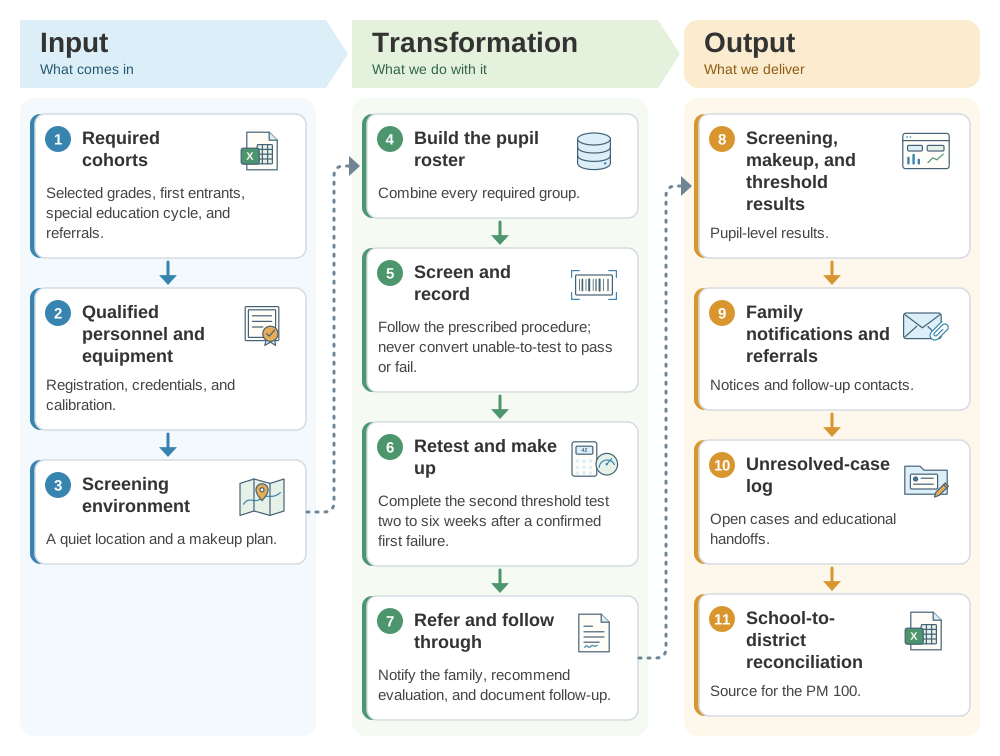
From cohort rosters to screened, followed-up, and reported pupils: the SDLA ITO workflow
A screening result is a routing decision, not a diagnosis, and a mailed letter does not complete the follow-up. This SDLA ITO (Input, Transformation, Output) graphic shows how the required grade cohorts, the personnel and equipment, and referral groups become the rosters and results, the family notifications and follow-up, and the consolidated state report.
The annual implementation calendar
- Before the school year or screening contractName the accountable owner and verify qualified personnel.Confirm current school-audiometrist registration, credentials or contractor authorization, supervision, equipment, calibration, reporting duties, and the local escalation route.
- Before screening dates are setBuild the complete pupil roster.Combine selected grade cohorts, first California public-school entrants, the applicable special education cycle, pupil-specific referrals, and other required risk groups. Include late entrants and schools within the district reporting scope.
- Before each screening sessionPrepare the environment and logistics.Reserve a sufficiently quiet location, check equipment and earphones, arrange accessible participation, notify staff, and create a makeup plan before the first absence occurs.
- On the screening dateConduct and record the prescribed procedure.Condition the pupil, screen each ear, distinguish pass from missed response, and complete the first threshold test when required. Never convert unable-to-test or absent into pass.
- Within the prescribed retest periodComplete makeups and second threshold testing.Track every unresolved pupil and perform the required second threshold test two to six weeks after a confirmed first-threshold failure.
- When referral criteria are metNotify, refer, and follow through.Send written family notification, recommend the appropriate medical or audiological evaluation, document contact and access support, and monitor whether the referral produced an outcome.
- When hearing affects educational accessActivate educational supports without waiting for the next grade cycle.Route substantiated or continuing concerns to appropriate general education, educational audiology, deaf/hard-of-hearing, Section 504, or IDEA processes. Screening alone does not determine eligibility.
- Before June 30, 2027Reconcile and submit the district PM 100.Aggregate school results, resolve unexplained roster differences, include charter-school results within the required district scope, use the current state form, submit one consolidated report, and retain evidence.
A screening result is a routing decision—not a diagnosis
| Result or circumstance | District route | Do not |
|---|---|---|
| Pass | Record the date and result in the pupil health record and close the screening episode unless another concern remains. | Describe the result as proof that the pupil has normal hearing in all conditions. |
| Absent, incomplete, or unable to condition | Keep the pupil on the open-work list; schedule a makeup or use an appropriate qualified pathway. | Record pass, fail, refusal, or exemption merely to clear the roster. |
| Missed screening tone | Reinstruct, verify earphone placement, and complete the California first-threshold process. | Send an automatic medical referral based only on a poorly controlled first presentation. |
| First threshold failure | Schedule the second threshold test in two to six weeks unless evident pathology requires immediate medical referral. | Lose the pupil between the screening date and the retest list. |
| Referral criteria met | Provide written family notification and recommend the appropriate medical and/or audiological evaluation; maintain follow-up. | Treat mailing a letter as completion of the district’s follow-up responsibility. |
| Continuing educational concern | Share permitted information with the appropriate educational team and consider access, accommodations, evaluation, and services through the applicable process. | Use the screening result alone to diagnose hearing loss or determine Section 504 or IDEA eligibility. |
School responsibilities and family participation
The school and district must control the process
- Find every pupil in the required cohorts.
- Use qualified personnel, compliant equipment, and the state procedure.
- Complete makeups, threshold testing, and written referral notices.
- Maintain protected pupil health records.
- Track unresolved referrals and educational concerns.
- Reconcile schools and submit the PM 100.
Families are essential follow-up partners
- Receive understandable written information about the result.
- Obtain recommended medical or audiological evaluation.
- Return relevant provider information when requested and authorized.
- Tell the school about access, language, learning, or communication concerns.
- Participate in educational decision-making if further supports are considered.
Qualified personnel are a preflight—not an afterthought
California distinguishes people who may independently perform hearing screening and referral functions from trained employees who may only assist under immediate qualified supervision. Before assigning a nurse, SLP, assistant, contractor, or other employee, verify the exact credential, registration, training, supervision, and contractor authorization that apply to the proposed role. A professional title by itself is not a substitute for the California school-audiometrist requirements.
- Current qualification and school-audiometrist registration verified.
- Supervisor and assistant duties defined in writing.
- Contract agency and individual authorization confirmed when applicable.
- Equipment inventory, annual calibration, and pre-use checks documented.
- California screening, threshold, retest, and referral protocol available.
- Quiet-room suitability and contingency plan confirmed.
- Infection-control and earphone-cleaning procedures established.
- Health-record, referral, and PM 100 responsibilities assigned.
The grade 10/11 waiver is narrow
Reconcile the program from roster to state report
Evidence to retain
- District grade selections and annual program calendar.
- School and district required-cohort rosters.
- Personnel qualifications, registration, supervision, and contractor records.
- Equipment inventory, calibration, repair, and daily check evidence.
- Screening, makeup, first-threshold, and second-threshold results.
- Written family notifications and referral recommendations.
- Follow-up contacts, returned provider information, and unresolved-case log.
- Educational-support handoffs made under applicable privacy rules.
- Pupil health-record entries and threshold-test copies.
- Approved grade 10/11 waiver and alternative plan, if used.
- School-to-district reconciliation and charter collection evidence.
- Final PM 100, submission evidence, and superintendent/county copies as applicable.
Official guidance and help
- California Code of Regulations, title 17, section 2951Required cohorts, screening and threshold standards, referral criteria, records, annual reporting, special education testing, and the high-school waiver framework.
- DHCS Hearing Conservation ProgramCurrent state program notices, districtwide consolidation instructions, June 30 due date, and program contact.
- DHCS Manual for the School AudiometristCalifornia program planning, qualified personnel, equipment, screening, threshold testing, referral, follow-up, records, and reporting procedures.
- California Hearing Conservation Program formsCurrent PM 100 annual report, PM 359 high-school waiver request, DHCS 101 school-audiometrist application, and agency-registration forms.
- Commission on Teacher Credentialing – Health Services assignment resourcesCalifornia assignment information for school health services and hearing testing.
- ASHA Childhood Hearing ScreeningProfessional practice information about screening purpose, technologies, procedures, environment, personnel, referral, and quality management.
- CSHA contact informationCalifornia professional-association contacts, including the school-based committee.
Implementation questions: Contact the DHCS Hearing Conservation Program at for current forms and state-program questions. Confirm personnel assignments with district human resources, credential analysts, health-services leadership, and the applicable county office before testing begins.
Source review completed August 28, 2026. Verify current California regulations, DHCS forms and instructions, personnel registration, contractor authorization, equipment standards, local health-record procedures, and pupil-specific facts before acting.