



SDLA Compliance Resource
Maintain Emergency Epinephrine Auto-Injector Readiness at Every School
A mandatory readiness system for supply, accessible storage, annual volunteer notice, trained responders, emergency activation, documentation, replacement, and post-use review.
In Plain Language: Schools must have emergency epinephrine available for a person suffering—or reasonably believed to be suffering—anaphylaxis, including someone with no known allergy. The system must work wherever pupils are served, not only when the nurse is present.
Why this matters
Anaphylaxis can progress within minutes. Medication locked away, expired, off campus, or known only to one person is not true readiness.
Joint ownership
Clinical owner: school nurse/qualified supervisor. Operational owners: site administrator and trained volunteers. Partners: pharmacy/prescriber, facilities, athletics, transportation, food service, HR, and emergency services.
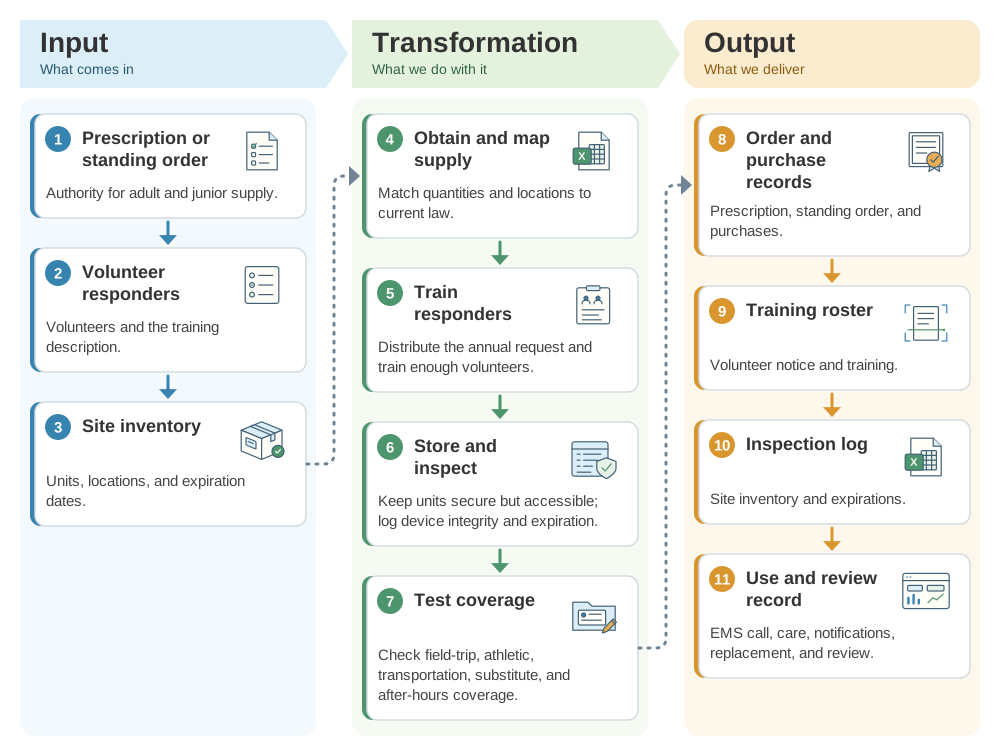
From a lawful supply to a ready epinephrine response: the SDLA ITO workflow
Readiness means the medication and a trained responder are reachable wherever pupils are served. This SDLA ITO (Input, Transformation, Output) graphic shows how the prescription or standing order, volunteers, and site storage locations become the order and training records, the inspection log, and the post-use review.
Operational workflow
- Obtain the correct adult and junior supply under a lawful prescription or standing order; map quantities and locations to current law.
- Annually distribute the volunteer request/training description; train and document enough responders for foreseeable coverage.
- Store units in known, secure but readily accessible locations; inspect device integrity and expiration on a scheduled log.
- Post an emergency sequence and test communications, field-trip, athletic, transportation, substitute, and after-hours coverage.
- After use, call EMS, document care, notify, replace inventory, and review the response.
Readiness dashboard
- Supply: Correct device types and required quantities.
- Access: Available during the school day and planned activities without avoidable delay.
- People: Nurse and trained volunteers with current coverage.
- Recovery: EMS transfer, documentation, replacement, and review.
Evidence to retain
- Prescription/standing order and purchase records
- Annual volunteer notice and training roster
- Site inventory/location/expiration inspection log
- Emergency drill and activity-coverage plan
- Administration, EMS, notification, replacement, and review record
Official guidance and help
- CDE Epinephrine Training StandardsOfficial training and readiness guidance
- Education Code section 49414Required school epinephrine program
- CDE Medication AdministrationCurrent standing-order and medication resources
Source review completed August 30, 2026. Verify current law, official health guidance, local health-department instructions, licensed-provider orders, individual pupil circumstances, and local policy before acting. This operational resource does not replace clinical judgment or emergency services.