



SDLA Compliance Resource
Report Suspected Reportable Diseases and School Outbreaks to the Local Health Department
An immediate public-health routing guide for recognizing a reporting trigger, protecting confidentiality, contacting the correct health authority, and following—not inventing—control instructions.
In Plain Language: School staff do not need to diagnose a disease before escalating a credible concern. The designated administrator or health professional should promptly compare the facts with current reporting rules and local instructions, contact the local health department (LHD), and follow the LHD's direction about exposure, exclusion, communications, testing, and return.
Why this matters
Delay can widen exposure; overreaction can disclose private health information or unnecessarily exclude pupils. The LHD leads public-health assessment and supplies disease-specific direction.
Joint ownership
Report owner: school nurse or designated administrator. Decision partner: LHD communicable-disease staff. Internal partners: attendance, HR/workplace safety, facilities, food service, communications, and executive leadership.
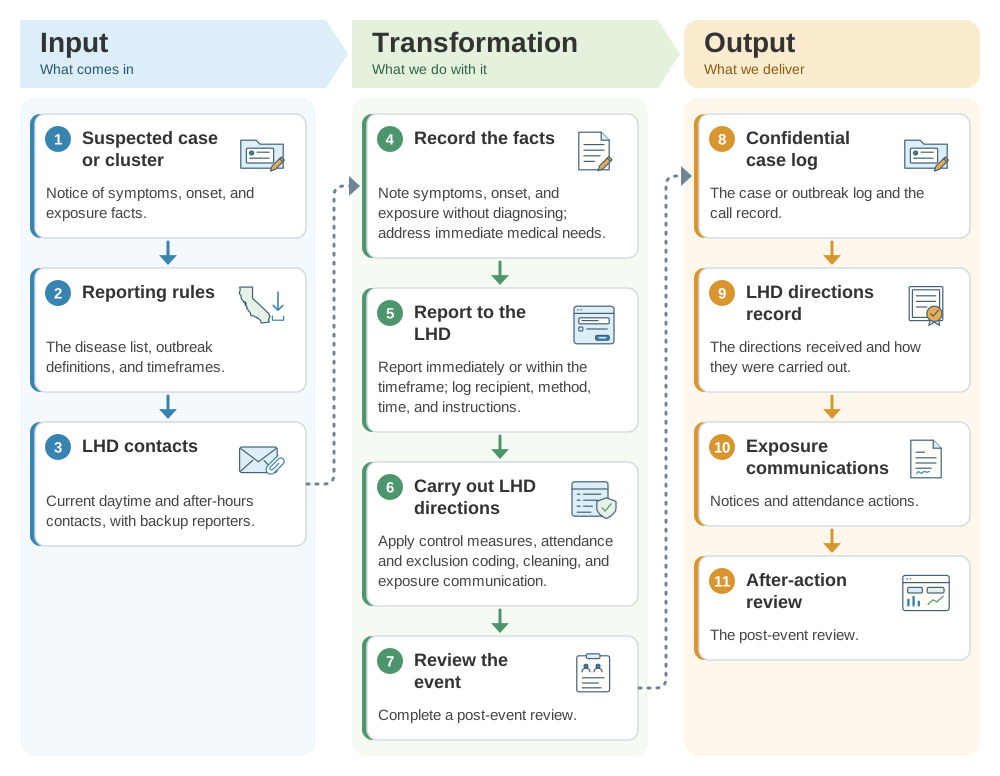
From a suspected case or cluster to a report to the health department: the SDLA ITO workflow
Staff do not diagnose; they escalate credible concerns and follow the health department's directions. This SDLA ITO (Input, Transformation, Output) graphic shows how the suspected case or cluster, the current reporting rules, and the local health department's contacts become the confidential log, the report record, and the follow-through records.
Operational workflow
- Maintain current daytime and after-hours LHD contacts, reporting methods, disease list, outbreak definitions, and backup reporters.
- When notified of a suspected case or cluster, record symptoms/onset/exposure facts without making a diagnosis; address immediate medical needs.
- Report at once or within the disease-specific timeframe and document the recipient, method, time, and instructions.
- Implement LHD-directed control measures, attendance/exclusion coding, cleaning, exposure communication, and employee-safety coordination.
- Keep a confidential case/outbreak log and complete a post-event review.
Urgent versus routine routing
- Immediate/urgent: Use telephone or other required urgent method for conditions marked for immediate reporting and unusual or severe clusters.
- Routine: Use the required secure form or channel within the published timeframe.
- Any outbreak: Schools report suspected outbreaks of any disease under 17 CCR section 2508; local definitions and instructions may be more specific.
Evidence to retain
- Current LHD contact and escalation sheet
- Reporter designation and staff training
- Confidential report/call log and case facts
- LHD directions and implementation record
- Exposure communications, attendance actions, and after-action review
Official guidance and help
- CDPH TK–12 GuidanceCurrent reporting and outbreak-response direction
- CDPH LHD Reporting ContactsCounty reporting channels
- CDPH Communicable Disease FormsCurrent forms and disease resources
Source review completed August 30, 2026. Verify current law, official health guidance, local health-department instructions, licensed-provider orders, individual pupil circumstances, and local policy before acting. This operational resource does not replace clinical judgment or emergency services.