



SDLA Compliance Resource
Provide Fiscal-Distress Reports to the County Superintendent
An implementation guide for recognizing studies, reports, evaluations, and audits that show fiscal distress and sending them to the county superintendent as Education Code 42127.6 requires.
In Plain Language: If any study, report, evaluation, or audit shows signs of fiscal distress under the state's financial standards and criteria (EC 33127), or if FCMAT or another outside team issues a report, the district must send a copy to the county superintendent. The county then reviews it and may investigate and act.
Why this matters
Early disclosure gives the county a chance to help before a crisis. Withholding a distress report delays assistance, damages the county relationship, and can lead to stronger intervention later, including stays of actions such as bond issuances.
Joint ownership
District: superintendent and chief business official decide what qualifies and transmit it; the board is informed. County office: reviews, investigates, and may notify the board and State Superintendent.
From a new fiscal report to a documented county transmittal: the SDLA ITO workflow
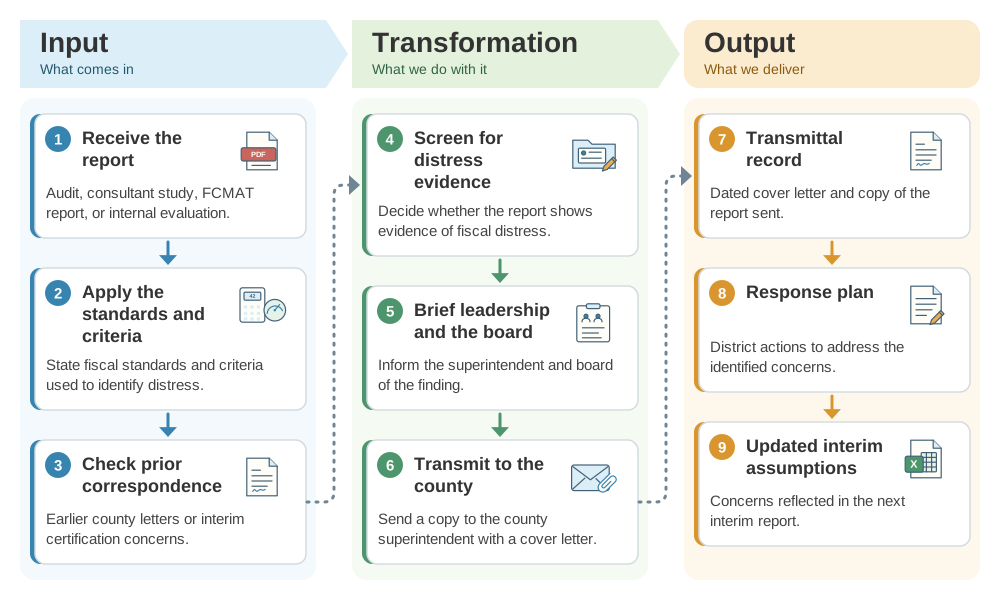
This workflow makes sure a distress finding reaches the county instead of sitting in a file. This SDLA ITO (Input, Transformation, Output) graphic shows how the inputs become the outputs in 9 steps.
Implementation workflow
- On receiptScreen the report.Compare findings to the fiscal standards and criteria.
- Within daysInform leadership.Brief the superintendent and board on any distress evidence.
- PromptlySend to the county.Transmit a copy to the county superintendent and retain proof.
- Next interimReflect the findings.Address the concerns in the certification and multiyear projection.
Fiscal-distress disclosure checklist
- Owner named to screen every audit, study, and consultant report.
- Screening uses the state standards and criteria.
- Transmittal letter and report copy retained.
- Board informed of the finding and the response plan.
- Findings carried into the next interim certification.
Official guidance and help
- Education Code 42127.6District disclosure duty and county intervention steps.
- Fiscal Crisis and Management Assistance TeamFiscal health risk analysis and predictors of distress.
Source review completed October 25, 2026. Verify the current text of EC 42127.6, which has been amended in recent sessions, and your county's transmittal preferences.