



SDLA Compliance Resource
File the Adopted District Budget With the County Superintendent
A board-to-oversight handoff that delivers the exact adopted budget and supporting data, preserves proof, and starts disciplined response to county questions.
In Plain Language: After board adoption, file the prescribed budget and supporting data with the county superintendent by the earlier deadline, verify receipt, and keep the board-approved and filed versions identical.
Why this matters
Adoption does not complete the process. The county superintendent examines the budget for standards, technical corrections, LCAP alignment, and the district’s ability to meet current and multiyear commitments.
Primary ownership
Primary owner: chief business official/fiscal reporting lead. Handoff partners: superintendent, board clerk, SACS preparer, LCAP lead, county fiscal analyst, and records staff.
From adopted budget to county receipt: the SDLA ITO workflow
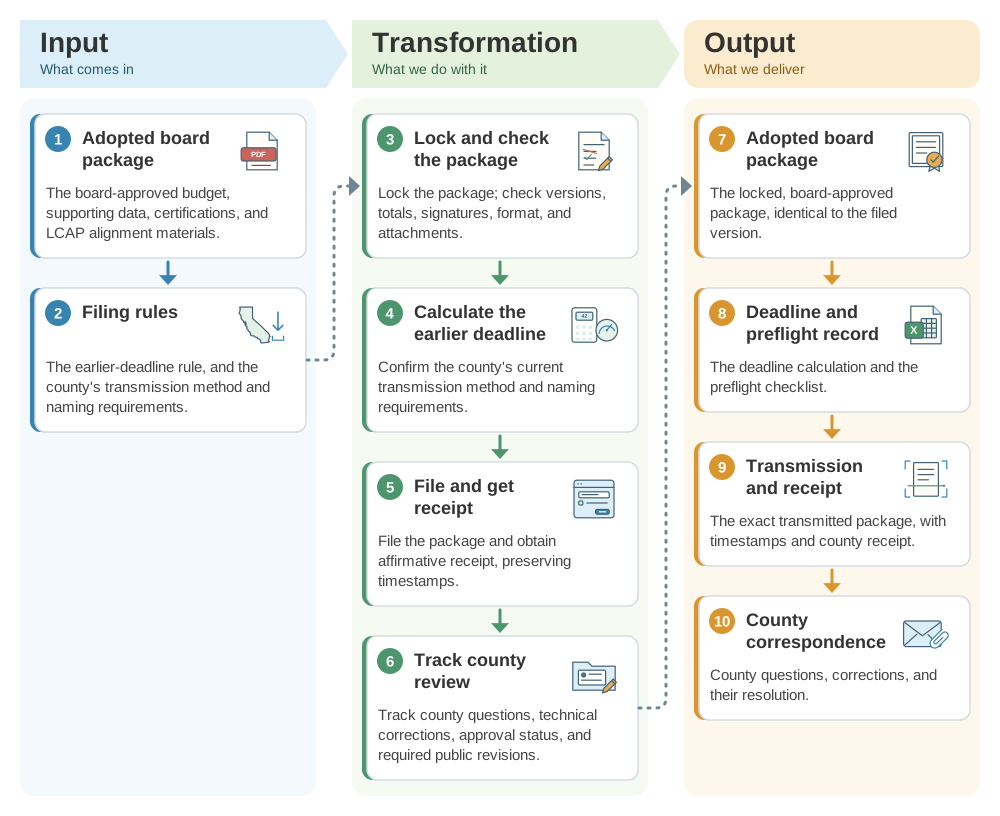
This is a board-to-oversight handoff: the exact adopted budget goes to the county, with proof of receipt. This SDLA ITO (Input, Transformation, Output) graphic shows how the adopted board package and the county's filing rules become the locked package, the preflight and deadline record, the transmission and receipt, and county resolution.
Operational workflow
- Immediately after adoption, lock the board-approved budget, supporting data, certifications, and LCAP alignment materials.
- Calculate the earlier filing deadline and confirm the county’s current transmission method and naming requirements.
- Perform version, totals, signature, format, and attachment checks.
- File and obtain affirmative receipt; preserve timestamps and the exact transmitted package.
- Track county questions, technical corrections, approval status, and any required public revisions.
Implementation pathway
Evidence to retain
- Adopted board package
- Deadline calculation
- Preflight checklist
- Transmission and receipt
- County correspondence/resolution
Official guidance and help
- CDE 2026 District CalendarCurrent filing deadline and review cycle
- CDE Budget StatusCounty review context
- Education Code section 42127Controlling filing rule
Source review completed August 30, 2026. Verify current federal and California requirements, CDE/FCC guidance, local policy, public-meeting procedures, records, and final submitted or adopted state before acting.