



SDLA Compliance Resource
Notify the Family Within Two Weeks of Midyear EL Program Placement
A separate federal clock for pupils identified and placed after the school year has begun.
In Plain Language: When identification and placement occur after the beginning-of-year notice cycle, issue the full required program notification within the first two weeks of placement.
Why this matters
A midyear student cannot wait until next fall for the information other EL families received at the start of school. The placement date must be visible and owned.
Primary ownership
Primary owner: EL program administrator. Handoff partners: enrollment, ELPAC, CALPADS/SIS, school/teacher, translator/interpreter, special education, and family liaison.
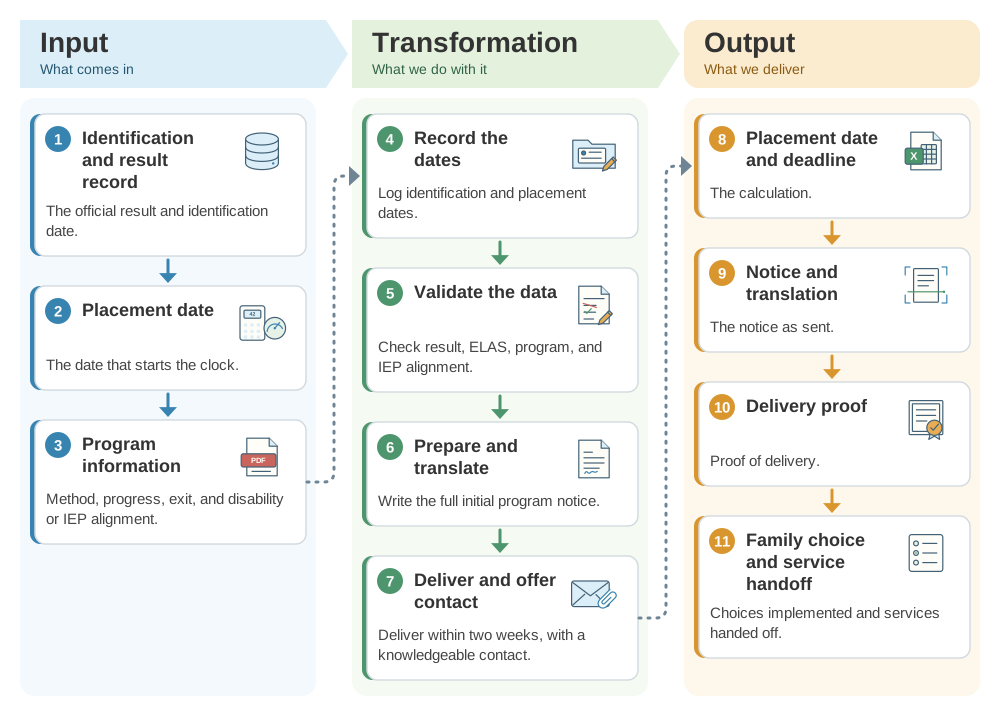
From midyear placement to a notice within two weeks: the SDLA ITO workflow
A pupil placed after the beginning-of-year cycle has a separate two-week clock for the full notice. This SDLA ITO (Input, Transformation, Output) graphic shows how the identification and placement dates, the results and ELAS, and the program details become the placement and deadline record, the notice and delivery proof, and the family response and handoff.
Operational workflow
- Record the official identification and program-placement dates.
- Validate result, ELAS, program method, progress/exit information, and disability/IEP alignment when applicable.
- Prepare and translate the full initial program notice.
- Deliver within the first two weeks of placement and offer a knowledgeable contact.
- Implement and document family program choices and instructional/service handoffs.
Implementation pathway
Evidence to retain
- Identification/result record
- Placement date and deadline
- Notice and translation
- Delivery proof
- Family response and service handoff
Official guidance and help
- CDE Title I Parent and Family EngagementTwo-week midyear rule and required content
- CDE Parent Notification ResourcesCurrent initial templates and translations
- CDE Initial ELPACIdentification context
Source review completed August 30, 2026. Verify current federal and California requirements, CDE and ELPAC manuals, local policy, pupil records, and live CALPADS/TOMS status before acting.