



SDLA Compliance Resource
Manage E-Rate FY2026 Recurring Services
A full-year delivery, billing, change-control, and evidence cycle for each committed recurring-service Funding Request Number.
In Plain Language: For every FRN, verify the committed service began, remains eligible and delivered to approved recipients, matches the contract and funding decision, and is supported by invoices, payments, changes, CIPA compliance, and reimbursement controls throughout the funding year.
Why this matters
E-Rate support follows the approved FRN—not merely the vendor contract. Unreported service changes, ineligible use, unsupported quantities, unpaid non-discount share, or delivery outside July 1–June 30 can reduce recovery or create audit exposure.
Primary ownership
Primary owner: E-Rate applicant lead. Partners: technology/network, procurement, fiscal/accounts payable, CIPA compliance lead, service provider, site contacts, records custodian, and authorized EPC users.
From funding decisions to a BEAR/SPI support package: the SDLA ITO workflow
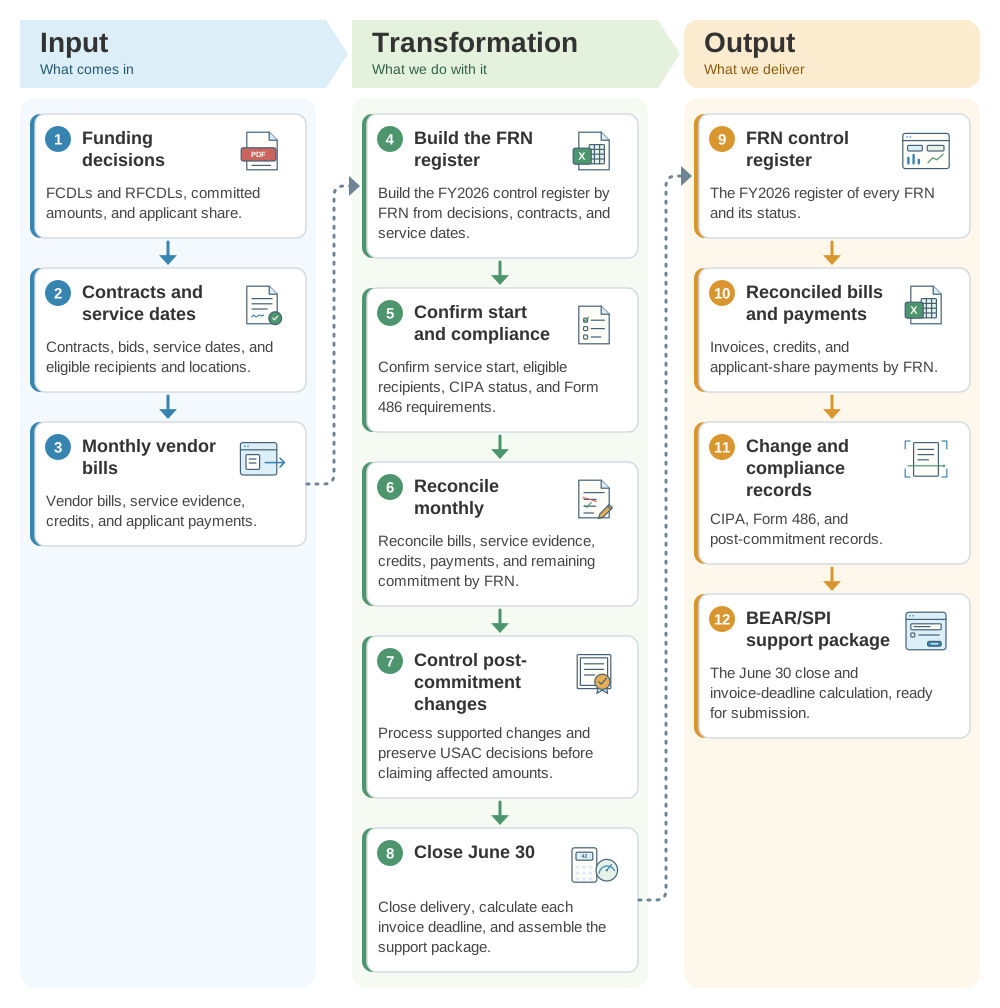
Each committed recurring-service Funding Request Number (FRN) needs a full-year cycle of delivery, billing, change-control, and evidence. This SDLA ITO (Input, Transformation, Output) graphic shows how the funding decisions, contracts, and vendor bills become the FRN register, reconciled bills and payments, change and compliance records, and the BEAR/SPI support package.
Operational workflow
- Build an FY2026 FRN control register from FCDLs/RFCDLs, contracts, service dates, committed amounts, and applicant share.
- Confirm service start, eligible recipients/locations, CIPA status, and FY2026 Form 486 requirements.
- Reconcile monthly vendor bills, service evidence, credits, applicant payments, and remaining commitment by FRN.
- Process supported post-commitment changes and preserve USAC decisions before claiming affected amounts.
- Close June 30 delivery, calculate each invoice deadline, and hand off a complete BEAR/SPI support package.
Implementation pathway
Evidence to retain
- FCDL/RFCDL and FRN register
- Contracts, bids, and service evidence
- Invoices, credits, and applicant-share payments
- CIPA/Form 486 and post-commitment records
- June 30 close and invoice-deadline calculation
Official guidance and help
- USAC Service DeliveryRecurring and non-recurring delivery rules
- USAC Form 486 FilingFY2026 start-of-service control
- USAC InvoicingCurrent reimbursement rules
- USAC Open DataFRN status and deadline verification
Source review completed August 30, 2026. Verify current USAC, FCC, CRDC, EPC, funding-year, FRN, procurement, and local records before acting.