



SDLA Compliance Resource
Discuss the School–Parent Compact at an Annual Elementary Conference
An individualized conversation connecting the jointly developed Title I compact to the child’s achievement, family-school communication, shared responsibilities, and practical next steps.
In Plain Language: During an annual parent–teacher conference, discuss how the school–parent compact relates to the individual child’s learning and achievement; do not merely send the compact home for signature.
Why this matters
The compact becomes useful when school commitments, family support, student needs, progress evidence, and communication routes are made concrete for one child.
Primary ownership
Primary owner: classroom teacher with principal/Title I lead. Partners: parent/family, student when appropriate, specialists, family liaison/interpreter, and staff responsible for compact and conference systems.
From the compact to a conference conversation about the child: the SDLA ITO workflow
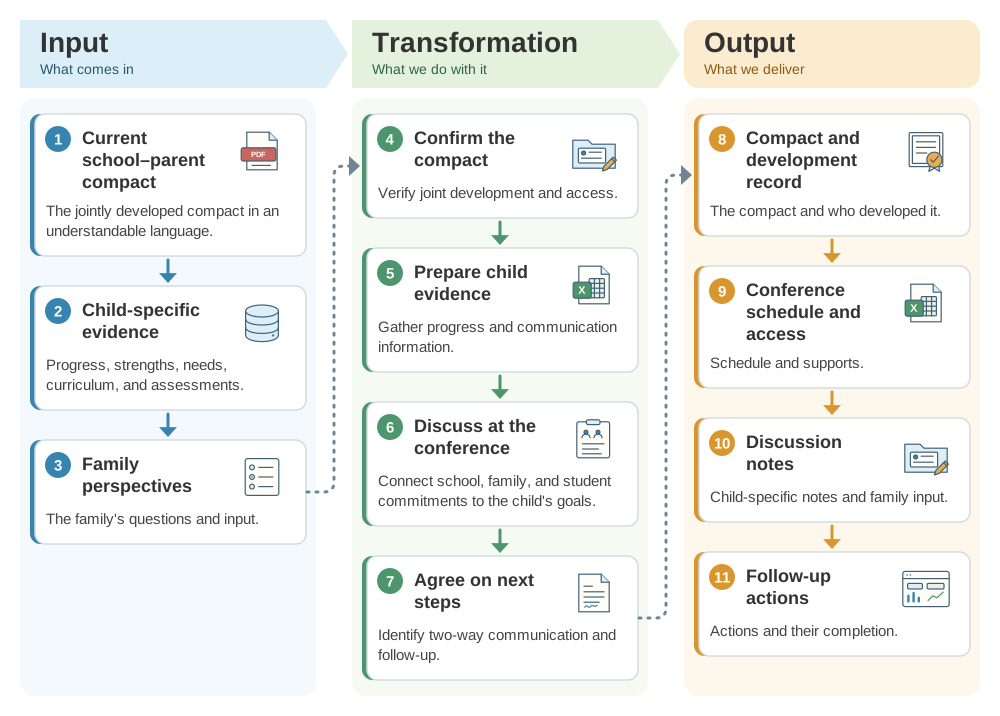
The compact is discussed with the family in light of the child's own learning; sending it home for signature is not enough. This SDLA ITO (Input, Transformation, Output) graphic shows how the jointly developed compact, the child's progress evidence, and family perspectives become the compact record, the child-specific discussion notes, and the follow-up actions.
Operational workflow
- Confirm the current compact was jointly developed and is available in an understandable language/format.
- Prepare child-specific progress, strengths, needs, curriculum/assessment, and communication information.
- At the conference, connect school, family, and student commitments to the child’s actual goals and supports.
- Invite family perspectives and identify feasible two-way communication and follow-up actions.
- Document that the discussion occurred and route commitments or concerns to responsible staff.
Implementation pathway
Evidence to retain
- Current compact and joint-development record
- Conference schedule/access supports
- Child-specific discussion notes
- Family questions/input
- Follow-up actions and completion
Official guidance and help
- CDE Title I Parent and Family EngagementCompact content and conference requirement
- Elementary and Secondary Education ActFederal section 1116 authority
- CDE Title I CriteriaRelated family-engagement controls
Source review completed August 30, 2026. Verify current federal and California requirements, CDE/FCC guidance, local policy, public-meeting procedures, records, and final submitted or adopted state before acting.