



SDLA Compliance Resource
Develop, Evaluate, Update, and Approve the Annual SPSA
A school-level continuous-improvement cycle joining verified needs, educational-partner input, measurable goals, strategies, expenditures, implementation evidence, and governing approval.
In Plain Language: The Schoolsite Council evaluates the prior plan, completes a data-based needs assessment, develops and approves goals/actions/expenditures, obtains ELAC advice when required, recommends the plan to the LEA governing board/body, and monitors implementation throughout the year.
Why this matters
The SPSA is not a once-a-year template exercise. Spending without an approved strategy, skipping SSC/ELAC roles, or failing to evaluate results breaks the link between identified needs, categorical funds, and school improvement.
Primary ownership
Primary owner: principal with Schoolsite Council chair. Governance owners: SSC and LEA governing board/body. Partners: ELAC, teachers, classified staff, families, pupils, Title I/fiscal, CSI/ATSI leads, data team, and LCAP coordinator.
From the prior SPSA to an approved and monitored plan: the SDLA ITO workflow
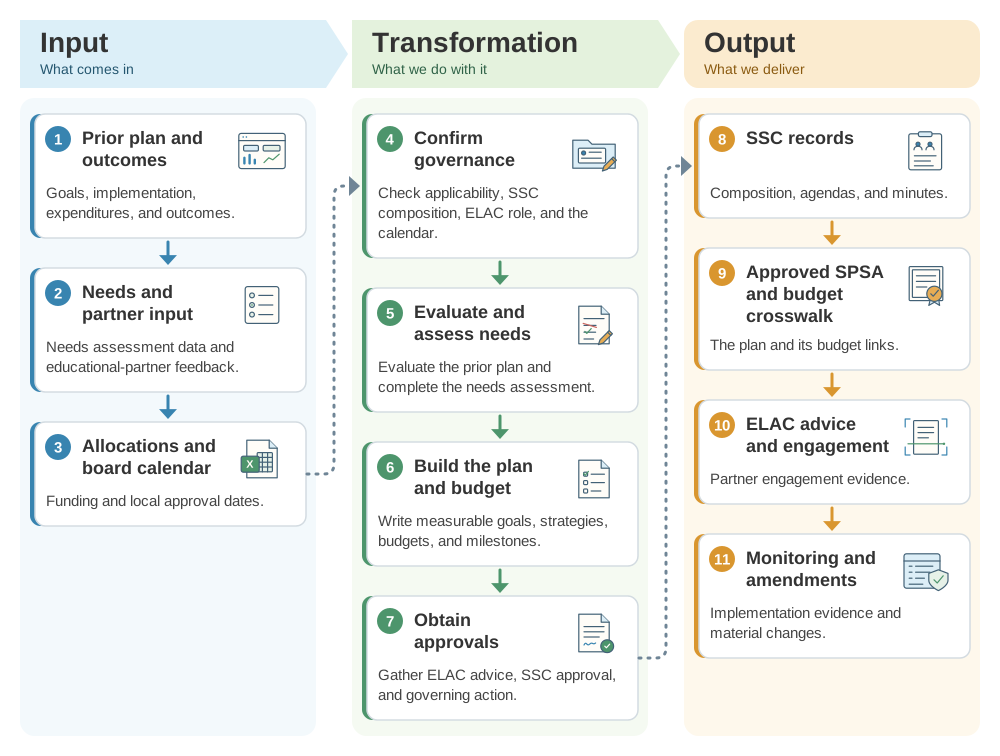
The plan moves through a sequence of evaluation, needs assessment, advice, and governing approval, then through monitoring. This SDLA ITO (Input, Transformation, Output) graphic shows how the prior plan, needs and outcome data, and partner feedback become the evaluation and needs record, the approved SPSA and budget crosswalk, and the monitoring record.
Operational workflow
- Confirm applicability, SSC composition/election/meeting compliance, ELAC role, allocations, and local board calendar.
- Evaluate prior goals, implementation, expenditures, outcomes, and educational-partner feedback; complete the needs assessment.
- Develop measurable goals, evidence-based strategies, services, budgets, responsibilities, and monitoring milestones aligned with LCAP/federal requirements.
- Obtain required ELAC advice, SSC development/approval, and governing-board/body approval; respond to any rejection with specific reasons.
- Implement, monitor, retain evidence, and route material changes through the required approval process.
Implementation pathway
Evidence to retain
- SSC composition/election and agendas/minutes
- Prior-plan evaluation and needs data
- ELAC advice and partner engagement
- Approved SPSA and budget crosswalk
- Governing action
- Implementation/monitoring and material amendments
Official guidance and help
- CDE 2026–27 Planning GuidanceApplicability and local timeline
- CDE Schoolsite CouncilSSC roles and approvals
- CDE LCAP and School PlansTemplates and planning resources
- CDE Title IFederal program context
Source review completed August 30, 2026. Verify current CDE, governing, Dashboard, school-plan, SARC, safety, instructional-materials, local-calendar, and legal instructions before acting.