



SDLA Compliance Resource
Correct an Instructional-Materials Insufficiency
The rapid procurement, distribution, access, and verification response required after a governing-board finding of insufficient materials.
In Plain Language: Publish the required school and subject percentages and reasons, act immediately, and place complete standards-aligned materials in pupils hands for class and home use by the end of the second month.
Why this matters
A purchase order, shipment promise, partial digital license, or teacher packet does not cure an insufficiency while pupils still lack complete accessible materials.
Primary ownership
Primary owner: curriculum and instructional-materials lead. Governance owner: governing board and board office. Partners: principals, teachers, enrollment, EL, special education and accessibility, IT, library and textbook staff, procurement, fiscal, high-school science, legal, and auditors.
From a board finding to every pupil with materials: the SDLA ITO workflow
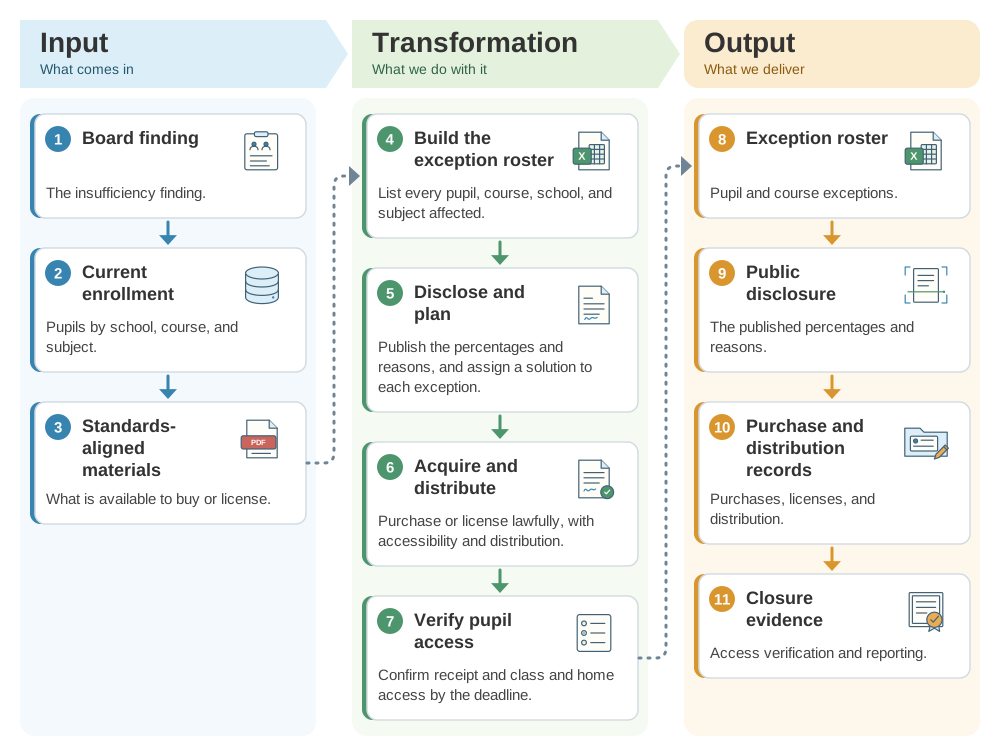
The fix counts only when each pupil actually has materials for class and home use. This SDLA ITO (Input, Transformation, Output) graphic shows how the board finding, current enrollment, and the list of courses and schools affected become the exception roster, the public disclosure, and the pupil access verification.
Operational workflow
- Create a pupil, course, school, and subject exception roster from the board finding and current enrollment.
- Publish required percentages and reasons and assign a solution to every exception.
- Expedite lawful purchasing, licensing, accessibility, and distribution.
- Verify actual pupil receipt and class and home access by the two-month deadline.
- Report closure and retain evidence for audit and complaints.
Implementation pathway
Evidence to retain
- Board finding
- Pupil and course exception roster
- Public disclosure
- Purchase, license, and distribution records
- Pupil access verification
- Closure evidence
Official guidance and help
- CDE Instructional Materials FAQTiming, notice, sufficiency, and cure
- CDE Williams Instructional MaterialsCore sufficiency principle
- CDE Williams Sample DocumentsSuggested resolution and resources
- Education Code 60119Statutory authority
Source review completed August 30, 2026. Verify current CDE, governing, Dashboard, school-plan, SARC, safety, instructional-materials, local-calendar, and legal instructions before acting.