



SDLA Compliance Resource
Keep Local UCP Policies and Procedures Available Free of Charge
A public-access control for ensuring that current complaint procedures, forms, contacts, timelines, appeal information, accommodations, and language help are genuinely obtainable—not merely adopted.
In Plain Language: A person should be able to obtain the complete current UCP procedures without a fee, login, public-records request, or legal vocabulary. The materials should explain who may complain, where and how to file, applicable timelines, investigation and decision steps, appeals, remedies, confidentiality limits, retaliation protections, and assistance.
Why this matters
A board-adopted document can still be inaccessible if staff cannot locate it, a web link is broken, a form is mandatory when the law does not require that form, or language/disability access is absent.
Joint ownership
Owner: UCP compliance officer. Access partners: front offices, schools, communications/web, translation, accessibility/ADA, records, covered-program leads, and governing-board policy staff.
From adopted procedures to UCP materials anyone can obtain: the SDLA ITO workflow
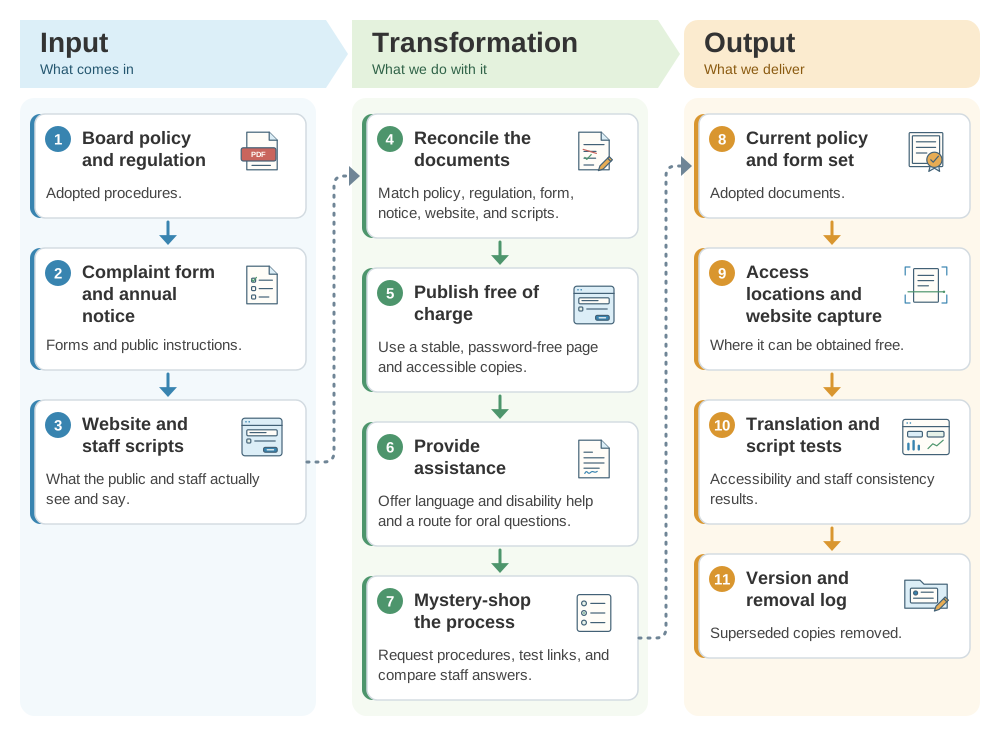
Adopting the procedures is not enough: people must be able to get them free, with help in their language. This SDLA ITO (Input, Transformation, Output) graphic shows how board policy, regulation, the complaint form, and the annual notice become the current policy set, the access and test records, and the version log.
Operational workflow
- Reconcile board policy, administrative regulation, complaint form, annual notice, website instructions, coordinator scripts, and CDE guidance.
- Publish a stable, password-free page and keep printed or otherwise accessible copies available at reasonable locations free of charge.
- Provide language and disability assistance and a clear route for oral questions or help preparing a written complaint.
- Mystery-shop the process: request procedures, submit a routing question, test links, and verify that staff give consistent answers.
- Version-control changes and remove superseded materials from every location.
If the requirement is missed
If access failed, provide the correct procedures immediately, preserve the original receipt date, assess whether a deadline or right was affected, correct every distribution point, and retrain staff. The goal is restored access and a fair process.
Evidence to retain
- Current adopted policy/procedure/form set
- Free-access locations and dated website capture
- Translation/accessibility and staff-script tests
- Version and superseded-copy removal log
- Misrouting correction and preserved-date records
Official guidance and help
- CDE Uniform Complaint ProceduresOfficial procedures, forms, and guidance
- CDE UCP ScopeCurrent covered issues
- U.S. ED OCR Complaint ProcessSeparate federal civil-rights route
Source review completed August 30, 2026. Verify current federal and California law, official guidance, local policy, named contacts, language and disability access, and the facts of the individual matter before acting.