



SDLA Compliance Resource
Investigate and Issue the UCP Decision Within 60 Calendar Days
A case-control guide for neutral intake, evidence preservation, fair investigation, written findings, corrective action, appeal information, and documented extensions based on written complainant agreement.
In Plain Language: Day one is complaint receipt. The LEA should promptly identify allegations, preserve evidence, assign a neutral investigator, give both sides a fair opportunity to provide information, make findings tied to evidence and law, state corrective actions, and deliver a written decision with appeal information by day 60.
Why this matters
A deadline-only process can still be unfair; a careful investigation delivered late can still violate UCP. The control must manage both quality and time, including translation, accessibility, conflicts, parallel safety measures, and implementation of remedies.
Joint ownership
Case owner: UCP compliance officer. Decision authority: designated LEA official. Partners: program owner, records, language/accessibility support, Title IX/504/HR as applicable, and counsel.
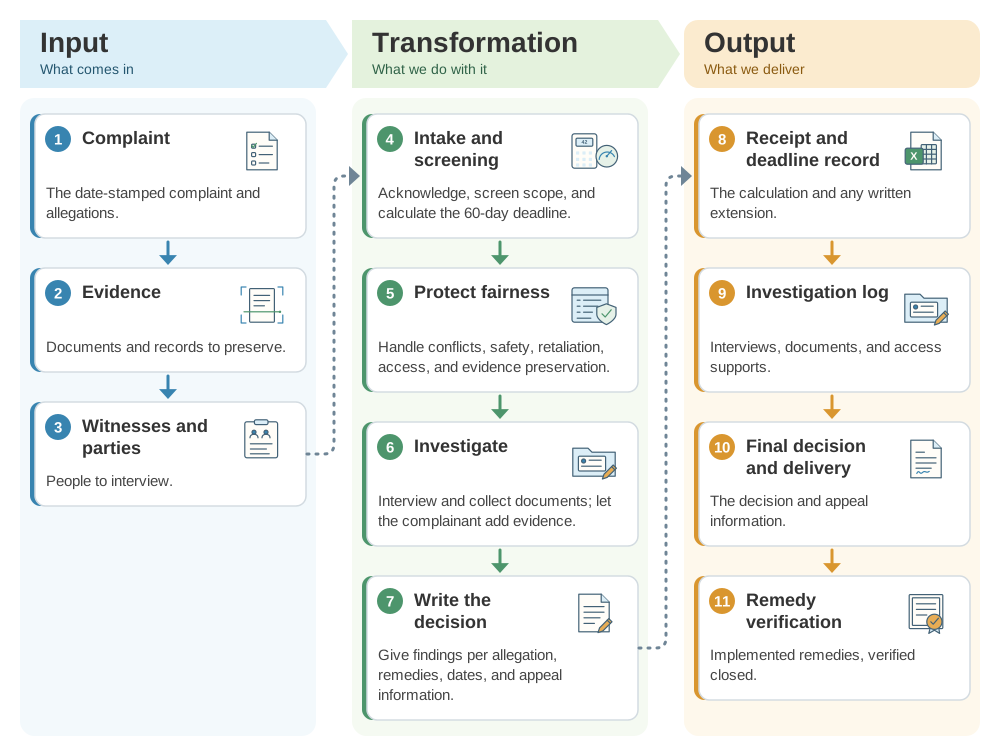
From a UCP complaint to a written decision in 60 days: the SDLA ITO workflow
Day one is receipt, and a written extension needs the complainant's agreement. This SDLA ITO (Input, Transformation, Output) graphic shows how the complaint, the evidence, and the interviews become the deadline and routing record, the investigation log, and the decision and verification.
Operational workflow
- Date-stamp receipt; acknowledge, screen scope, identify allegations and parallel routes, and calculate the 60-calendar-day deadline.
- Address conflicts, interim safety/support needs, retaliation risk, language/disability access, and evidence preservation.
- Interview and collect documents fairly; give the complainant an opportunity to present evidence or information.
- Write allegation-by-allegation findings, conclusions, corrective actions, completion dates, and required appeal/civil-remedy information.
- Deliver by day 60, document any written extension, implement remedies, and verify closure.
If the requirement is missed
A late or inadequate decision can be appealed or reviewed and may require a corrected investigation, new decision, remedies, policy changes, or monitoring. Explain the repair and preserve the complainant's rights rather than minimizing the delay.
Evidence to retain
- Receipt and deadline calculation
- Scope/routing and conflict check
- Interview, document, and access-support log
- Written extension agreement, if any
- Final decision, delivery, appeal information, remedies, and verification
Official guidance and help
- CDE Uniform Complaint ProceduresCurrent UCP resources and regulations
- CDE UCP AppealsState appeal information
- CDE UCP ScopeCurrent covered programs and activities
Source review completed August 30, 2026. Verify current federal and California law, official guidance, local policy, named contacts, language and disability access, and the facts of the individual matter before acting.