



SDLA Compliance Resource
Meet California's 15 Percent Written-Translation Rule Without Mistaking It for the Federal Floor
A language-access control that uses current school-level census data for California written notices while maintaining broader, individualized federal meaningful access for limited-English-proficient parents.
In Plain Language: Use CDE's current school-level language-group data to identify mandatory written translations. But do not tell a parent whose language is below 15 percent that no help is required: federal law may require competent interpretation or translation so limited-English-proficient parents can meaningfully access important school information.
Why this matters
The 15 percent calculation is a bright-line California production rule, not permission to ignore smaller language groups. Meaningful access affects enrollment, discipline, special education, safety, civil-rights complaints, academics, and family participation.
Joint ownership
Owner: language-access/multilingual services lead. Partners: Title VI/equity, communications, data/CALPADS, special education, enrollment, student services, schools, vendors, and program owners.
From the 15 percent report to meaningful language access: the SDLA ITO workflow
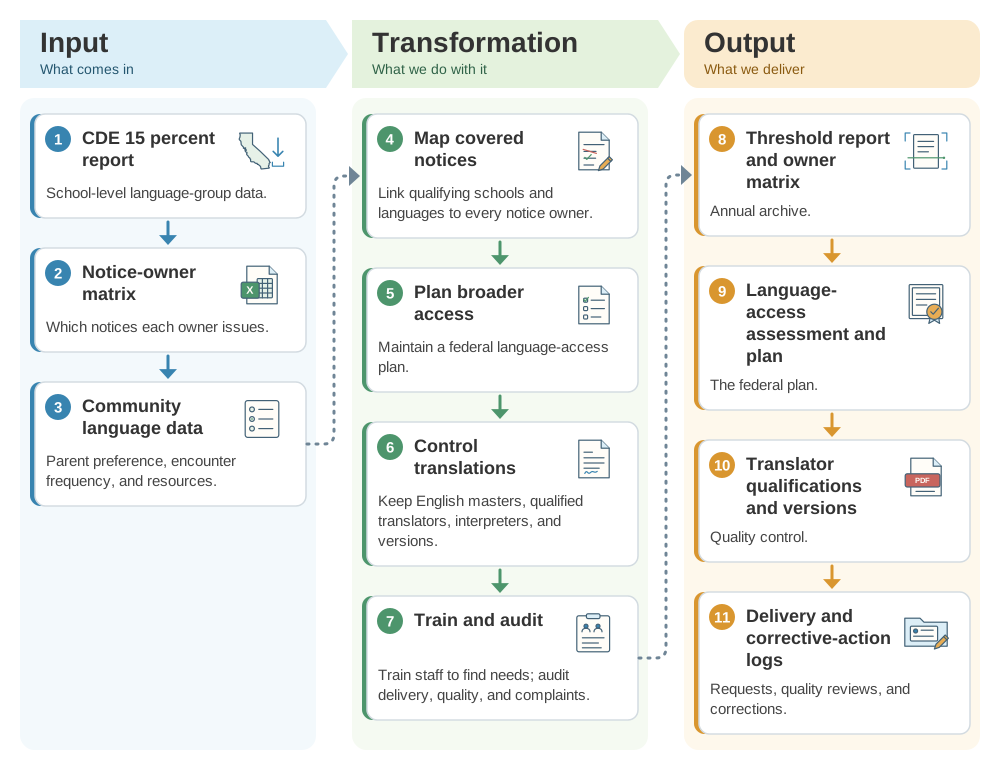
The 15 percent rule is a floor for written notices; federal law may require more help for an individual family. This SDLA ITO (Input, Transformation, Output) graphic shows how the CDE school and language report, notice owners, and community language data become the threshold report and owner matrix, the language-access plan, and the delivery and quality logs.
Operational workflow
- Download and archive the current CDE 15-percent-by-school report; map each qualifying school/language to every covered notice owner.
- Maintain a broader federal language-access plan using current community data, parent preference, encounter frequency, importance, and available resources.
- Create controlled English masters, qualified translations, interpreter access, accessibility review, version control, and rapid-request procedures.
- Train front-office and program staff to identify language needs and obtain assistance without delay or stigma.
- Audit delivery, understanding, vendor quality, complaints, and changing enrollment; correct missed communications.
If the requirement is missed
Recovery may include reissuing an understandable notice, extending or reopening a process where lawful, providing an interpreter, correcting a decision affected by inaccessible communication, revising the language-access plan, and training staff. OCR may require corrective action under Title VI.
Evidence to retain
- Annual CDE school/language threshold report
- Notice-language-owner matrix
- Federal language-access assessment and plan
- Translator/interpreter qualifications and version controls
- Delivery, request, quality-review, and corrective-action logs
Official guidance and help
- Education Code section 48985California 15 percent written-translation rule
- CDE Translation Resources and Language Group DataOfficial school-level threshold data and resources
- CDE Multilingual Documents FAQsState and federal distinction
- U.S. ED Limited English ProficiencyFederal Title VI language-access resources
Source review completed August 30, 2026. Verify current federal and California law, official guidance, local policy, named contacts, language and disability access, and the facts of the individual matter before acting.