


SDLA Compliance Resource
Notify the Community Who the Title IX Coordinator Is and How to Reach Them
A coordinator-notice control aligned to the currently operative 2020 federal Title IX regulations and California's additional posting duties.
In Plain Language: Tell applicants, students, parents/guardians, employees, and relevant unions or professional organizations the coordinator's name or title, office address, email, and telephone number. Explain that any person may report sex discrimination, including sexual harassment, at any time using those channels.
Why this matters
A coordinator hidden in a directory cannot receive urgent reports or coordinate compliance. The person needs visible contact information, training, authority, backup coverage, and a reliable path for reports received after business hours.
Joint ownership
Accountable leader: superintendent/designee. Coordinator: designated Title IX employee. Partners: HR, student services, school leaders, athletics, communications, safety/support teams, records, and legal/policy.
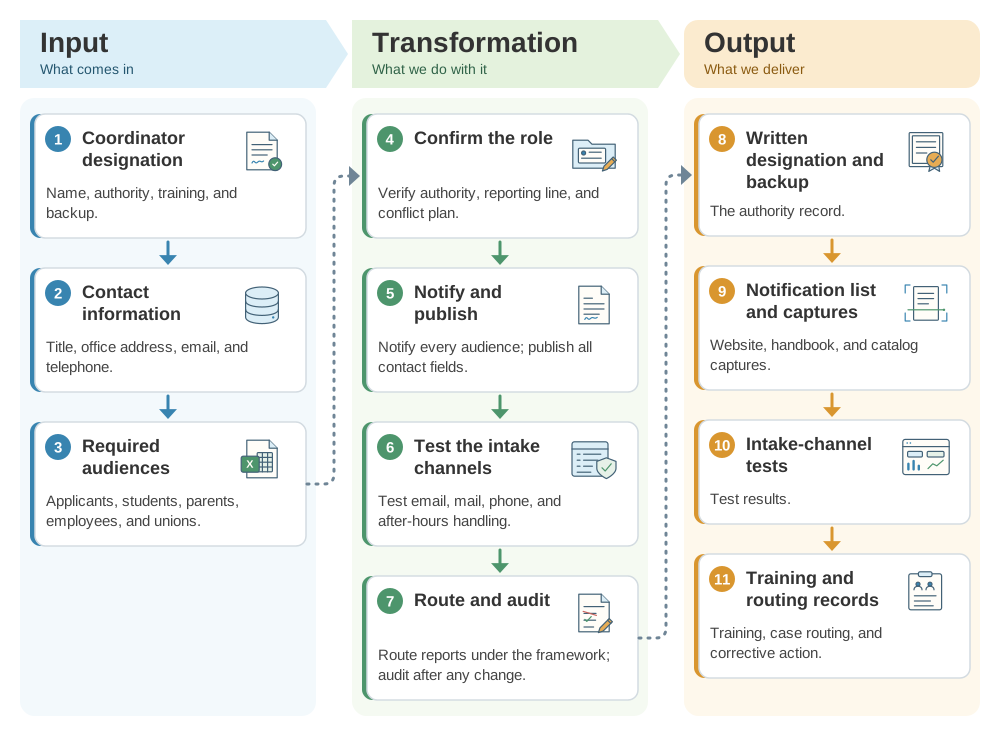
From a designated coordinator to community notice and tested intake: the SDLA ITO workflow
Every required audience must be told who the coordinator is and how to reach them, and the channels must work. This SDLA ITO (Input, Transformation, Output) graphic shows how the coordinator designation, the required audiences, and the contact information become the designation record, the notification and publication captures, and the intake and training records.
Operational workflow
- Confirm the current designated coordinator, authority, training, reporting line, backup, and conflict-management plan.
- Notify every federal audience and prominently publish all required contact fields in the website, handbooks, catalogs, and policy notices.
- Test every intake channel, including after-hours email/mail/phone handling, and train staff that any person may report.
- Route reports under the operative federal grievance framework and any overlapping California process while explaining the distinction to families.
- Audit notices and case records after any personnel, legal, or procedural change.
If the requirement is missed
A missing or ineffective designation can delay support and expose the LEA to complaints and corrective action. Repair includes immediate contact updates, preserved intake, appropriate supportive measures, procedure correction, training, and monitoring—not blame toward the reporting person.
Evidence to retain
- Written designation, authority, and backup plan
- Required-audience notification list
- Website/handbook/catalog captures
- Intake-channel and after-hours tests
- Training, case routing, and corrective-action records
Official guidance and help
- U.S. ED Regulations Enforced by OCRConfirms the 2020 Title IX rule is currently enforced
- 34 CFR Part 106Operative federal Title IX regulations
- CDE Gender Equity/Title IXCalifornia and federal coordinator requirements
- Education Code section 221.61California website-posting duties
Source review completed August 30, 2026. Verify current federal and California law, official guidance, local policy, named contacts, language and disability access, and the facts of the individual matter before acting.