



SDLA Compliance Resource
Maintain One Usable Nondiscrimination Policy Across California and Federal Duties
A policy-governance guide for aligning protected bases, coordinators, reporting routes, investigation duties, remedies, accessibility, and public notice without collapsing distinct laws into one vague promise.
In Plain Language: A nondiscrimination policy tells the community what equal access means, which characteristics are protected, how to report concerns, who receives them, what process follows, how retaliation is prohibited, and where other complaint routes remain available.
Why this matters
A copied list of protected classes can hide broken operations. The policy must match real intake, coordinator authority, investigation capacity, supportive measures, recordkeeping, website information, handbooks, employment practices, and program access.
Joint ownership
Executive owner: superintendent/designee. Coordinators: UCP, Title IX, Section 504/ADA, Title VI/language access, and HR. Partners: board policy, student services, communications, schools, technology, and counsel.
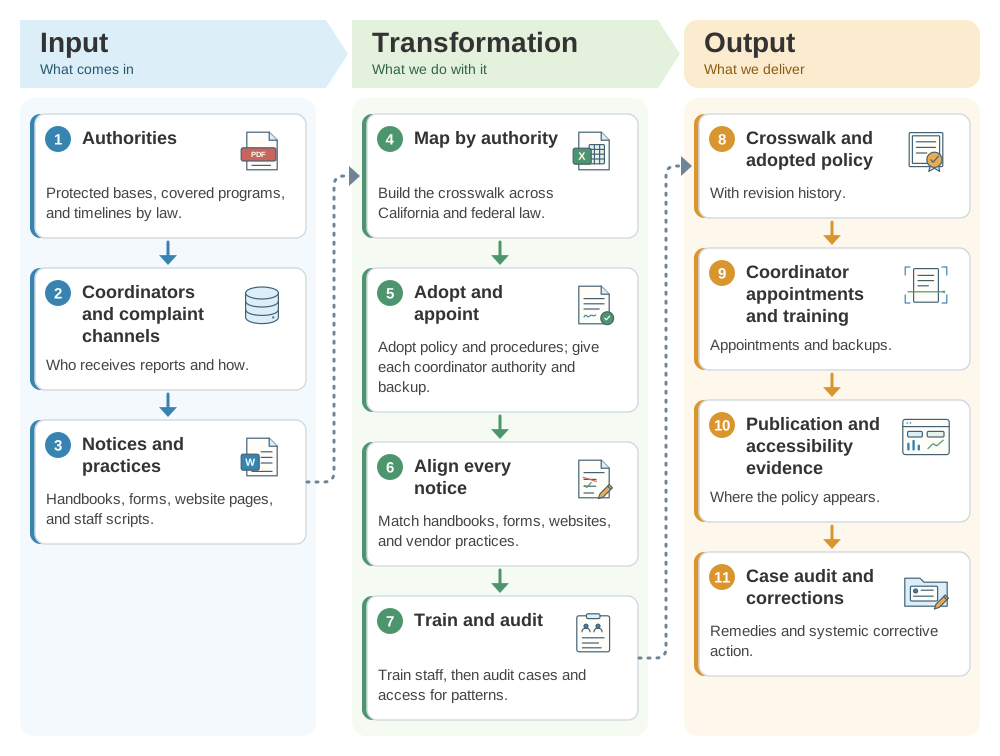
From a legal crosswalk to one usable nondiscrimination policy: the SDLA ITO workflow
The policy must keep distinct laws distinct while giving the community one clear route to report. This SDLA ITO (Input, Transformation, Output) graphic shows how California and federal authorities, coordinators, and current notices and practices become the crosswalk and adopted policy, the coordinator and publication records, and the case audit and corrections.
Operational workflow
- Map protected bases, covered programs, audiences, notices, coordinators, complaint channels, timelines, appeal rights, and record rules by authority.
- Adopt/update board policy and administrative procedures; give each coordinator authority, independence, training, and backup coverage.
- Align every public notice, handbook, form, website page, employment publication, vendor practice, and staff script.
- Train all staff to receive and promptly route concerns, preserve evidence, prevent retaliation, and provide immediate safety/support measures.
- Audit cases and access data for patterns; correct policy and practice together.
If the requirement is missed
Noncompliance usually begins with notice, investigation, and an opportunity to resolve or correct. Remedies can include policy revision, training, individual services, restored access, monitoring, reimbursement, or formal enforcement. The objective is to stop harm, prevent recurrence, and repair effects.
Evidence to retain
- Authority and procedure crosswalk
- Adopted policy, regulations, and revision history
- Coordinator appointments, training, and backup plan
- Publication/distribution/accessibility evidence
- Case audit, remedies, and systemic corrective actions
Official guidance and help
- California Education Code, Part 1 nondiscrimination provisionsState educational equity framework
- U.S. ED Civil Rights LawsFederal Title VI, Title IX, Section 504, and related protections
- CDE UCP ScopeCalifornia complaints covered by UCP
Source review completed August 30, 2026. Verify current federal and California law, official guidance, local policy, named contacts, language and disability access, and the facts of the individual matter before acting.