


SDLA Compliance Resource
Maintain the Required Bullying, Harassment, and Civil-Rights Information Online
A public-website control for making prevention policies, reporting routes, coordinator contacts, pupil rights, and state and federal resources easy to find.
In Plain Language: The website must be more than a generic anti-bullying statement. It should give families and students one prominent, accessible place to find the LEA's prevention policies, complaint procedures, Title IX information, pupil rights, coordinator contacts, reporting options, and required CDE links.
Why this matters
General bullying and discriminatory harassment overlap but are not identical. A peer conflict may require school intervention without being a federal civil-rights violation. Conduct tied to a protected characteristic may trigger additional duties to stop it, prevent recurrence, address its effects, and protect against retaliation.
Joint ownership
Content owner: equity/student services. Publishers: web and communications. Route owners: UCP, Title IX, Section 504, school safety, and site administrators.
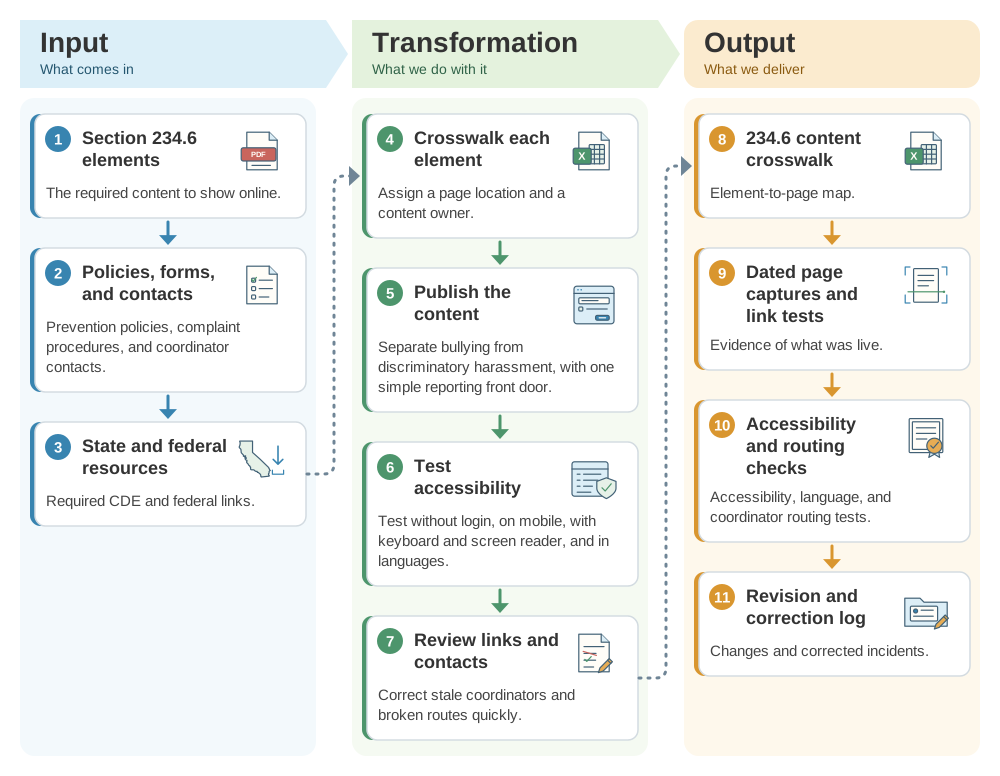
From the content crosswalk to a findable bullying and civil-rights page: the SDLA ITO workflow
Families and students should find prevention policies, reporting routes, and rights in one prominent, accessible place. This SDLA ITO (Input, Transformation, Output) graphic shows how the section 234.6 elements, current policies, and coordinator contacts become the crosswalk and page captures, the accessibility and language checks, and the revision log.
Operational workflow
- Crosswalk each section 234.6 element to a visible page location and named content owner.
- Separate general bullying information from protected-class discriminatory harassment while providing a common, simple reporting front door.
- Publish current policies, procedures, coordinator contacts, rights, filing instructions, forms, and required CDE/federal links.
- Test the page without a login on mobile, with keyboard and screen reader, and in needed languages.
- Run a scheduled link/contact review and immediately correct stale coordinators or broken complaint routes.
If the requirement is missed
When content is missing or stale, restore access, preserve reports received through any channel, correct the page, notify affected audiences when necessary, and train staff. Serious protected-class concerns may also be reviewed through UCP, CDE, OCR, or another applicable authority.
Evidence to retain
- Section 234.6 content crosswalk
- Dated page captures and link-test results
- Accessibility and language-access checks
- Coordinator confirmation and routing test
- Revision and incident-correction log
Official guidance and help
- Education Code section 234.6Required online bullying-prevention and civil-rights information
- CDE Bullying Prevention ResourcesPrevention and response resources
- U.S. ED: Harassment and BullyingFederal protected-class layer
Source review completed August 30, 2026. Verify current federal and California law, official guidance, local policy, named contacts, language and disability access, and the facts of the individual matter before acting.